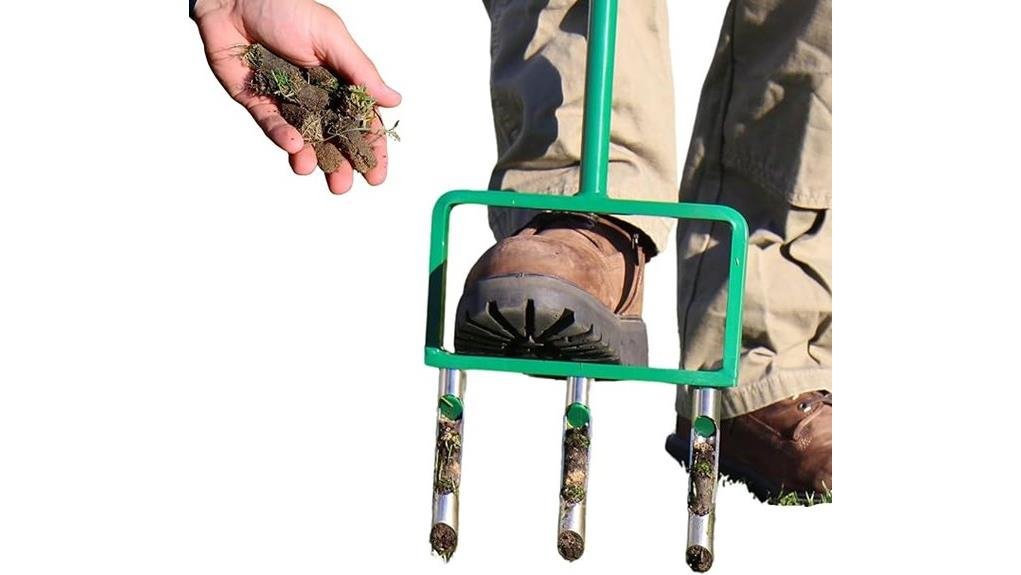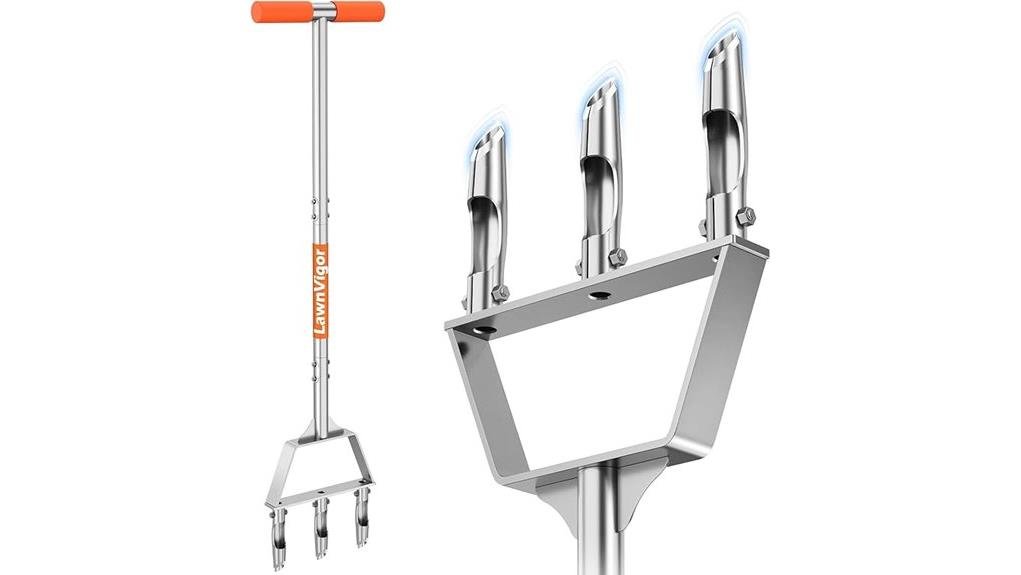
You’ll get a rugged, easy-to-use manual core aerator that pulls hollow soil plugs to relieve compaction, improve drainage, and boost root growth without power tools or pros. Its heat-treated hollow tines cut clean cores and resist clogging, the padded handle reduces fatigue, and three replaceable tines let you tackle compacted, dry, or clay soils—best when ground’s moist. It’s ideal for small-to-medium lawns and budget buyers, and keep going to see testing, care, and buying tips.
Some Key Takeaways
- Hollow, heat-treated tines pull clean soil plugs to relieve compaction and improve air, water, and nutrient flow to roots.
- Rugged metal frame and ergonomic padded handle reduce bending and fatigue during use, suitable for small-to-medium lawns.
- Best results when soil is moist — prewater very hard or clay-heavy ground to improve penetration and reduce skips.
- Manual design limits large yards; durable construction and replaceable tines prolong life but package may lack spares.
- Maintain by cleaning, drying, lubricating moving parts, and replacing worn tines; ideal spring or fall use for best effect.
How a Manual Core Aerator Works and Why Your Lawn Needs One
When you push a manual core aerator into your lawn, its hollow, heat-treated tines pull out soil plugs so air, water and nutrients can reach grassroots more easily—this relieves compaction, improves drainage, and encourages deeper root growth for a greener, healthier turf. You’ll see improved soil respiration as oxygen moves into formerly dense layers, feeding microbes that release nutrients. Regular aeration supports root proliferation, letting grass anchor and access moisture during dry spells. You’ll work efficiently if soil’s damp, avoid twisting the tool, and gather plugs afterward. It’s a straightforward practice that connects you to your landscape and boosts long-term lawn health. Choose the right tool for your yard by comparing manual aerator types to find one that fits your soil and yard size.
What to Expect From This Aerator: Build, Tines, and Comfort
Now that you know how core aeration benefits soil and roots, let’s look at what this particular aerator brings to the job: a rugged metal frame, heat-treated hollow tines, and a user-focused handle that make the task both effective and comfortable. You’ll appreciate durable construction that won’t bend under pressure and three hollow, replaceable tines that lift clean plugs without clogging. Handle padding and ergonomic height reduce fatigue and keep you part of a community that cares for its lawns. Assembly’s quick; maintenance is simple. Thoughtful plug disposal and long-term durability mean this tool grows with your routine. It’s an ideal choice for homeowners looking to maintain a healthy lawn with consistent results.
Performance Test: Real-World Results on Compacted, Dry, and Clay Soils
Although dry, compacted, and clay-heavy patches test any tool, this aerator proved surprisingly effective across all three: its sharp, heat-treated hollow tines penetrated tough soil with steady downward pressure, removed clean plugs without frequent clogging, and reduced the effort you’d expect on dense sections — provided you prewater really hard ground and avoid rocking or twisting the tool while tines are engaged. You’ll notice performance improves as soil moisture rises; wetter clay allows cleaner cores and fewer skips. Consistent holes increased root penetration in test areas, and repeated passes on compacted strips restored drainage. It’s predictable, durable, and community-approved for shared lawn care. For homeowners looking to improve turf health, routine aeration is an important lawn maintenance practice that complements other seasonal chores.
Pros, Cons, and Who This Manual Core Aerator Is Best For
Because it combines rugged construction with simple, effective tines, this manual core aerator delivers clear benefits for homeowners who want reliable aeration without power equipment. You get durable metal, hollow tines that pull clean plugs, ergonomic grip, and easy semi-assembly with quick installation tips included. Cons: manual effort limits large yards, and no extra spare tines in the package. You’ll appreciate replaceable tines and reduced back strain, and you’re part of a practical DIY community. Ideal for small-to-medium lawns, budget-conscious buyers, and those who prefer hands-on care; check warranty info before you buy. Many homeowners pair this tool with smart irrigation upgrades to keep aerated lawns healthy while conserving water.
Buying, Using, and Maintaining the Aerator for Long Life
Having picked a manual core aerator that fits your yard and budget, you’ll want to think about buying the right model size, using it correctly, and keeping it in top shape so it lasts for years. Choose size and tine depth for your soil type; heavier clay needs deeper, sturdier tines. Observe seasonal timing—early spring or fall—when soil is moist but not soggy. Use square, evenly spaced passes; don’t rock or twist tines. Clean and dry tines after use, lubricate moving parts, and store indoors. Follow storage tips: cover tines, hang the tool, and replace worn tines promptly to protect your shared investment. For homeowners who enjoy outdoor spaces, consider regular maintenance and occasional upgrades to optimize spike aerator care and performance.
Some Questions Answered
Does This Aerator Work on Slopes or Uneven Terrain?
Yes — you can use it on slopes and uneven terrain, but take care. Its sturdy metal build and sharp hollow tines give reliable slope performance, and the ergonomic non-slip handle helps you keep control on uneven terrain. Work slowly, water dry soil first, and avoid rocking or twisting the tool when tines are in the ground. You’ll get consistent plugs and less strain when you pace yourself and maintain good footing.
Can I Rent Replacement Tines Separately From the Manufacturer?
Yes — you can rent replacement tines directly from the manufacturer if they offer rental service in your area; check manufacturer availability on their website or contact customer support. You’ll get the hollow, heat-treated replacement tines designed to fit the tool, keeping performance and comfort intact. If rental isn’t available, ask about buying or returning options so you and other users stay supported and keep your aerator working well.
Is This Tool Safe to Use Near Sprinkler Heads or Buried Utilities?
Yes — you can use it near sprinkler heads and buried lines, but avoid sprinklers and inspect utilities first. Walk the lawn to mark heads and known buried lines, call your local utility locating service for unknowns, and water dry soil beforehand so tines penetrate cleanly. Don’t rock or twist the tool when tines are in the ground near fixtures. Take your time so everyone feels safe and included in the work.
How Noisy Is the Aerator During Use in Residential Areas?
You’ll hear a low hum from metal on soil, but it won’t shatter neighborhood quietness — it’s surprisingly mild. You’ll work steadily without startling neighbors, since the tool’s manual action keeps noise minimal. You’ll feel the tines bite and hear light scraping; that’s normal. You’ll want to avoid very early or late hours out of courtesy, but otherwise you’ll aerate comfortably while staying part of your neighborhood rhythm.
Will It Fit in Small Storage Spaces or Hang on a Garage Wall?
Yes — you can tuck it away easily. The folding handle minimizes length and the compact footprint lets you stand it in a tight corner or hang it on a garage wall using a sturdy hook. You’ll appreciate the ergonomic grip when stowing and grabbing it for jobs. It’s built tough but designed to belong in shared storage spaces, so neighbors or family will find it practical and unobtrusive.