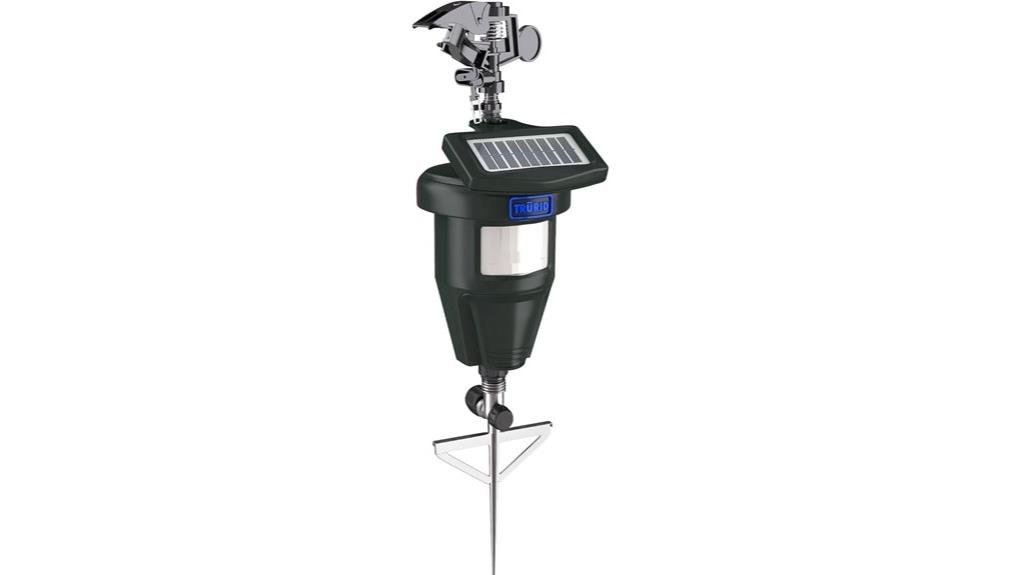
Motion-activated sprinklers are a practical, low-effort way to keep raccoons, skunks, rabbits, deer, and feral cats out of lawns and gardens without harm. You’ll want units with the right spray distance and sensor range for your yard size, sturdy stakes or metal bodies for durability, and hose fittings that match. Position sensors along animal routes, test bursts, and trim vegetation to avoid false triggers. Keep going to see model picks, setup tips, and maintenance checks.
Some Key Takeaways
- Choose units with adjustable sensor range and field-of-view to detect raccoons, rabbits, deer, and feral cats reliably.
- Compare coverage pattern and spray distance to ensure full protection of lawns, gardens, and vulnerable beds.
- Prefer weather-resistant construction, metal stakes, sealed electronics, and compatible quick-connect hose fittings.
- Match model features to use-case: gentle sprays for gardens, rotating heads for large lawns, high-pressure for persistent wildlife.
- Test placement and monthly maintenance—adjust sensitivity, clear vegetation, and winterize to prevent damage.
Which Yards and Pests Benefit Most From a Motion-Activated Sprinkler?
When you want low‑maintenance, chemical‑free protection, motion‑activated sprinklers work best in medium to large lawns, vegetable gardens, and flower beds where wildlife access is obvious and you need broad but targeted coverage. You’ll find them less ideal for very small yards or cramped urban gardens where overspray and neighbor concerns matter. They excel against nocturnal pests like raccoons, skunks, and rabbits, and deter deer and feral cats without harm. You can also protect edible plots while keeping water use efficient. If you share space with domestic dogs, position sensors to avoid false triggers and include neighbors in planning. These devices are a great option for homeowners who want to enjoy outdoor living without chemicals.
How Motion-Activated Sprinklers Work and What to Expect From Performance
If you’ve identified areas where wildlife keeps coming in, it helps to understand how motion-activated sprinklers actually work and what performance looks like so you can set them up for reliable results. You’ll place a sensor that detects motion and triggers a timed water burst; expect brief sensor latency before activation and a configurable burst duration to avoid overwatering. Proper positioning guarantees the sensor sees animals but not leaves or traffic. You’ll learn ideal range, how often bursts repeat, and roughly how much area each unit covers. With those details, you’ll set systems to protect shared spaces effectively. Consider pairing sprinklers with catch basin maintenance to keep runoff controlled and yards dry.
Top Sprinkler Features to Compare: Coverage, Sensor Range, Durability, and Fittings
Because your yard’s protection depends on matching device specs to site conditions, focus first on four measurable features: coverage pattern and spray distance, sensor detection range and field of view, build quality and weather resistance, and hose/connector compatibility. You’ll run a coverage comparison to map spray arcs and max distance against vulnerable zones. Test sensor sensitivity to avoid false triggers while catching target size and speed. Inspect material durability—metal stakes, UV-resistant plastics, sealed electronics—for seasons of reliable use. Confirm fitting types and quick-connect compatibility with your hose and timers. Consider checking specialized suppliers for compatible parts and replacement fittings like those used by sprinkler suppliers to ensure long-term maintenance.
Spotlight Reviews: Four Recommended Models by Use Case (Budget, Garden, Large Lawn, Heavy Wildlife)
Let’s break down four stand-out motion-activated sprinklers tailored to common needs—budget, garden, large lawn, and heavy-wildlife scenarios—so you can match features to your yard fast. For budget alternatives, choose a simple sensor unit with basic range and a sturdy stake—cheap, reliable, and community-approved. For garden use, pick a model with gentle spray patterns and adjustable sensitivity to protect plants without overwatering. For large lawns, get a rotating head with wide coverage and strong fittings. For heavy-wildlife, opt for high-pressure bursts, extended sensor range, and specialty attachments like repellent nozzles for extra deterrence. Many homeowners who enjoy outdoor spaces also pair sprinklers with yard care gear from specialized retailers for best results.
Buy, Install, and Maintain: Quick Setup Steps, Common Problems, and Water-Saving Tips
When you’re ready to buy, install, and maintain a motion-activated sprinkler, focus on matching sensor range, nozzle type, and build quality to your site so you avoid common mismatches and extra work later. Buy with hose adapters in mind, check quick-connect fittings, and plan installation timing for dry, calm weather. Push the stake firm, aim sensors toward animal routes, and test bursts. Create a simple maintenance schedule: test monthly, clear debris, tighten fittings. For winter, follow seasonal storage steps—drain lines, remove batteries, and store indoors. Troubleshoot false triggers by adjusting sensitivity and trimming vegetation. Also consider sprinkler compatibility with oscillating sprinkler components like fittings and nozzles when selecting models.
Some Questions Answered
Can These Sprinklers Harm Pets or Wildlife if Frequently Triggered?
They’re unlikely to cause lasting harm, but you should watch for pet stress and avoid overuse. You’ll startle animals with short water bursts; repeated triggers can raise anxiety and occasional water ingestion that upsets stomachs. You can minimize effects by adjusting sensitivity, positioning away from pet paths, and limiting activation periods. You’ll protect your garden while keeping neighbors’ and local wildlife’s wellbeing in mind, fostering safer shared spaces.
Do Motion-Activated Sprinklers Work in Freezing Temperatures?
They’ll struggle in freezing temperatures unless you winterproof them. You’ll want winterproofing tips: drain hoses, remove the unit from the stake, and store connectors indoors. Consider anti freeze options like insulated hose sleeves or a small heated hose clamp for mild freezes. If freezes are frequent, uninstall and store the sprinkler each winter to prevent burst fittings and sensor damage, then reinstall when temperatures stay reliably above freezing.
How Do I Prevent False Triggers From Wind or Falling Leaves?
You prevent false triggers by adjusting sensitivity and installing barriers to block wind-blown leaves. Lower sensitivity so only larger, warmer targets activate the unit, and aim the sensor away from trees or shrubs. Install simple barriers—low fencing, dense edging, or windbreak plants—to deflect gusts and debris. Regularly trim nearby foliage, clear leaf litter, and test settings after changes. That keeps your group’s yard protected and reduces annoying false activations.
Can I Integrate Multiple Units to Cover One Large Area?
Yes — you can integrate multiple units to cover a large area by placing them so their detection zones overlap and using mesh networking-capable models for synchronized coverage. You’ll position stakes for continuous overlap, adjust sensitivity to avoid false triggers, and route hoses or use quick-connect fittings for tidy setup. You’ll coordinate timings so bursts don’t conflict, conserving water while ensuring the group protects your shared yard effectively and reliably.
Are Replacement Sensors or Parts Readily Available?
Yes — sensor availability is generally good, and you’ll find replacement sensors and parts from manufacturers and aftermarket suppliers. Check part compatibility before buying: match model numbers, connection types, and mounting hardware. You’ll want compatible quick-connect fittings and the same stake or sensor specifications to avoid fit issues. Join user forums or brand communities; members share compatible part sources and tips so you won’t feel alone when repairing or upgrading.