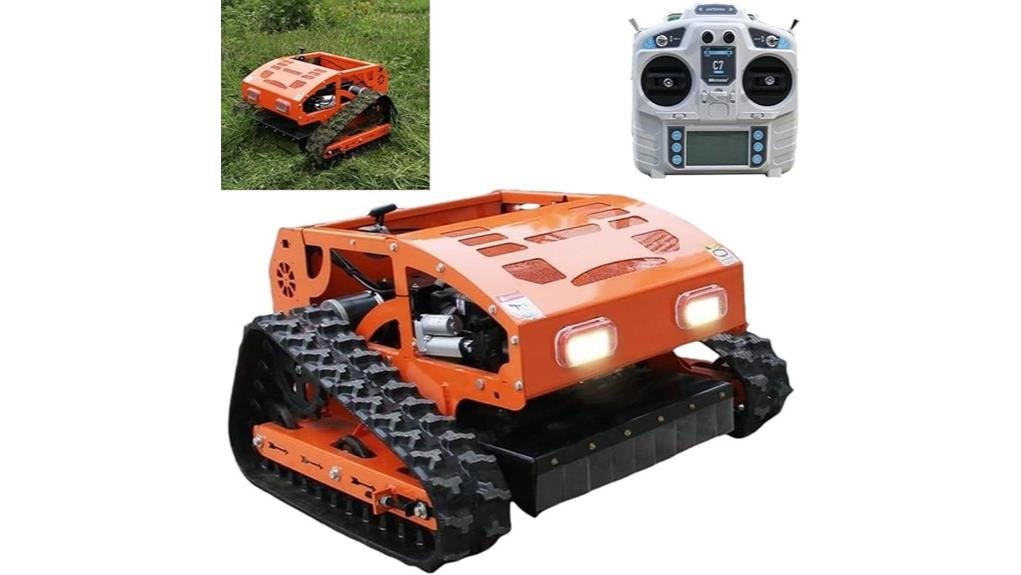
The 300LBS remote-control mower gives you tracked stability and predictable traction on slopes up to 30%, so it clambers over roots, ruts, and loose soil where wheeled mowers slip. Its 9 HP electric-start engine and 20″ manganese-steel blade deliver steady cutting for turf and brush, with adjustable deck height and good airflow to reduce clogging. Remote operation keeps you safe on banks, though you’ll want training and interference checks, and more details follow below.
Some Key Takeaways
- Confirms lightweight tracked mower (~300 lbs) offers excellent slope capability up to 30% for steep banks and orchards.
- Remote-control provides safe standoff operation with precise speed, direction, and blade engagement.
- 9 HP engine and 20-inch manganese-steel blade deliver consistent cutting through grass and light brush.
- Compact, agile chassis rides over roots and ruts while predictable traction minimizes wheel spin.
- Inspect hydraulics, test emergency stop, and check fuel access and deck height adjustability before purchase.
Performance and Terrain Test: How the 300LBS Handles Slopes, Ditches, and Brush
Tackle steep banks, ditches, and thick brush with confidence: the 300LBS uses rubber tracks and a compact, lighter-than-expected frame to climb slopes up to 30% and maintain traction on loose soil where wheeled mowers slip. You’ll appreciate its predictable traction control that keeps progress steady without aggressive wheel spin. Obstacle negotiation is deliberate — the chassis rides over roots and ruts instead of catching them, so you feel in sync with the machine. In orchards, parks, or rough fields you’ll join others who trust its balance of agility and strength, confident it won’t surrender when terrain gets tough. Designed for homeowners who value reliable outdoor equipment, it pairs well with a range of gas mower accessories for routine upkeep.
Power, Cutting Quality, and Deck Features: What to Expect From the 9 HP Engine and 20 Blade
After seeing how the 300LBS handles rough ground, you’ll want to know what actually makes it cut cleanly: a 9 HP four-stroke engine with electric start that feeds a 20-inch deck fitted with a manganese-steel blade. You’ll notice solid engine torque that keeps RPMs steady through thick grass and brush, so you don’t have to constantly re-pass. The deck design balances protection and deck airflow, ejecting clippings efficiently to reduce clogging. Blade durability and adjustable height give you versatile finishes from tidy turf to overgrown fields. You’ll appreciate the dependable power and thoughtful deck features that help your team succeed. For homeowners who enjoy outdoor spaces, having the right essential gear can make maintenance and care much easier.
Remote Control, Safety, and Operation: Using It in Hazardous or Hard-to-Reach Areas
When you need to mow near drop-offs, steep banks, or unstable ground, the remote control lets you keep a safe distance while retaining precise command over speed, direction, and cutting engagement. You’ll appreciate remote operation that keeps you out of harm’s way while delivering consistent cuts. Complete operator training before use so you know responses to slope shifts, vegetation snags, and signal loss. Test for wireless interference on-site; interference can delay commands. Verify the emergency stop works instantly and practice activating it. This machine balances autonomy and control, helping your crew feel confident and included when tackling risky terrain. Consider models designed for homeowners who enjoy their outdoor spaces and look for features that suit residential yards.
Maintenance, Adjustability, and Real-World Durability: Fuel Tank, Hydraulics, and Blade Height Tips
Because regular upkeep keeps this remote-control mower reliable in the field, you’ll want to focus first on the user-friendly fuel tank, enclosed hydraulics, and adjustable blade height—three features that directly affect uptime and cut quality. Check rear fuel access before each shift; you’ll refill quickly and avoid spillage. Inspect hydraulic routing for abrasion or leaks, and keep fittings torqued to spec to preserve enclosed hydraulics. For blade height, use lower settings on turf and raise it for brush; test cuts confirm settings. Follow a simple checklist you and your crew can trust to keep the mower durable and ready. Consider upgrading with compatible mower lift accessories to simplify servicing and transport.
Who Should Buy the 300LBS Mower and What to Check Before Ordering (Shipping, Address, and Delivery)
If you or your crew manage steep orchards, rough parkland, or overgrown farm edges where wheeled mowers struggle, the 300‑lb remote‑control mower is worth serious consideration. You should buy it if you need tracked stability on 30% slopes, remote operation for hazardous zones, and a lighter-but-durable unit that handles thick brush. Before ordering, review buyer requirements: fuel capacity, deck width, and access for maintenance. Complete a shipping checklist—confirm LTL carrier rules, delivery window, and a correct shipping address and contact. That prevents delays or failed deliveries and keeps your team ready to deploy the mower safely. Consider how a robotic mower lifestyle can improve time spent outdoors and property upkeep, especially for those who prioritize outdoor living.
Some Questions Answered
Does It Come With a Warranty and What’s Covered?
Yes — it includes a limited manufacturer warranty covering engine, drive system, and major components against defects. You’ll see exclusions for wear items (blades, belts) and misuse. Warranty transferability may be allowed to a new owner if you follow registration steps; check terms. To file a claim, follow the claim process: gather serial, proof of purchase, photos, and contact support. You’ll get repair, parts, or replacement per policy.
Are Replacement Blades and Parts Readily Available?
Yes — replacement blades and parts are generally available. You’ll find OEM pieces plus aftermarket compatibility options through dealers and virtual marketplaces, so you won’t feel stranded. Blades, belts, and hydraulic components are common listings; choose reputable sellers and confirm specs for fit. You’ll want to stock essential spares and check local dealers for quicker service, which helps your crew stay connected and confident during upkeep.
How Long Is the Battery Life for the Remote Control?
You’ll get about 6–8 hours of remote use per full charge. The battery capacity supports long sessions and balances run time with compact size; charging speed yields roughly 2–3 hours to full from empty. You’ll find that’s enough for most orchards or yards, and the fast charging keeps you moving between jobs. You’ll feel confident the remote won’t cut out during tricky or hazardous work.
What Is the Mower’s Empty and Gross Transport Weight?
Empty weight is about 300 lbs and gross transport weight is roughly 350 lbs. You’ll appreciate the balance between battery capacity and chassis materials: the lighter chassis materials keep empty weight down while the battery capacity supports remote operation without adding excessive mass. You’ll feel part of a practical community that values durability and efficiency, since the build handles tough terrain yet stays manageable for shipping and handling.
Can It Be Stored Upright or Requires Horizontal Storage?
You can store it upright if you secure it for vertical stability; otherwise horizontal storage is safer. The machine’s rubber tracks and lighter frame let you stand it on the rear, but you’ll want blocks or straps to prevent tipping and protect the fuel tank and hydraulic lines. For communal storage, agree on safe upright procedures so everyone feels comfortable; when in doubt, lay it flat to avoid spills or damage.