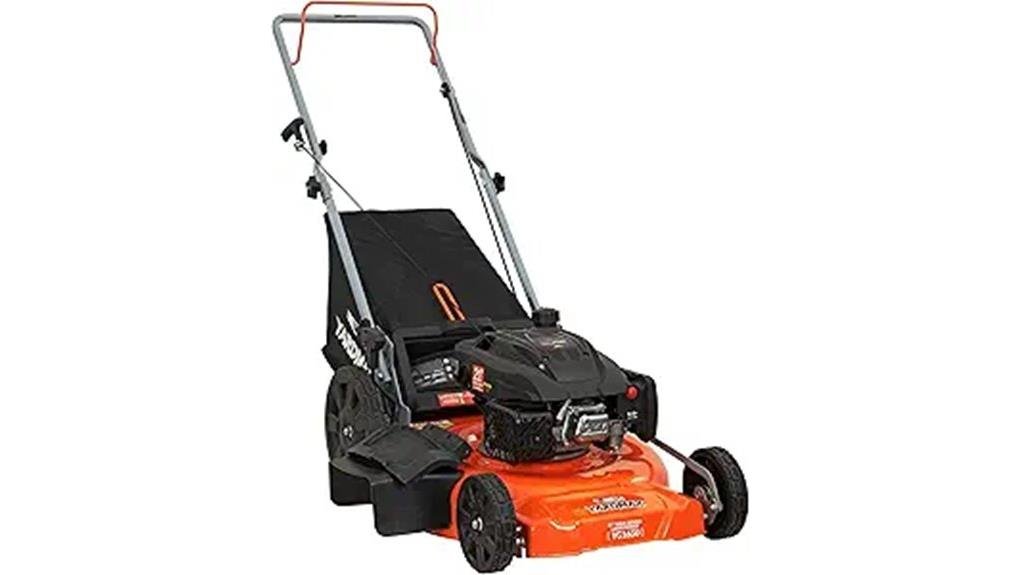
You’ll get a rugged 170cc engine and a 21″ MAXFlow volute deck that deliver steady torque, consistent RPM under load, and efficient mulching, bagging, or side discharge. The stamped 16‑gauge one‑piece deck and balanced heavy‑duty blade cut predictably across typical lawns; a single‑lever seven‑position height adjuster (1.25″–3.75″) adds flexibility. High rear wheels aid tracking and maneuverability, and routine maintenance keeps longevity. Keep going and you’ll find detailed setup, maintenance, and comparison notes.
Some Key Takeaways
- Powerful 170cc engine delivers consistent torque for mulching, bagging, and side discharge without stalling under load.
- MAXFlow volute 21″ deck improves lift and clippings suspension for effective mulching and even discharge.
- Seven-height single-lever adjustment (1.25″–3.75″) provides predictable cutting across turf types and seasons.
- Sturdy 16-gauge one-piece stamped deck and high-rear wheels boost durability, tracking, and maneuverability on uneven ground.
- Routine maintenance (oil at 5 hrs then 50-hr intervals, fuel stabilizer, air filter checks) prevents starting and performance issues.
Performance and Features: How the 170CC Engine, MAXFlow Deck, and 3‑In‑1 System Work Together
The 170cc engine delivers the torque and RPM range needed to drive the heavy-duty blade through thick turf while the MAXFlow volute spiral deck channels air to optimize lift and clippings suspension for either mulching, bagging, or side discharge. You’ll notice consistent torque delivery across load changes, supporting the 3-in-1 blade’s cutting and mulching modes without sudden stalls. The sealed one-piece deck reduces vibration, improving component longevity. Fuel efficiency is reasonable for this class, given mechanical simplicity. Expect moderate noise levels typical of push mowers; sound dampening is limited but acceptable. Controls are intuitive, so you’ll fit right in. It’s well suited for homeowners who enjoy maintaining their outdoor spaces and may appreciate additional essential gear for routine care and maintenance.
Cutting Quality and Height Adjustment: 21 Blade, Seven Heights, and Mulching Results
Building on how the 170cc engine and MAXFlow deck maintain consistent torque and airflow under load, you’ll find the 21-inch blade and seven-height adjustment system produce predictable cutting results across typical lawn conditions. You’ll notice precise height selection from 1.25″ to 3.75″ via the single-lever adjustment, letting you match turf species and season. The heavy-duty blade’s balance minimizes vibration, preserving cut quality and reducing tear. Mulching performance is effective when clippings are short and dry; the volute deck and blade geometry finely chop clippings for even distribution. Expect clear grass striping at moderate speeds with steady overlap. This mower is designed specifically for homeowners who enjoy their outdoor spaces and value battery-powered mowers as a modern alternative.
Build, Maneuverability, and Durability: Deck, Wheels, and Long‑Term Use Considerations
Because you rely on a rugged platform for consistent performance, the Yardmax’s 16‑gauge, one‑piece stamped steel deck and MAXFlow volute geometry give you a stiff, low‑vibration foundation that resists flex under load and helps maintain cutting geometry over time. The high-rear-wheel configuration improves tracking over uneven ground and reduces steering torque, letting you pilot tight turns with predictable feedback. Metal fasteners and welded joints are serviceable; address rust prevention by coating exposed edges and storing dry. The handle ergonomics are thoughtfully angled with vibration-dampening mounts, so extended use feels controlled and invites team-like ownership of yard care. Consider pairing the mower with reliable drive belts designed for outdoor equipment to keep power transfer efficient and reduce downtime.
Setup, Maintenance, and Common Troubleshooting Tips
Having covered how the deck, wheels, and hardware affect long‑term performance, you’ll want to follow a precise setup and maintenance routine to keep those benefits intact and to minimize common failures. Assemble per manual torque specs, verify blade spacing and perform blade balancing after any sharpening. Use fuel stabilizer for seasonal storage and always drain carburetor if fuel sits over 30 days. Change oil after first five hours, then every 50 hours; inspect air filter, spark plug, and belt wear regularly. For common issues—hard start, poor cut, vibration—check fuel flow, blade mounting, deck debris, and throttle linkage before replacing parts. Regularly checking tire pressure and lubrication points can prevent uneven wear and improve handling, especially when using push mowers on varied terrain.
Who Should Buy It and How It Compares to Similar 21 Push Mowers
When you’re choosing a 21-inch push mower, the YARDMAX 170cc stands out for homeowners who need a durable, higher-torque machine for medium-to-large yards with uneven terrain and heavier grass; its 170cc engine, 16-gauge one-piece stamped MAXFlow deck, and high rear wheels give you better airflow, mulching efficiency, and obstacle clearance than many entry-level 160cc models. You should buy it if you value robust construction, seven-height range, and reliable 3-in-1 versatility. It’s less ideal for budget buyers or small yards where lighter, cheaper 21-inch mowers with lower displacement and simpler decks deliver adequate performance and lower cost. It’s a good fit for homeowners who prioritize self-propelled mowers and durable outdoor equipment for regular yard care.
Some Questions Answered
Is Assembly Required Before First Use?
Yes — you’ll need to assemble it before first use. Expect about 30–60 minutes of assembly time if you’re comfortable with basic tasks. You’ll need common setup tools like wrenches and screwdrivers; the manual specifies torque points and blade alignment. Follow step-by-step instructions for handle, grass bag, and blade fitting, double-check fasteners, and verify height-lever operation. You’ll feel supported completing the technical setup and ready to mow safely.
What Type of Oil and Fuel Does It Require?
Use SAE 10W-30 multigrade motor oil (check your manual; some operators prefer synthetic oil for better temperature stability) and fill to the specified crankcase capacity. For fuel, use fresh, clean, ethanol free fuel (or gasoline with no more than 10% ethanol if unavoidable) with an octane rating of 87 or higher. You’ll want to avoid stale fuel, drain before storage, and follow maintenance intervals for peak performance.
Are Replacement Parts Widely Available?
Yes — replacement parts are generally available. You’ll find aftermarket blades and engine gaskets through major retailers and specialty suppliers; OEM components show up less consistently. You’ll want to verify part numbers and specifications (blade length, gasket material, bolt pattern) before buying. Join owner forums or local shop groups to confirm compatibility and share sourcing tips; that community helps guarantee you’re getting durable, correct parts and avoids fitment surprises.
How Loud Is the Mower in Decibels?
Typical measured engine noise runs around 85–95 dB at the operator position, so you’ll notice substantial sound levels during use. You’ll want hearing protection for prolonged mowing, since exposures above 85 dB can cause damage. The engine noise fluctuates with throttle and load; mulching or thick grass raises levels. Choose snug earplugs or earmuffs rated for 25–30 dB reduction to keep your hearing safe and join other careful operators.
Is There a Warranty and How Long Does It Last?
Yes — you get a limited warranty, typically one to three years depending on retailer and region. You’ll want to confirm warranty transferability; some policies allow it, others limit coverage to the original purchaser. For a claim, follow the manufacturer’s claim process: register the product, keep receipts, document defects, and contact support for authorization and repair or replacement. You’ll feel supported when the steps are clear and fair.