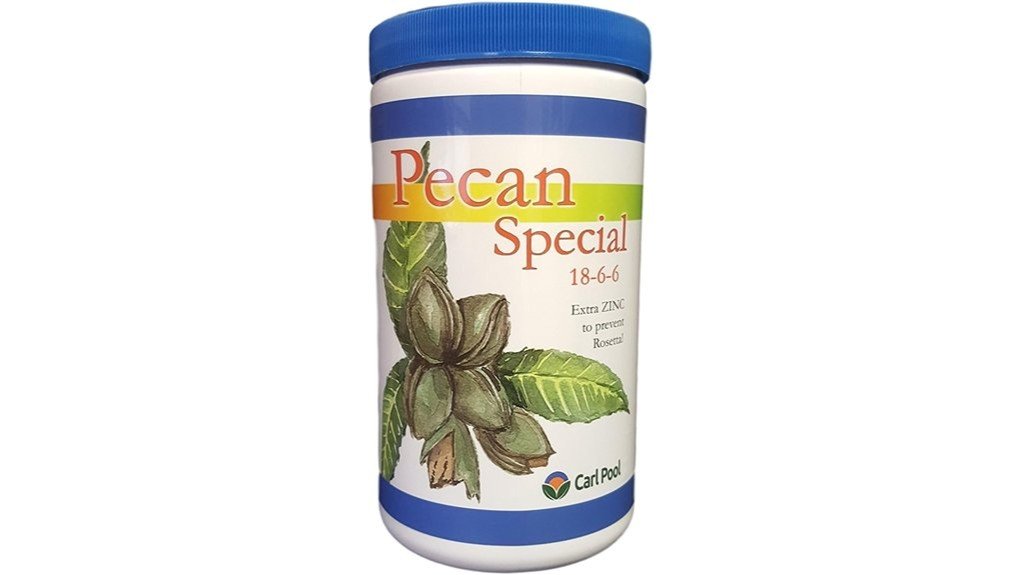
You’ll get an 18-6-6 granular designed to push rapid foliage and shoot growth while supplying zinc to prevent pecan rosette and aid micronutrient uptake in high‑pH soils. Apply around the dripline per trunk size after a soil test, late winter to early spring with a possible midseason split; avoid trunk contact and water in. It’s practical for small to mid‑size orchards, gives fast canopy recovery, but watch salts and spreader consistency—keep going for detailed rates and comparisons.
Some Key Takeaways
- High 18-6-6 NPK drives rapid foliage and shoot recovery in pecans, especially after stress or pruning.
- Added zinc helps prevent rosette disease and improves micronutrient uptake in high-pH or chelated soils.
- Best applied as surface band or broadcast around the dripline in late winter/early spring, with midseason split if needed.
- Use soil test to set N targets, avoid trunk contact, water in granules, and follow label mixing and safety instructions.
- Packaged as a 24‑ounce granule for spot or small-orchard use—convenient but costlier per pound than bulk fertilizers.
What’s in Carl Pool Pecan Special (18-6-6) and Why Zinc Matters
Although the 18-6-6 ratio might look like just numbers, it tells you the fertilizer’s active nutrient mix: 18% nitrogen for foliage growth, 6% phosphorus to support root development and flowering, and 6% potassium for overall vigor and stress resistance. You get granular NPK plus added zinc to prevent zinc deficiency and rosette disease in pecans. That zinc aids micronutrient uptake, especially where soil chelation or high pH limits availability. Use this product to correct leaf chlorosis tied to zinc scarcity. The formulation addresses common pecan needs, letting you steward trees confidently with predictable, technical nutrient support. Monitoring soil pH and nutrient levels with soil pH monitoring helps ensure zinc and other nutrients remain available in your lawn and landscape.
How to Use It: Application Rates, Timing, and Mixing Tips for Pecan Trees
When you’re ready to feed pecan trees, apply Carl Pool Pecan Special (18-6-6) as a surface band or broadcast around the dripline, following rates based on tree age and trunk diameter to avoid over-application and salt stress. Do soil testing first to set nitrogen targets; younger trees need smaller, more frequent applications for root stimulation, mature trees benefit from seasonal splits. Apply in late winter to early spring and again midseason if indicated. Broadcast evenly, avoid direct trunk contact, and water after application to move granules into the root zone. Follow label mixing instructions and safety precautions precisely. Consider a baseline soil test to determine existing nutrient levels before making amendments.
Real-World Performance: Results, Benefits, and Common Issues From Users
Because users report consistent visual and yield improvements, you’ll see that Carl Pool Pecan Special (18-6-6) delivers predictable nitrogen-driven leaf and shoot growth while the included zinc helps reduce rosette incidence on susceptible varieties. You’ll notice quicker canopy recovery and cleaner tissue in trial plots; application anecdotes point to stronger spring flushes and fewer zinc-deficiency symptoms. Expect reduced yield variability when you follow recommended rates and timing, though soil tests still matter. Common issues reported include transient salt buildup from overapplication and inconsistent granule spreading with handheld spreaders. You’ll benefit most by pairing product use with monitoring and periodic soil analysis. Our store focuses on granular lawn fertilizers designed for homeowners who maintain their lawn and landscape.
How It Compares to Other Pecan Fertilizers (Cost, N-P-K, and Zinc Content)
Having seen how Carl Pool 18-6-6 drives rapid canopy recovery and reduces rosette symptoms, you’ll next want to compare its formulation and cost against common pecan fertilizers to pick the best fit for your orchard. You’ll find Carl Pool’s 18-6-6 N-P-K offers a high nitrogen bias for vigorous leaf and shoot growth versus balanced blends (10-10-10) or higher-potassium mixes used post-harvest. In cost comparison, the small 24‑ounce granule pack is economical per application for localized treatment but pricier per pound than bulk fertilizer. Zinc levels are explicit and adequate to prevent rosette, matching specialty pecan mixes. This product is sold through a website that focuses on spray fertilizer concentrates for homeowners who maintain their lawn and landscape and offers related application resources for small-scale users, including guides on spray fertilizer concentrates.
Who Should Buy It and Quick Buying & Safety Tips
If you manage a small to mid‑size pecan orchard or need a targeted treatment for individual trees, Carl Pool 18-6-6 is a strong choice because it delivers high nitrogen for rapid canopy recovery and includes zinc to help prevent rosette; its 24‑ounce granule pack suits spot applications or trial use rather than whole‑orchard feeding. You should buy it if you want concentrated NPK with zinc for pecans, a trial pack before scaling up, or a product easy to store. Home gardeners will appreciate measured dosing. Follow safety precautions: wear gloves, avoid inhalation, keep away from children and pets, and follow label rates precisely. Consider time-release coated fertilizers for more consistent nutrient delivery and reduced leaching with slow nutrient release.
Some Questions Answered
Is This Fertilizer Organic or Synthetic?
No — it’s synthetic. You’ll be applying granules formulated from synthetic sources (18-6-6) with added zinc, so it supplies nutrients quickly rather than relying on slow organic breakdown. You’ll still support soil microbes by combining with compost or microbial inoculants, but don’t expect organic certification. If you want a biologically driven program that builds microbial life, pair this product sparingly with organic matter to balance immediate nutrient needs and long-term soil health.
Can I Use It on Non-Pecan Fruit Trees?
Yes — you can use it on non-pecan fruit trees if you monitor fruit compatibility and soil needs. You’ll apply the 18-6-6 granules at rates suited to tree size and season, avoiding overapplication near roots to protect root health. It supplies nitrogen, phosphorus, potassium and zinc, benefiting many fruit and nut species, but you should adjust timing and amount for specific trees and soil test results to guarantee best results.
Does It Come With a Measuring Scoop?
No, it doesn’t include a measuring scoop. You’ll need to supply your own for application methods and to maintain dosing accuracy. Use a calibrated scoop or kitchen scale and follow the user guide’s rates for tree size and season. By sharing tools and techniques with fellow growers, you’ll keep applications consistent and prevent over- or under-feeding. That practical approach helps everyone in your group get reliable, repeatable results.
Is It Safe for Pets and Wildlife?
You should exercise caution: pet safety isn’t guaranteed if animals ingest granules or enter treated areas. Follow label directions, keep pets and wildlife away until product dissolves or is watered in, and store granules securely. To minimize wildlife impact, apply only recommended amounts, avoid runoff into habitat, and monitor treated trees. If exposure occurs, contact a veterinarian or local wildlife rehabilitator and provide product information.
What Is the Product’s Shelf Life?
You’ll generally get 2–3 years of usable shelf life when stored dry and cool; storage stability drops if exposed to moisture or heat. Check expiry indicators like clumping, odor changes, or visible granule breakdown to assess viability. Keep the bag sealed, off concrete, and in a ventilated area to maintain nutrient balance. Share storage tips with others to keep your community’s supplies reliable and consistent.