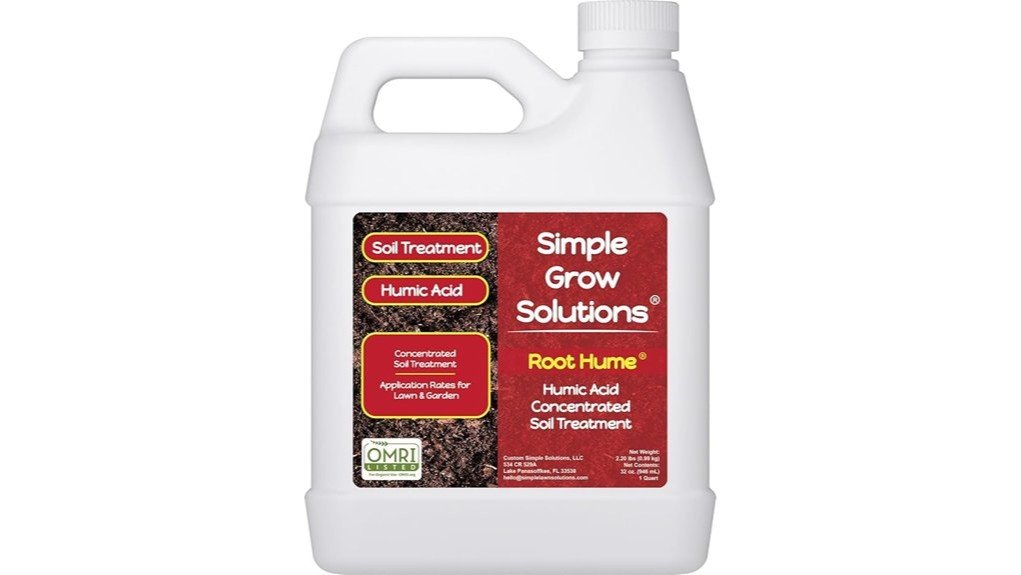
You’ll find Root Hume is a concentrated liquid humic acid primer that helps you build stronger roots, improve soil structure, and make nutrients more available across lawns, gardens, and containers. It supplies soluble carbon chains and carboxyl/phenolic groups to chelate nutrients, boost cation exchange, and stimulate beneficial microbes. Apply diluted per label with common sprayers; pair with fertilizers or soil amendments for best results. Keep going to see detailed rates, tank‑mix tips, and real‑world results.
Some Key Takeaways
- Concentrated humic acid liquid that primes soil biology and boosts root development across lawns, gardens, and containers.
- One 31.98 fl oz bottle covers about 3,200 sq ft; dilute proportionally for smaller areas.
- Improves nutrient availability, soil structure, water retention, and stimulates beneficial soil microbes.
- Use at establishment, growth flushes, or monthly; compatible with common sprayers and watering cans.
- Complements fertilizers and soil amendments but does not replace nutrients; test tank mixes with caution.
What This Review Covers and Who Should Use Root Hume
Because you want clear guidance before adding anything to your lawn or garden, this review focuses on Root Hume’s formulation, application, and where it fits into existing fertility programs. You’ll get concise info on how this concentrated liquid humic acid supports soil biology and promotes root development across lawns, gardens, and containers. You’ll learn who benefits most—home gardeners, turf managers, and pros needing a compatible enhancer—and practical application methods, coverage, and timing. This review keeps recommendations specific, evidence‑oriented, and inclusive, so you can decide confidently whether Root Hume belongs in your fertility plan without guessing or unnecessary extras. Many homeowners choose organic humic acid granules to complement liquid products like Root Hume because organic humic acids enhance soil structure and microbial activity.
What Root Hume Is Made Of and How Liquid Humic Acids Work
Now that you know where Root Hume fits in a fertility program, let’s look at what’s inside and how it acts in soil and on roots. Root Hume is a concentrated liquid humic acid blend derived from high‑quality humate sources; its humate composition supplies soluble carbon chains, carboxyl and phenolic groups that chelate nutrients and improve cation exchange. You’ll see faster nutrient availability, improved soil structure, and water retention. It also boosts microbial stimulation—feeding beneficial soil microbes that cycle nutrients and protect roots. Use it as a consistent biological primer to strengthen root growth and maximize fertilizer efficiency without replacing nutrients. Many homeowners apply liquid humic acid products regularly to enhance lawns and overall landscape health.
How to Apply Root Hume: Rates, Methods, and Compatibility
When you apply Root Hume, follow precise rates and methods to get consistent root stimulation and nutrient efficiency without overdoing inputs. You’ll measure per label: one quart covers about 3,200 sq ft; for smaller areas use proportional dilution. Apply with a hose‑end, backpack, pump‑up sprayer, or watering can for potted plants. Respect application timing: use at establishment, during growth flushes, or monthly for maintenance. You can tank mix with compatible fertilizers and foliar feeds, but always test a small area first and avoid strong oxidizers. Wear gloves, calibrate equipment, and record mixes so your group shares consistent results. For best overall results on lawns and landscapes, consider pairing Root Hume with quality soil conditioner granules to improve structure and moisture retention.
Real-World Performance: Results on Lawns, Gardens, and Potted Plants
Regularly, you’ll notice Root Hume delivering measurable improvements in soil structure and plant vigor across lawns, garden beds, and containers when applied at the recommended rates. You’ll see faster turf recovery after stress or overseeding, with tighter soil aggregation and improved moisture retention that shortens recovery windows. In garden beds, root density and nutrient uptake increase, producing steadier growth and bloom set. For potted plants, expect enhanced container vigor, reduced watering frequency, and less transplant shock. Use it alongside your fertilizer program, follow rates, and monitor results over several cycles—you’ll join others who get consistent, predictable benefits. Many homeowners pair such amendments with organic matter blends to enhance soil health and long-term landscape resilience.
Value, Packaging, and Buying Considerations for Home and Pro Users
Whether you’re a weekend gardener or a turf pro, Root Hume offers a compact, cost‑effective way to boost soil health without overhauling existing fertilizer plans. You’ll appreciate the 31.98 fl oz bottle for trial use or spot treatments; pros may bulk‑buy multiple units to match coverage needs (3,200 sq ft per bottle). Do a cost comparison against granular humates and liquid concentrates—Root Hume’s concentrated formula often lowers per‑area cost. Packaging is durable and labelled for spray dilution; shelf stability is good when stored cool and sealed. Buy where returns and seller support align with your community standards. Consider pairing Root Hume with biochar soil amendments to further enhance long‑term soil structure and nutrient retention.
Some Questions Answered
Is Root Hume Safe for Organic-Certified Farms?
Generally yes—you’ll find Root Hume can fit into organic certification if your certifier accepts humic acid derived from natural humate sources. You’ll need to document ingredient sourcing and supply-chain practices for the certification process and confirm with your certifying agency. Keep records of product labels, manufacturer statements, and application rates. That practical transparency helps you belong to certified growers, demonstrates compliance, and speeds approval through the certification process.
Does It Contain Any Synthetic Pesticides or Herbicides?
No, it doesn’t contain synthetic pesticides or herbicides. You’ll find Root Hume is a concentrated humic acid liquid derived from natural humate, with no added synthetic residues; the manufacturer focuses on organic‑style inputs. While the label doesn’t list pesticide testing data, you can request pesticide testing or certificates from the seller for confirmation. You’ll feel confident asking for lab results to verify purity and compliance for your operation.
Can Root Hume Freeze During Shipping or Storage?
Yes — Root Hume can face freeze risk during shipping or storage if exposed to freezing temperatures. You’ll want to avoid freezing because thaw effects can alter viscosity and suspension, making mixing harder and dosing inconsistent. Store the bottle in a cool, nonfreezing place, insulated during cold transit, and gently agitate after thawing to restore uniformity. That keeps your product reliable and helps you get consistent results.
Are There Temperature or pH Limits for Storing the Liquid?
Yes — you should store it in moderate storage temp to protect pH stability and product integrity. Keep the liquid between about 40°F and 100°F, avoiding freezing or prolonged heat above 100°F. Maintain a sealed container out of direct sun; that preserves pH stability and concentration. You’ll want a dry, ventilated spot with stable temperature so you and your fellow gardeners can rely on consistent performance.
Is a Dilution Chart Included on the Bottle Label?
Yes — the bottle includes a label dilution chart and clear usage guidance you can follow. You’ll find concentration ratios for common applications, recommended spray volumes, and coverage estimates. Follow those directions when mixing with other fertilizers or applying via hose‑end, backpack, or watering can. You’ll feel confident using it because the label gives practical, step‑by‑step guidance tailored to lawns, gardens, and container plants.