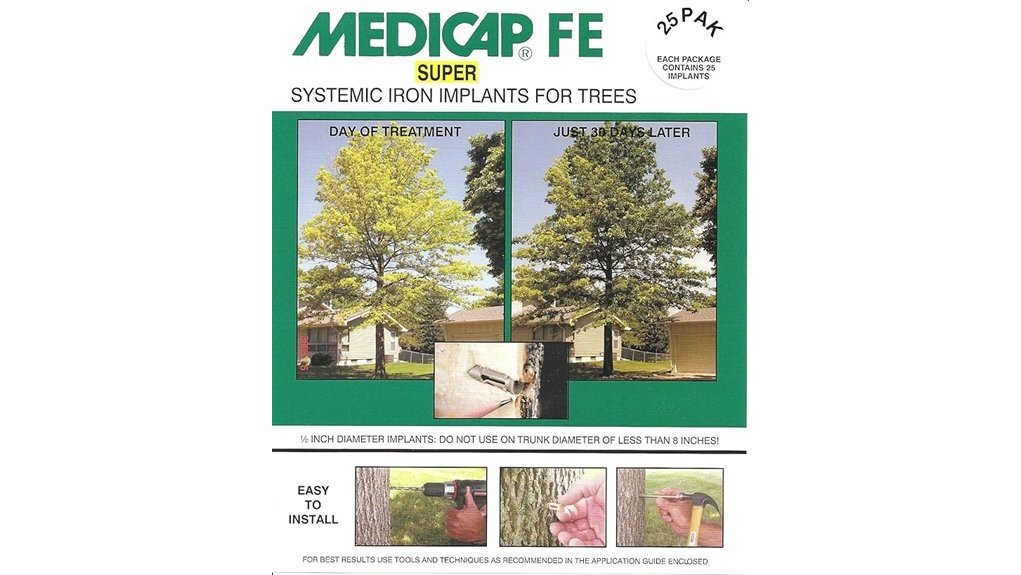
You’ll get a 25‑pack of 1/2‑inch Medicap FE implants that deliver chelated iron directly into the sapwood for rapid xylem uptake. You’ll drill 1/2‑inch holes in the lower trunk, tap implants flush to seal wounds, and expect visible leaf recovery in 14–21 days with effects lasting 2–3 years. Best on calcareous or sandy soils and susceptible species like oaks and citrus; installation is invasive but predictable. Continue for installation tips, dosage and cost guidance.
Some Key Takeaways
- Medicap FE FEP425 delivers chelated iron directly into sapwood, correcting iron deficiency within 14–21 days and lasting 2–3 years.
- Cartridge-style implants plug wounds flush, providing measured dosing and simple installation for trees ≥8-inch trunk diameter.
- Best performance on calcareous or sandy soils and susceptible species like oaks, birch, and citrus.
- Installation is invasive and labor-intensive—pre-drill 1/2-inch holes at 4–6 inch spacing and monitor wound closure.
- Alternatives include foliar chelates or soil-applied iron when less invasive or lower-cost options are preferred.
Medicap FE 1/2 SUPER at a Glance: What’s in the 25-Pack and Who It’s For
What’s inside the Medicap FE 1/2 SUPER 25-pack and who should use it? You get 25 cartridge-style 1/2-inch diameter implants formulated for systemic iron delivery; cartridge heads plug wounds on installation. 25 pack contents include Medicap FE implants (Model FEP425), labeled dosing per trunk diameter, and manufacturer identifiers for inventory. You’ll use these on trees ≥8-inch trunk diameter—target users are arborists, landscapers, and community stewards managing oaks, maples, citrus, and other iron-deficient species in calcareous or sandy soils. You’ll install at 4–6 inch spacing; each treatment persists 2–3 years under normal conditions. These implants are particularly useful for improving tree health in lawns and landscapes treated with gypsum products to amend soil structure and drainage for better root growth and nutrient uptake (soil amendment).
How the Implants Work and How Fast Trees Absorb Iron
Because the implants deliver chelated iron directly into the sapwood, the active ingredient bypasses insoluble soil compounds and is taken up systemically via the xylem, moving with transpiration stream into leaves and growing tissues. You’ll see systemic uptake proceed from trunk to canopy; under normal moisture it distributes within 14–21 days. Cellular transport restores chlorophyll synthesis in deficient tissues, producing measurable foliage response in emerging leaves and reduced interveinal chlorosis. The implant form maintains localized concentration, limits soil interactions, and sustains availability for 2–3 years. You’ll appreciate predictable kinetics and consistent canopy recovery when treating susceptible species. These implants are used alongside liquid lime products to support overall soil and plant health.
Step-by-Step Installation: Drilling, Spacing, and Sealing for Best Results
Now that you know how implants deliver chelated iron systemically and how quickly the tree will absorb it, proper placement and sealing determine treatment effectiveness and wound closure. You’ll pre-drill 1/2-inch holes in the lower trunk at 4–6 inch spacing, perpendicular to the cambium, keeping drill speed steady to minimize bark damage. Follow recommended application timing—avoid drought stress and frost. Tap each 1/2-inch MediCap FE implant flush; the cartridge head acts as a plug. Inspect and record sites for wound care; monitor closure over months. Use consistent technique so you and your crew achieve uniform, reliable results. For homeowners purchasing products like these there are useful guidelines on choosing bulk lawn fertilizer that can help you assess product quality and value.
Performance, Longevity, and What to Expect for Different Tree Species and Soils
Although uptake rates vary by species and soil, you can expect MediCap FE 1/2 SUPER implants to deliver measurable iron correction within 14–21 days and maintain effective tissue levels for about 2–3 years per treatment. You’ll see improved leaf coloration and incremental recovery of root vigor in susceptible species such as oak, birch, and citrus, especially on calcareous or sandy soils. Performance depends on soil moisture and species variability; dry, compacted soils slow translocation. Monitor responsive species more closely; tolerant species may show modest change. Treatments integrate with routine care, and implant sites typically seal as cambium heals. These products are aimed at homeowners maintaining their lawn and landscape and can be incorporated into regular maintenance routines with proper application and timing, especially when addressing fast-acting lime products.
Pros, Cons, and Buying Guidance: Dosage, Cost per Treatment, and Alternatives
How do you balance effectiveness, ease of use, and cost when choosing MediCap FE 1/2 SUPER implants? You’ll appreciate clear pros: predictable 2–3 year efficacy, cartridge-style dosing, minimal downtime, and compatibility with many species and calcareous soils. Cons include invasive installation, per-tree labor, and upfront pack cost. Dosage: 10 implants for a 14″ trunk; scale linearly for larger diameters. Do a cost breakdown by dividing pack price by implants used per treatment and factoring re-treatment interval. Consider alternative formulations—foliar chelates or soil-applied iron—for less invasive, more frequent maintenance or budget constraints. For homeowners focused on lawn and landscape care, topdressing and proper soil amendments can complement tree implant treatments by improving overall soil health and nutrient retention, especially when integrated with topdressing practices.
Some Questions Answered
Are These Implants Safe for Pets and Wildlife?
Yes. You’re generally safe; pet safety risks are low because implants are inserted into the trunk and cartridge heads plug wounds, minimizing wildlife exposure. You should still avoid leaving loose implants accessible and monitor treated trees until wounds close. Follow installation protocol, use recommended spacing and depth, and treat trees above specified trunk diameter. If pets or wildlife ingest an implant, contact a veterinarian or local wildlife rehabilitator immediately.
Can Implants Be Used on Fruit Trees Close to Harvest?
Yes — you can use implants on fruit trees close to harvest, but avoid applying within a few weeks of picking. The systemic iron moves through the tree in 14–21 days, so plan treatment to guarantee uptake well before harvest timing. Properly timed implants improve fruit quality by correcting chlorosis without leaving residues on fruit. You’ll also protect tree health; follow spacing and installation guidance for consistent results.
Do Implants Interact With Other Tree Treatments or Fertilizers?
Yes—you can combine implants with most foliar sprays and soil fertilizers, but check foliar compatibility and timing. You’ll avoid tank-mix issues since implants deliver iron internally, yet concurrent heavy soil acidifiers or strong biocides can alter uptake and stress the soil microbiome. Space applications: install implants, then resume foliar feeding after 14–21 days; avoid simultaneous root drenches with harsh chemicals to protect microbial balance and optimize iron movement.
How Should Unused Implants Be Stored Long-Term?
Store unused implants in cool storage, keeping them dry and away from sunlight. Place cartridges in sealed containers or original packaging to prevent contamination and moisture ingress. Label containers with date and lot number, and keep at stable temperatures away from freezing or excessive heat. Your team’ll maintain consistency by storing all units together, rotating stock by date, and inspecting seals periodically to safeguard integrity for up to the product’s stated shelf life.
Are There Any Regulatory Restrictions or Disposal Rules?
Yes. You must follow environmental regulations; unused implants and cartridges may be classified as hazardous waste depending on local rules. Don’t dispose in regular trash or drains. Store securely, label clearly, and contact local waste authorities or hazardous waste facilities for approved disposal or recycling options. If regulations require, use licensed hazardous waste contractors. You’re supported when you check municipal guidance to make sure compliant, safe handling and disposal.