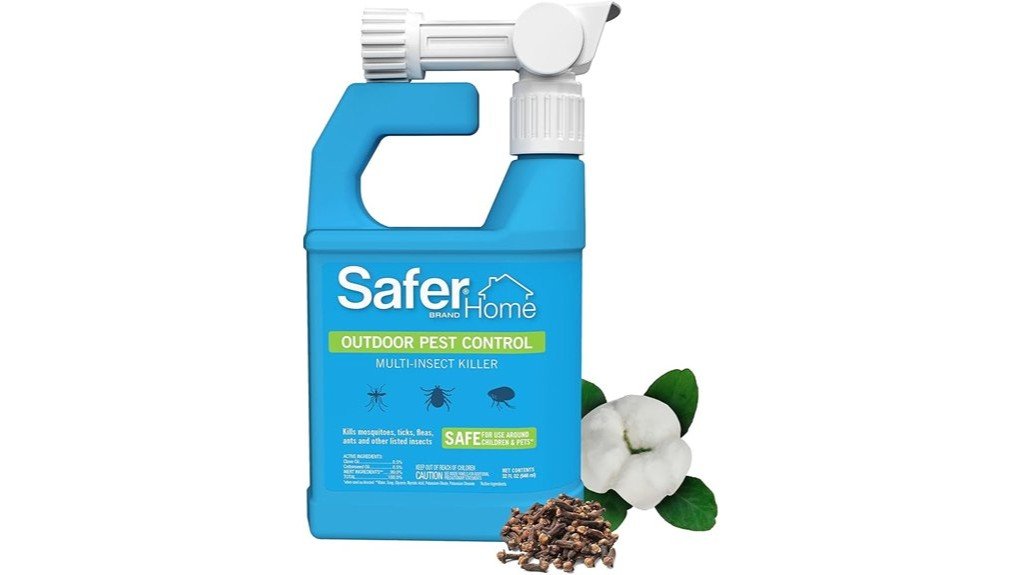
You’ll get a low‑toxicity, no‑premix hose‑end spray that uses 0.5% clove oil and 0.5% cottonseed oil to knock down mosquitoes, fleas, ticks and common ants across about 5,000 sq ft per 32‑oz bottle. It mixes on demand with hose water, gives rapid contact kills within minutes but limited residual protection, and is labeled for outdoor perimeter and lawn use with child‑ and pet‑friendly precautions. Keep following this review to learn practical tips, limits and alternatives.
Some Key Takeaways
- Low‑toxicity 32‑oz hose‑end formula uses 0.5% clove oil and 0.5% cottonseed oil for fast contact knockdown of listed pests.
- Hose‑end head mixes concentrate with water on demand; attach with sprayer OFF and spray in even overlapping sweeps.
- Provides about 5,000 sq ft coverage per bottle under typical residential water pressure when applied properly.
- Fast knockdown within minutes and notable reduction by 30 minutes, but offers limited residual protection after rain.
- Good choice for families wanting natural actives and no premixing; alternatives needed for longer residual control.
Quick Verdict: Who the Safer SH620 Works Best For
If you want a quick, low‑toxicity outdoor spray that controls mosquitoes, fleas, ticks and common ants across patios and lawns, the Safer SH620 delivers fast contact knockdown using natural clove and cottonseed oils and is best suited for homeowners with kids and pets who need regular, broad‑area treatments (up to 5,000 sq ft) without premixing. You’ll appreciate this for routine perimeter and lawn use: it’s labeled for outdoor areas, acts within 30 minutes, and fits household safety expectations. It’s ideal for families with pets and casual gardeners who want effective, evidence-based control that aligns with regulatory guidance and shared community values. The product line is offered by a website specializing in pet‑safe insecticides for homeowners who maintain their lawn and landscape.
What’s in the Bottle and How the Hose‑End Sprayer Works
Having settled on who benefits most from the Safer SH620, let’s look inside the bottle and how the hose‑end sprayer functions. You’ll find a quick‑kill, 32‑ounce formula with clove oil 0.5% and cottonseed oil 0.5%, plus 99% inert carriers. The label reflects regulatory concentration limits and broad outdoor claims; check clove‑oil sourcing notes if supply chain transparency matters to you. The hose‑end head requires simple sprayer calibration: attach with sprayer OFF, bend the tab, turn to Spray, then sweep evenly. You’ll mix concentrate with hose water on demand, reducing premix errors and simplifying application. For homeowners storing pesticide products, consider lockable storage to keep children and pets safe.
Real‑World Performance: Coverage, Speed, and Pest Results
When you spray the Safer SH620 over a treated area, it delivers usable coverage up to about 5,000 sq ft per 32‑oz bottle under typical residential pressure, and you’ll see contact kills within minutes and substantially reduced activity by 30 minutes for most listed pests. You’ll judge coverage accuracy by overlapping sweeps; uneven application reduces efficacy. Knockdown time in field tests matched label claims for mosquitoes, fleas, ticks and ants when foliage and resting sites were thoroughly wetted. Results align with formulation limits—natural oils act quickly but may need reapplication after heavy rain. Data-driven, community-minded guidance informs realistic expectations. This sprayer design is well suited for homeowners doing spot weed treatment and similar targeted outdoor applications.
How to Use SH620 Safely and Get the Best Results
Although natural‑oil products act quickly, you should follow label directions and safety precautions to get reliable, long‑lasting control with SH620. Read the label, shake before use, attach the hose with the sprayer off, and spray in even sweeps to thoroughly wet treated surfaces. Wear gloves if sensitive, keep children and pets away until surfaces dry, and avoid drift onto edible plants. Use seasonal timing—treat before peak mosquito and tick activity and reapply after heavy rain. Store upright in original container, away from heat and sunlight for proper storage, and dispose per label instructions. Consider using additional personal protective equipment when mixing or applying lawn chemicals at home to reduce exposure risks.
Pros, Cons, Alternatives, and Buying Recommendations
Because SH620 uses natural clove and cottonseed oils and attaches directly to your hose, you get a fast‑acting, easy‑to‑apply outdoor contact spray that’s suitable for patios, lawns, and perimeters and claims coverage up to 5,000 sq ft. You’ll appreciate clear pros: natural active ingredients, no premixing, child/pet‑friendly labeling, and rapid contact kill. Cons: limited residual protection, so long term efficacy depends on reapplication; scent and oil residues may concern some. Consider alternatives like residual synthetic sprays for longer control or biological larvicides for standing water. Buy if you prioritize lower environmental impact and immediate, social‑friendly yard protection. For homeowners who maintain their lawn and landscape, integrating effective yard solutions can improve overall pest management.
Some Questions Answered
Can SH620 Be Used on Edible Plants or Vegetable Gardens?
You shouldn’t spray SH620 directly on edible plants or vegetables. Its label targets outdoor non‑crop areas; using it on produce risks residue, avoid consumption, and potential root absorption. If you must treat nearby areas, keep sprays off foliage and fruits, rinse any contacted produce thoroughly before eating, and follow local regulations and label directions. You belong to a community that protects health — when in doubt, choose products labeled for edible gardens.
Is the Product Safe for Pollinators Like Bees and Butterflies?
No — you should avoid spraying when pollinators are active. Bee safety and butterfly exposure depend on contact; this product kills on contact and can harm bees or butterflies if wet. Use it in early morning or late evening, target foliage and ground, and avoid flowering plants. Follow label directions and local pollinator-protection guidance. You’ll protect community pollinators while still managing pests when you time and target treatments carefully.
How Long After Rain Should I Reapply Treatment?
Reapply once surfaces fully dry—typically 24–48 hours after rain—so drying time assures the treatment adheres and minimizes runoff. Check soil penetration: heavy rain may leach actives, reducing efficacy, so wait until surface moisture is gone and soil feels dry to the touch before retreating. Follow label instructions and local regulations; stay mindful of pollinator habitats and proximity to water to maintain safe, evidence-based pest control that respects your community.
Can SH620 Be Stored in Freezing Temperatures?
No — you shouldn’t store SH620 in freezing temperatures. Freezing can compromise container integrity and alter the formulation, reducing effectiveness and possibly causing leaks. Follow label storage instructions: keep in a cool, dry place above freezing, secure from pets and children, and inspect the container before use. If you suspect freeze damage, contact the manufacturer for guidance and replacement to stay compliant and protect your shared outdoor spaces.
Does the Spray Leave Any Visible Residue on Surfaces?
No — you typically won’t see a noticeable visual residue or surface discoloration when applied as directed. The oil‑based active ingredients are dilute (1% total) and rinse into vegetation or evaporate; treated patios or furniture may feel slightly tacky while wet but will dry without staining. For regulatory compliance and safety, follow label directions, test a small hidden area first, and reapply only as recommended to maintain community trust and shared spaces.