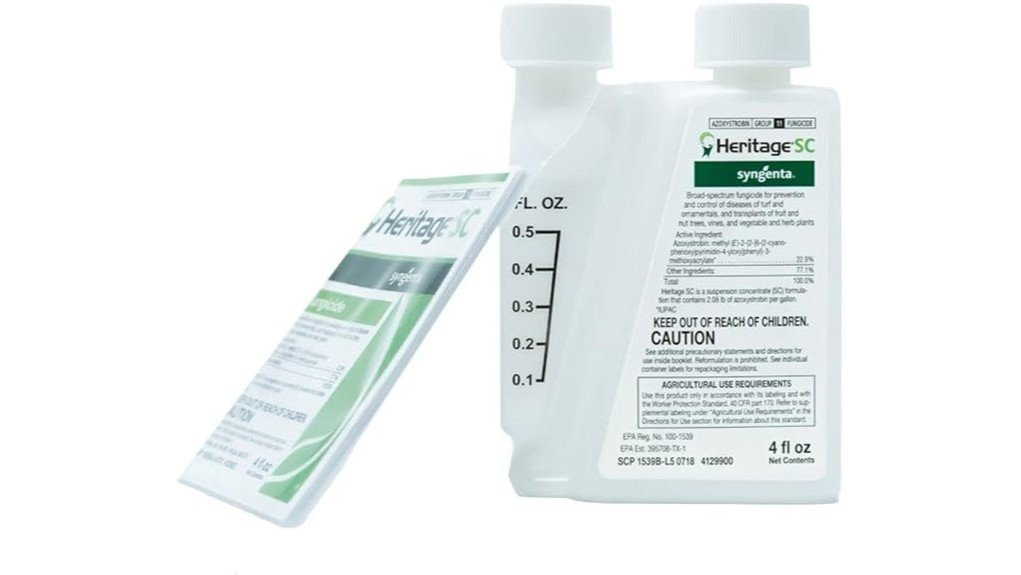
You’ll find Heritage SC 4 oz delivers azoxystrobin, a QoI fungicide that systemically blocks cytochrome bc1 electron transport to stop spore germination and mycelial growth. It’s proven on brown patch, Pythium, and snow mold when applied preventively at label rates with proper calibration, nozzle selection, and split applications. Use on cool- and warm-season turfs during high disease risk, wear PPE, and rotate chemistries for resistance. Continue for application steps, compatibility, and troubleshooting guidance.
Some Key Takeaways
- Heritage SC (azoxystrobin) is a systemic QoI fungicide effective preventively against brown patch, Pythium spp., and snow mold.
- Typical 4 oz bottle suits targeted, preventive treatments on high-value lawns or small greens, covering under an acre per interval.
- Apply at label rates with calibrated equipment, split applications, and avoid spraying during heat stress or imminent rain.
- Single-site mode risks rapid resistance; rotate chemistries, limit applications, and use cultural controls.
- Not ideal for large acreage due to cost-per-acre; consider larger containers or alternative chemistries for routine programs.
How Heritage SC 4oz Works and Which Turf Diseases It Controls
Heritage SC 4oz uses azoxystrobin, a QoI (quinone outside inhibitor) fungicide, to disrupt fungal mitochondrial respiration by blocking electron transport at the cytochrome bc1 complex, which halts spore germination and mycelial growth. You’ll see systemic action moving through plant tissues after uptake, offering both preventive curative benefits when applied appropriately. Trials and label data show efficacy against over 20 turf pathogens, including brown patch, Pythium spp., and snow mold. You’ll rely on its suspension concentrate formulation for uniform coverage and predictable translocation. Use of resistance‑management practices preserves activity and supports community confidence in long‑term disease control. This product is marketed for homeowners managing lawn and landscape health and complements eco-friendly fungicide practices for maintaining turf.
How to Apply Heritage SC 4oz: Timing, Rate, and Step‑by‑Step Tips
When you’re preparing to apply Heritage SC 4oz, plan timing and rates around disease pressure, turf species, and local weather to maximize preventive uptake and systemic movement. You’ll follow label rates (typically low‑use azoxystrobin rates per 1,000 sq ft), split applications at recommended intervals, and target preventive windows before peak infection. Perform pre application calibration of spray equipment to confirm uniform coverage and correct nozzle selection. Mix thoroughly in carrier volume prescribed on label, avoid overlapping swaths, and monitor wind. After application, complete post application cleanup of equipment and document rate, date, and conditions for resistance management. Consider integrating Heritage SC into an essential summer fungicides rotation for a thriving lawn.
Which Grasses, Weather Windows, and Safety Rules to Follow
After calibrating your equipment and documenting application details, match the product to the turf species, weather windows, and safety measures that optimize azoxystrobin performance and limit risk. You’ll use Heritage SC on cool season grasses (fescue, ryegrass, bent) and warm season turfs (zoysia, bermuda) per label rates. Apply during active disease risk: temperatures and leaf wetness favor pathogen growth; avoid treatments under heat stress or imminent rain. Wear protective clothing, gloves, and eye protection; follow respirator guidance if specified. Keep people and pets off treated areas until spray has dried. Store and dispose as label mandates. Consider pairing treatments with quality grass seed and proper lawn care to restore turf vigor after disease control.
Is the 4oz Bottle Worth It? Cost, Coverage, and Who Should Buy It
Wondering whether the 4 oz bottle is a practical buy? You’ll find the 4 oz Heritage SC favors targeted applications: small greens, high-value lawns, or trial use. Calculate cost effectiveness by comparing per-acre-treated rates—azoxystrobin’s label rates make 4 oz suitable for under an acre at preventive intervals. Your buyer profile: turf managers, conscientious homeowners, and professionals confirming product fit before bulk purchases. You’ll get precise dosing, minimal storage burden, and Amazon’s 30-day return safety net. It’s not ideal for large-acreage routine programs; for that, economies of scale favor larger containers and wholesale purchasing. It’s particularly useful when managing homeowner lawn care projects or small commercial greens where precise, low-volume applications are required.
If It Fails: Resistance, Common Issues, and Better Alternatives
If Heritage SC appears to fail, consider fungicide resistance, application errors, and misdiagnosis as primary causes. You should assess spray coverage, calibration, and timing against pathogen life cycle. Azoxystrobin is QoI-class; single-site modes select for resistance quickly without rotation. Implement resistance management: rotate chemistries, limit applications, integrate cultural controls (thatch reduction, irrigation timing). If diagnosis is uncertain, send samples or use lab confirmation before switching products. For persistent issues, consider alternative chemistries (e.g., SDHI or DMI classes) and tank-mix partners with different modes. You’ll maintain efficacy and community trust by documenting outcomes and sharing data. Consider broad-spectrum approaches and homeowner-friendly products like those sold for lawn fungicides to simplify integrated programs.
Some Questions Answered
Is Heritage SC Legal for Use in My State or Municipality?
You might be able to use Heritage SC, but you’ll need to confirm state regulations and local restrictions first. Check your state’s pesticide registration database and your municipality’s ordinances; consult the product label and your extension service for evidence-based guidance. If restrictions apply, your local regulatory office or certified applicator can clarify allowable uses, buffer zones, and reporting requirements. Join community forums or turf professionals to share experiences and compliance tips.
How Should I Store Leftover Mixed Solution Safely?
Store leftover mixed solution in a cool, locked area away from children and pets. Use clearly labeled containers that are compatible with chemical storage and won’t leach; include product name, concentration, date, and handler. Keep containers sealed, upright, and on secondary containment to prevent spills. Follow local disposal regulations; don’t pour down drains. You’ll protect your community and comply with safe, evidence-based proper storage practices.
Can Heritage SC Be Tank‑Mixed With Fertilizers or Herbicides?
Yes — you can tank‑mix Heritage SC with some fertilizers or herbicides, but you should always run compatibility testing first and follow label restrictions. You’ll avoid phytotoxicity or reduced efficacy by respecting application timing, using correct pH and water quality, and mixing small jar tests before full loads. If labels conflict or you lack data, separate applications to preserve performance. You belong to a safety‑minded applicator community; document results and adjust accordingly.
Are There Preharvest or Reentry Intervals for Treated Turf?
Yes — you’ll follow specified preharvest interval and reentry interval instructions from the label. The label provides exact preharvest interval and reentry interval times for treated turf to guarantee safety and compliance. You should read and adhere to those intervals, use appropriate PPE during reentry, and consult the product label or manufacturer for site‑specific guidance. Following label intervals keeps your crew safe and maintains regulatory conformity.
What Personal Protective Equipment Should I Buy for Application?
Wear chemical-resistant gloves (nitrile or neoprene) and long-sleeved coveralls to minimize skin contact; Glove materials should be rated for azoxystrobin exposure. Use eye protection (chemical splash goggles) and waterproof boots. For Respirator selection, choose a NIOSH-approved respirator with organic vapor cartridges and P100 particulate filters when mixing or spraying in enclosed areas. Follow label PPE and fit-test respirators. You’re part of a community prioritizing safe, evidence-based application.