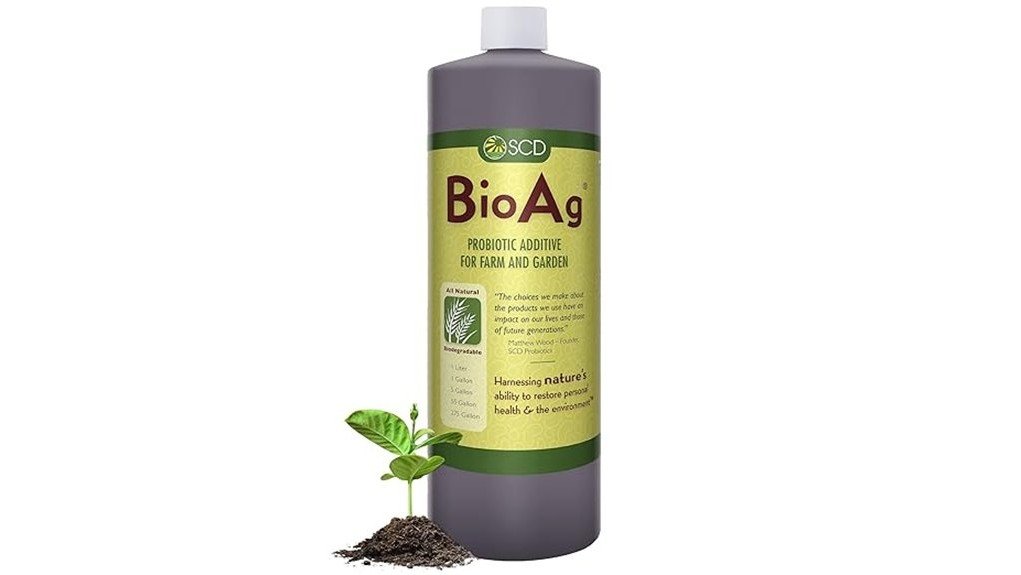
You’ll find SCD BioAg is a concentrated, OMRI-listed, 12-strain microbial inoculant you can use to rebuild root-zone biology and speed nutrient cycling in home gardens and small farms. Apply as a diluted root soak, soil drench, foliar spray, or compost activator per label rates (up to 1:1,000) to preserve viability and maximize coverage. Expect measurable seedling vigor, denser roots, faster composting within weeks and cumulative gains mid-season with consistent use—keep going to see detailed use cases and comparisons.
Some Key Takeaways
- SCD Bioag is a concentrated, OMRI-listed 12-strain probiotic blend for rebuilding soil microbiology in organic farms and gardens.
- Best used diluted (up to 1:1000) as root soak, soil drench, foliar spray, or compost activator per label directions.
- Users can expect visible seedling vigor, denser roots, faster composting, and improved nutrient cycling within weeks.
- Performance depends on baseline soil, consistent application, and environmental stressors; benefits accumulate over a season.
- Cost-effective for small-acreage users compared with frequent compost teas, and pairs well with mycorrhizal inoculants and compost topdressing.
Quick Verdict: Is SCD BioAg Worth Buying for Home Gardeners and Small Farms?
Generally, yes—SCD BioAg is worth buying for home gardeners and small farms when you want a concentrated, chemical-free microbial amendment that targets the root zone and compost systems. You’ll use it as a soil inoculant to rebuild microbial balance, improving nutrient cycling and root microbiome function. Evidence shows targeted applications at germination, transplant and compost activation yield measurable benefits; follow printed dilution and application timing for best results. You’ll join a community prioritizing regenerative, science-backed practices. The product’s concentrate format and coverage make it practical for small-acreage users seeking reproducible soil biology improvements without synthetic inputs. Boost your lawn and landscape by integrating mycorrhizal inoculants and related soil microbe products for improved plant health.
What’s in the Bottle: 12 Probiotic Strains, OMRI Listing, and Key Functions
Inside the bottle you get a live, concentrated blend of 12 proprietary probiotic microbial strains formulated to colonize root zones, accelerate organic matter decomposition, and enhance nutrient availability. You’ll find an OMRI-listed, chemical-free liquid designed for measurable soil biodiversity gains. The blend emphasizes microbial synergy: complementary taxa target cellulose breakdown, nitrogen mineralization, and phosphorus solubilization via enhanced soil enzyme activity. Documentation cites controlled strain sourcing and viability testing; batch records support consistency. For you, that means repeatable outcomes and community confidence. Labels address application safety, storage, and non-toxicity, aligning with organic standards and shared stewardship values. It’s a product intended for homeowners maintaining lawns and landscapes who want to enhance organic matter in their soil.
How to Use SCD BioAg Effectively: Dilution, Coverage, and Application Tips
Now that you know the product’s microbial profile and OMRI listing, let’s focus on practical use: dilute SCD BioAg according to on-label ratios (up to 1:1000) to preserve cell viability while achieving broad coverage—this concentration yields up to ~17,000 sq ft per liter under typical foliar or soil drench regimes. You’ll apply as a root soak, soil drench, or foliar spray; adhere to recommended foliar timing (early morning or late afternoon) to reduce UV and desiccation stress. For compost activation, mix diluted product into feedstocks during initial pile formation. Calibrate sprayers, avoid direct bloom contact, and maintain mixing hygiene. This works well when combined with quality compost topdressing compost topdressing to improve soil structure and microbial habitat.
Performance in the Garden: Expected Results, Timeline, and Real-World Pros & Cons
Expect to see measurable changes within weeks and clearer benefits across a season as SCD BioAg repopulates root zones and compost piles with its 12-strain probiotic consortium. You’ll observe improved seedling vigor, denser root mats, and faster composting rates tied to increased soil enzymes activity measured in trials. Benefits accrue cumulatively: nutrient cycling and water retention improve within weeks; yield and resilience gains become evident by mid-season. Real-world cons: results vary with soil baseline, application consistency, and environmental stressors; some gardeners report modest effects. Document your plots, expect population-dependent variability, and integrate SCD as part of a systems-based strategy. The company also targets homeowners maintaining lawns and landscapes with specialized products for biological soil activators.
Who Should Buy It and How It Compares to Alternatives (Price, Value, and Use Cases)
Although outcomes depend on soil baseline and management, you should consider SCD BioAg if you’re aiming to rebuild root-zone microbiology with a vetted multi-strain probiotic rather than relying solely on single-strain inoculants or raw compost teas. You’ll buy it if you prioritize soil restoration, measurable microbial synergy, and OMRI-listed safety for organic systems. For targeted application at roots, seeds, or compost, its dilution and coverage beat smaller single-strain bottles. In a budget comparison, cost-per-square-foot is competitive versus repeated compost teas or proprietary mycorrhizae blends. Choose it when you want scalable, evidence-based microbial support and community-minded gardening outcomes. Many homeowners focused on sustainable turf and landscape care also prefer solutions that emphasize non-toxic pest control alongside soil microbiology.
Some Questions Answered
Can SCD Bioag Be Stored Frozen or Refrigerated for Longer Shelf Life?
No, you shouldn’t freeze it; refrigerated storage at recommended storage temperature extends viability best. The live microorganism concentrate has limited freeze stability—freezing can rupture cells and reduce efficacy. Keep the product cool, dark, and sealed; refrigeration (not freezing) slows metabolic decline and preserves probiotic function. Follow manufacturer dilution/use timelines, and you’ll maintain active strain counts longer while staying part of a community using evidence-based soil biology practices.
Is This Safe to Use Around Bees and Other Pollinators?
Yes — you can use it around bees and other pollinators with caution. Evidence-based formulations aim for pollinator safety and minimal bee exposure when applied per label directions. You’ll avoid direct bloom spraying and follow dilution/application rates to reduce contact. That protects pollinators while rebuilding soil biodiversity. You’re encouraged to apply during low foraging periods (dawn/dusk) and follow OMRI-listed organic guidelines to support shared stewardship and habitat health.
Does It Interact With Synthetic Fertilizers or Chemical Pesticides?
Yes — it can be used with many synthetics, but you should test compatibility. You’ll maintain chemical compatibility by avoiding simultaneous mixing with strong oxidizers, high pH salts, or concentrated pesticides that kill microbes. Nutrient interactions may shift as probiotics mobilize NPK, so reduce overlapping fertilizer rates to prevent excess. You’ll perform a jar or patch test, stagger applications when using harsh chemicals, and monitor soil biology to protect microbial efficacy.
Can SCD Bioag Be Used in Hydroponic or Aquaponic Systems?
Yes — you can trial it, but proceed cautiously: hydroponic compatibility is possible since the live probiotic concentrate targets roots and nutrient availability, yet you’ll need strict dilution, monitoring of dissolved oxygen, and biofilter checks to avoid clogging. For aquaponic safety, introduce small doses and monitor fish health and ammonia/nitrite levels; the OMRI-listed, chemical-free formula reduces chemical risk, but validate compatibility with your system’s microbiome and regulatory requirements.
Are There Any Documented Plant Species That React Poorly to It?
No documented plant species consistently react poorly to it; reported issues are rare. You’ll want to treat sensitive species cautiously and follow dilution guidelines to avoid concentrated exposure that could stress roots. There’s no strong evidence of systemic root burn under recommended use, though accidental overapplication might cause localized root burn in very young or delicate seedlings. You’ll belong to a community that shares observations—monitor and report any adverse reactions.