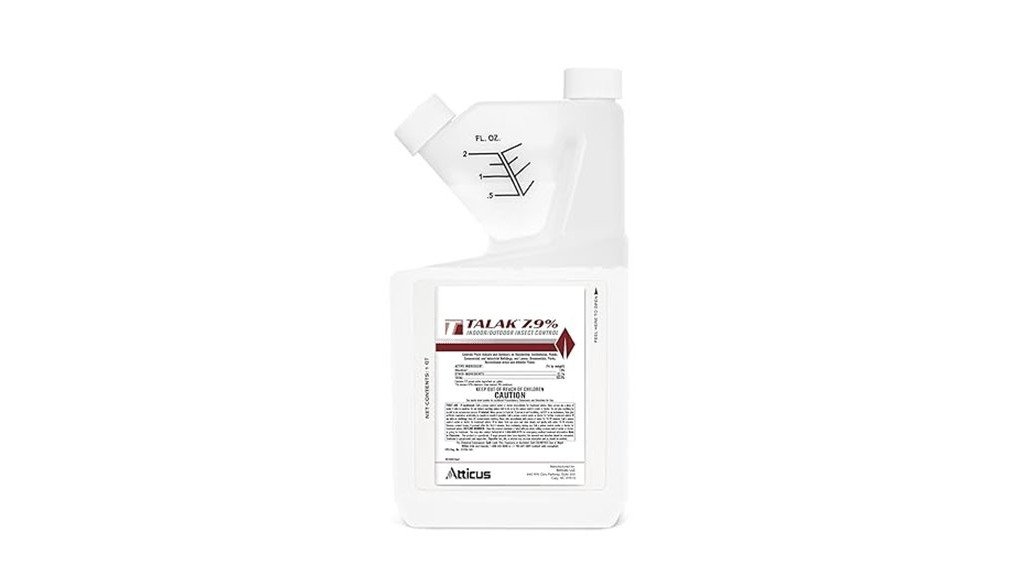
You’ll find Atticus Talak 7.9% is a water-based bifenthrin concentrate that gives you fast contact knockdown and up to three months’ residual control for ants, roaches, fleas, ticks, spiders, scorpions, mosquitoes and fire ant mounds. It’s formulated for indoor spot and perimeter work and outdoor broadcast or mound drench when mixed per label, and it’s plant-compatible at label rates. Use calibrated equipment, wear PPE, restrict reentry until dry, and keep records — continue for detailed mix rates, limits, and alternatives.
Some Key Takeaways
- Atticus Talak 7.9% is a water-based bifenthrin concentrate offering broad-spectrum control of over 75 listed pests indoors and outdoors.
- The product provides rapid contact knockdown and up to three months residual protection on treated surfaces.
- Labeled plant-compatible when diluted per directions, it’s suitable for baseboards, cracks, turf edges, and perimeter defenses.
- Mix per label rates and use calibrated equipment (pump sprayer, hand wand, hose-end, mound drench) for reliable results.
- Check state registration (not sold in CT, NY, VT), follow PPE and reentry intervals, and compare cost-per-use for purchasing decisions.
What Atticus Talak 7.9% Is and Who Should Use It
Attack pest problems with Atticus Talak 7.9% — a water-based bifenthrin concentrate formulated for indoor and outdoor use that delivers broad-spectrum control of more than 75 pests, kills on contact, and provides up to three months of residual protection. You’ll find a technical, user-focused solution: a 1-quart, 7.9% bifenthrin liquid that’s water-based, dries clear, and won’t harm plants when used per label. Use it if you’re a homeowner, gardener, or pest professional needing adaptable perimeter, structure, or landscape treatments. Read label directions for dilution, state registration limits, reentry intervals, and safe handling to make certain compliant, effective applications. It’s a suitable option for those maintaining lawns and landscapes who need rodent and vole control alongside general pest management.
Pest Control Performance : What It Kills, Speed, and Residual Activity
Deliver rapid, reliable control across more than 75 listed indoor and outdoor pests — including ants, fleas, ticks, spiders, scorpions, mosquitoes, roaches, wasps and fire ants — with a contact-killing action and up to three months of residual protection when applied per label. You’ll see rapid knockdown on contact pests and effective mound drench results against fire ant colonies. The bifenthrin formulation provides predictable residual persistence on treated surfaces, limiting reinfestation. Use it to establish a defensive perimeter indoors and outdoors; follow label directions for targeted placement. You’ll get consistent, professional-grade performance that teams well with integrated pest management. This product complements systemic approaches for long-term landscape health by integrating with systemic insect preventatives.
How to Mix and Apply Atticus Talak 7.9% Safely (Indoor and Outdoor Rates)
Having established what Talak controls and its residual profile, you’ll now learn how to mix and apply it safely for indoor and outdoor use. You’ll follow label-specified mix ratios—measure concentrate against water per the label for spot, perimeter, and broadcast treatments. Use calibrated application equipment: pump sprayer for interiors, hand wand or hose-end sprayer for landscapes, and a mound drench bottle for fire ant colonies. Mix thoroughly in clean water, prep treated areas, and apply even, overlapping swaths to target zones (baseboards, cracks, turf edges). You’ll keep records of rates used and equipment cleaned after each job. Many homeowners prefer organic fungicide options for parts of their landscape maintenance.
Safety, Plant Compatibility, and Re-Entry Times You Need to Know
Because you’ll be treating areas where people, pets, and plants may later occupy, follow label instructions closely to minimize exposure: mix and apply only at the specified rates, wear recommended PPE when handling the concentrate, keep bystanders and pets out of treated zones until sprays are fully dry, and wash hands and equipment after use. You’ll use personal protective gear during mixing and application; gloves, eye protection, and long sleeves reduce exposure. Talak’s water-based formula won’t cause phytotoxicity when diluted per label, so plant compatibility is high. For children safety, restrict access until treated surfaces are dry and stored containers are secured. Homeowners should also consider keeping a dedicated set of safety gear for lawn chemical mixing and storage.
Buying Checklist : Restrictions, Alternatives, and Value for Money
When you’re weighing a purchase, confirm state registration and label restrictions first, then compare cost-per-use, application flexibility, and available alternatives. You’ll check state regulations—this product isn’t sold in CT, NY, VT—and read permitted uses for indoor/outdoor applications. Do a cost comparison: calculate diluted gallons per quart, expected coverage, and months of residual control to assess value. Consider alternatives with different actives for resistance management or reduced non-target risk. Choose products that match your site needs and community standards. You’ll join peers who prioritize compliance, efficacy, and practical budgeting when selecting insect control solutions. Also review city-approved resources for effective pest control solutions to ensure local compliance and best practices.
Some Questions Answered
Can I Use Atticus Talak With a Backpack or Handheld Sprayer?
Yes — you can use a backpack sprayer or handheld sprayer when you dilute and mix per label directions. You’ll follow specified rates, wear recommended PPE, and avoid application near people, pets, and water. The water-based formula works in both sprayer types, dries clear, and won’t harm plants if applied correctly. Check state registrations and label restrictions before treating to make certain compliant, effective use.
Is This Product Safe Around Edible Vegetable Gardens?
Yes — you can use it near edible vegetable gardens if you follow label directions strictly. You’ll avoid residue accumulation by diluting correctly, applying only to non-edible zones, and allowing sprays to fully dry before reentry. Maintain garden bufferzones (per label distances) to protect crops and pollinators. You’re part of a responsible community; read state-specific restrictions, follow application rates, and wear PPE to guarantee safe, compliant use around food plants.
How Should I Store Leftover Mixed Solution and for How Long?
Store leftover mixed solution in a clearly labeled, tightly sealed chemical-resistant container; use HDPE or glass as suitable container materials. Refrigeration isn’t necessary; keep it in a cool, dry, locked area away from children, pets, food, and water sources. Storage duration: discard any diluted mix after 24–48 hours for efficacy and safety, or follow label-specific limits if longer retention is permitted. Always wear PPE when handling stored mixtures.
Will Bifenthrin Harm Ornamental Beneficial Insects Like Bees?
Yes — bifenthrin can harm bees and beneficial beetles if they experience direct bee exposure or contact with treated surfaces before residues fully dried. You should avoid spraying flowering plants, apply in evening when pollinators are inactive, and target cracks/soil to minimize drift. Follow label rates and re-entry guidelines, and create community practices that protect pollinators while still controlling pests effectively.
Can I Apply Talak on Synthetic Turf or Artificial Grass?
Yes — you can apply Talak on synthetic turf, but you’ll dilute and follow label rates precisely and avoid over-saturating drainage zones. You’ll treat seams and infill sparingly to protect turf drainage and avoid pooling. Use low-pressure, even applications and allow complete drying before reentry. If you’re maintaining synthetic surfaces regularly, integrate treatments into your synthetic maintenance plan and document applications to make certain consistent, safe results for your community.