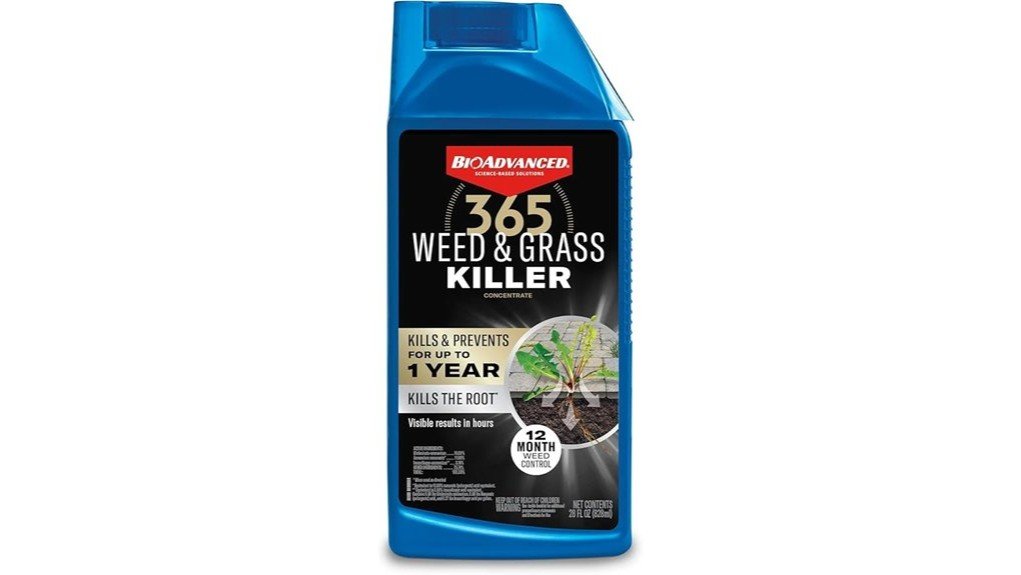
You’ll get fast, visible die-back on many weeds and solid residual suppression for months when you apply BioAdvanced 365 Weed & Grass Killer correctly. It combines glufosinate and ammonium nonanoate for quick contact burn and imazethapyr for systemic, longer-lasting control, so annuals brown within hours and tougher perennials decline over days. Apply on calm, dry days with damp soil, use PPE, and follow label rates; keep going below for detailed tips and cautions.
Some Key Takeaways
- Fast visible die-back: many annuals brown and collapse within hours after application.
- Dual action formula: contact glufosinate/ammonium plus systemic imazethapyr for short- and long-term control.
- Long residual control: can suppress weeds for months and protect treated areas up to about 12 months when applied correctly.
- Use precautions: follow label, wear PPE, avoid drift, apply when soil damp and weeds actively growing.
- Coverage and value: 28 fl oz makes up to 16 gallons, cost-effective for large areas compared with ready-to-spray options.
Quick Verdict : Does BioAdvanced 365 Weed & Grass Killer Work?
Although results vary by weed type and conditions, BioAdvanced 365 Weed & Grass Killer works reliably when used as directed: it delivers visible die‑back within hours, kills roots on many annuals and perennials, and can protect treated areas for up to 12 months. You’ll appreciate clear guidance: aim applications when weeds are actively growing and plan application timing around calm, dry weather. Pay attention to soil moisture—damp, not soggy, conditions help uptake without runoff. Follow dilution and coverage instructions, and you’ll see predictable control across common sites. You’ll feel part of a community of gardeners who get consistent results. Our product selection focuses on safe herbicides suitable for homeowners caring for lawns and landscapes.
What’s in the Bottle : Active Ingredients, Strengths, and What They Do
Now that you know how the product performs, let’s look at what’s actually in the bottle and how each component works. You get three actives: 10.00% glufosinate‑ammonium, non‑selective contact herbicide that disrupts ammonia metabolism; 11.08% ammonium nonanoate, fast‑acting burndown for foliage; and 3.18% imazethapyr‑ammonium, a systemic ALS inhibitor targeting the active site to block amino acid synthesis. Together they offer complementary herbicide mode actions—contact plus systemic—so you control diverse weeds and roots. Note soil persistence risks from imazethapyr; follow label directions to protect desirable plants and your community spaces. Top sprayers designed for homeowners help apply spot treatments precisely with minimal waste and overspray risk.
Real-World Performance : Speed, Residual Control, and Weed Types Controlled
When you spray BioAdvanced 365 on actively growing weeds, you’ll usually see visible browning and collapse within hours, with most annuals knocked down the same day and tougher perennials showing decline over several days as the systemic imazethapyr moves to the roots. You’ll appreciate the fast knockdown on visible foliage and the long persistence in treated areas—often keeping weeds suppressed for months when applied correctly. It handles a broad roster: common annuals, many grasses, and listed perennials. You’ll notice rainproofing within hours and consistent performance across seasons, giving you reliable, community‑minded results. This product is designed for homeowners maintaining their lawn and landscape with selective herbicide use.
How to Use the Concentrate Safely and Get the Best Results
Before you mix or spray, read the label and gather PPE—gloves, eye protection, and a long‑sleeve shirt—to protect yourself and prevent off‑target exposure. You’ll follow specified mixing ratios for spot treatments or larger areas; measure concentrate and water precisely and mark your sprayer. Work on calm days to avoid drift and keep people and pets away until spray dries. Apply when weeds are actively growing for best root control, and rinse equipment immediately after. Store unused concentrate locked and upright. By sharing these steps, you’ll protect yourself and your community while getting reliable results. Consider adding dedicated chemical mixing gear—like a calibrated measuring cup and splash apron—to further reduce spill and exposure risks.
Should You Buy It? Coverage, Cost, Alternatives, and Final Recommendation
If you want a concentrated, long‑lasting nonselective herbicide that tackles both annuals and perennials and can cover large areas, BioAdvanced 365 is worth considering because a single 28 fl oz bottle yields up to 16 gallons of spray and claims up to 12 months of control. You’ll like the coverage and convenience: treat driveways, beds, and borders without frequent reapplications. Do a cost analysis versus ready‑to‑spray options; concentrate often saves money if you’ll treat lots of area. Check user reviews for real‑world persistence and safety notes. Consider also integrating fire ant mound management into your overall lawn care plan for best results.
Some Questions Answered
Is This Product Safe to Use Around Edible Vegetable Gardens?
No, you shouldn’t use it directly in edible vegetable gardens. The concentrate is non‑selective and can drift or leach into garden proximity, harming crops. If you must, apply carefully to hardscapes or mulched beds away from vegetables, use barriers, and follow label restrictions. Wait and rinse any accidental contact, and consider safer, vegetable‑friendly options or spot‑treat with targeted methods to protect your shared garden space and community.
Does It Require Any Special Personal Protective Equipment Beyond Gloves?
Yes — you should use more than gloves. You’ll want eye protection and respiratory protection when mixing or spraying to avoid splashes and inhaling mist. Wear chemical-resistant gloves, long sleeves, long pants, closed shoes, and consider a face shield. Use a NIOSH-approved respirator if ventilation’s poor or spray drift’s likely. You’ll feel safer and part of a careful community when you follow these simple precautions.
How Should the Concentrate Be Stored and Disposed of Unused Portions?
Store the concentrate in its original labeled container, locked away, cool, dry, and out of direct sunlight for proper storage. Keep it away from children, pets, food, and water sources. For safe disposal, don’t pour leftovers down drains or onto soil; follow label instructions and local hazardous‑waste guidelines. Contact your local waste authority or a household hazardous waste facility for drop‑off. You’re protecting your community and environment.
Will It Harm Nearby Beneficial Plants Through Root Uptake or Drift?
It can harm nearby beneficial plants if they’re exposed via root uptake or spray drift, so you should be careful. Don’t apply near desirable roots, avoid overapplication, and keep wind low to prevent spray drift. Consider spot‑treating, use shields or targeted wands, and water after recommended waiting periods only if instructed. You’ll protect shared garden plants by planning applications, keeping neighbors informed, and checking weather and buffer zones first.
Is This Product Pet-Safe Once Treated Areas Are Dry?
No — you shouldn’t assume it’s pet safe immediately after dry; follow label directions for pet safety and re entry timing. Wait the specified re‑entry interval on the product label before letting pets access treated areas, and keep pets off until surfaces are fully dry and the recommended time has passed. Rinse paws if pets contact treated soil, and contact your veterinarian if you suspect exposure. Labels and your vet keep you safe.