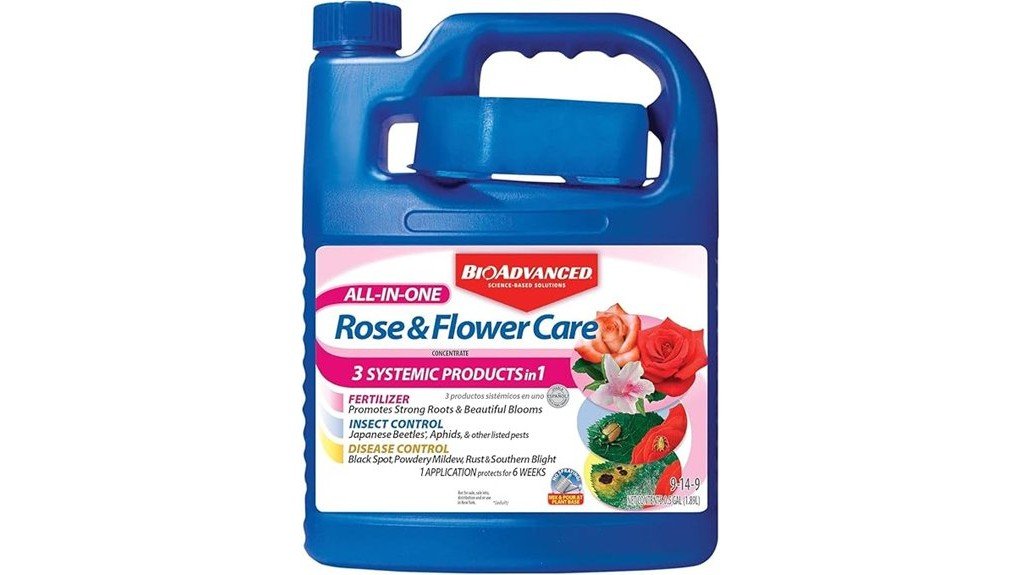
You’ll find BioAdvanced All‑In‑One Rose & Flower Care Concentrate a no‑spray, pour‑in systemic that mixes fertilizer with imidacloprid for insects and tebuconazole for diseases, giving predictable protection roughly every 4–6 weeks. You’ll measure by plant size, pour at the root zone, then water in; uptake is quick and rainproof for weeks. It’s convenient for managing multiple beds but has systemic insecticide risks and state restrictions—keep pets and pollinators in mind if you want full usage guidance.
Some Key Takeaways
- Systemic concentrate combines fertilizer with imidacloprid (0.15%) and tebuconazole (0.80%) for insect and disease control.
- Pour‑in application around roots is simple, with uptake in days and rainproof protection up to six weeks.
- Effective against aphids, Japanese beetles, and blackspot in trials, with bloom and root improvements over weeks.
- Potential non‑target risks and state sale restrictions mean follow label and avoid pollinator exposure.
- Not sold in several states; compare prices and consider alternatives if restricted or if you prefer non‑systemic options.
Quick Verdict and Who Should Use BioAdvanced All‑In‑One Rose & Flower Care Concentrate
If you want a single, science‑based product to feed your roses and protect them from common pests and diseases, this concentrate delivers a practical, no‑spray solution. You’ll get fertilizer plus systemic insect and disease control in one bottle, ideal if you value simplicity and consistent results. Use it if you manage several beds, want predictable application frequency (about every six weeks), and prefer pour‑in concentrates over sprays. You’ll appreciate clear labeling and community-tested performance, though you’ll also check pet safety guidelines before use. This fits gardeners who want reliable, science-backed care and shared stewardship of their plots. It’s a convenient option for homeowners who want to enhance their lawn and landscape with time-release fertilizers alongside targeted rose care.
What’s in the Bottle: Ingredients, Claims, and What They Actually Do (Insecticide, Fungicide, Fertilizer)
Although it looks like a simple blue bottle, the concentrate combines three distinct, systemic actions: imidacloprid (0.15%) as the insecticidal component, tebuconazole (0.80%) as the fungicide, plus a measured fertilizer blend to support root strength and blooming. You’ll rely on systemic uptake to move actives through roots and foliage, so label interpretation matters for rates and plant lists. The fertilizer portion feeds over weeks while the actives protect against listed pests and diseases. Be aware of potential non target impacts—use as directed to limit harm and preserve your soil microbiome and beneficial insects. For homeowners maintaining lawns and landscapes, selecting the right summer fungicide and following application guidance is crucial to a thriving lawn and landscape.
How to Use It and Expected Results: Mixing, Application, Coverage, Timing, and Rainproof/Systemic Performance
When you’re ready to treat roses or other listed flowers, mix the concentrate precisely per label directions and pour it into the soil around the root zone so the systemic actives and fertilizer are taken up efficiently. Measure mixing ratios for each plant size, use the recommended volume per plant, and avoid overapplication. Apply at planting or during active growth; observe application timing guidelines — typically every 4–6 weeks for sustained feeding and protection. Water in after pouring. Expect systemic uptake within days, rainproof protection lasting up to six weeks, and consistent coverage when you follow label spacing and reapplication intervals. Consider pairing this product with spray-on starter fertilizers for new plantings to boost early root development and nutrient uptake.
Real-World Performance: Pest and Disease Control, Bloom and Root Benefits, Plus Pros and Cons From Trials and Labels
Following the mix-and-pour application you just learned, real-world performance hinges on how quickly the systemic ingredients move through the plant and how they hold up under pest pressure and variable weather. You’ll notice Japanese beetles, aphids, and blackspot decline within days; blooms and root tone improve over weeks as nutrients and actives translocate. Trials and labels show up to six weeks’ rainproof protection, so stick to recommended application timing for consistent control. Pros: convenience, multi-target efficacy, measurable bloom/root benefits. Cons: systemic insecticide concerns, state sale restrictions, and potential environmental impact you should weigh before use. This product fits a niche for homeowners seeking systemic insect preventatives for lawn and landscape maintenance.
Buying, Restrictions, and Alternatives: Pricing, State Sale Restrictions, Safety Notes, and Comparable Products
Because purchasing decisions hinge on cost, legality, and safety, you should weigh price against state restrictions and environmental considerations before buying BioAdvanced All‑In‑One Rose & Flower Care Concentrate. Check pricing comparison across retailers for the 64 fl oz concentrate to find best value; factor shipping and unit coverage. Verify regulatory compliance: this product isn’t sold in CA, CO, CT, MA, MD, ME, NJ, NY, RI, VT, WA and has Florida limits; confirm local rules. Follow safety precautions—gloves, avoid pollinator exposure, store secure. If restrictions or preferences rule it out, consider alternative brands with similar fertilizer+insecticide+fungicide profiles. Also be sure to use essential safety gear when measuring and mixing to reduce exposure risks.
Some Questions Answered
Can I Use This Concentrate on Edible Plants or Herbs?
No — you shouldn’t use this concentrate on edible plants or culinary herbs. Its active ingredients and label aren’t formulated or approved for edible compatibility, so it could leave residues unsafe for consumption. You’ll want products specifically labeled for vegetables and herbs with clear pre-harvest intervals. If you’re part of a gardening group, stick to herb-safe fertilizers and insect controls to protect your community’s food and make sure everyone feels confident about harvest safety.
How Long After Application Is Safe to Prune or Deadhead Treated Plants?
Wait 24‑48hrs before pruning or deadheading treated plants; you’ll let systemic uptake begin and reduce sap loss. When you prune, prune gently to avoid tearing stems and minimize stress—use clean, sharp tools and make angled cuts just above buds. Handle plants with care for several days after treatment while protection establishes. You’re protecting blooms and encouraging recovery, and this routine helps the product work effectively without harming plant health.
Will This Product Harm Beneficial Pollinators Like Bees and Butterflies?
Yes — it can harm bees and butterflies if they contact treated flowers or nectar. You’ll want to avoid applying when pollinator activity is high and remove insect attractants until residues dry and systemic uptake reduces nectar/pollen exposure. Protect pollinator habitat by applying to soil, following label timing, and keeping flowering plants off‑limits during active translocation. That way you’ll care for plants while keeping community pollinators safer.
Can I Mix This With Other Garden Chemicals or Fertilizers?
Yes — but you’ll want to test first. You should perform compatibility testing and avoid blind tank mixing; combine small samples of this concentrate with any other garden chemical to check for reactions and pH effects. Stagger application timing when unsure: don’t apply multiple systemic treatments at once. Follow label directions, keep records, and consult local extension resources so you and your gardening group feel confident and safe.
How Should I Store Leftover Concentrate Safely Long-Term?
Store leftover concentrate in its original container with the cap tightly closed and proper labeling visible; don’t transfer to food or drink containers. Keep it in a cool, dry, locked area out of direct sunlight and away from children and pets—use childproof storage like a locked cabinet or box. Note shelf life on the label, follow local disposal rules for unused pesticide, and tell household members where it’s kept so everyone feels safe and included.