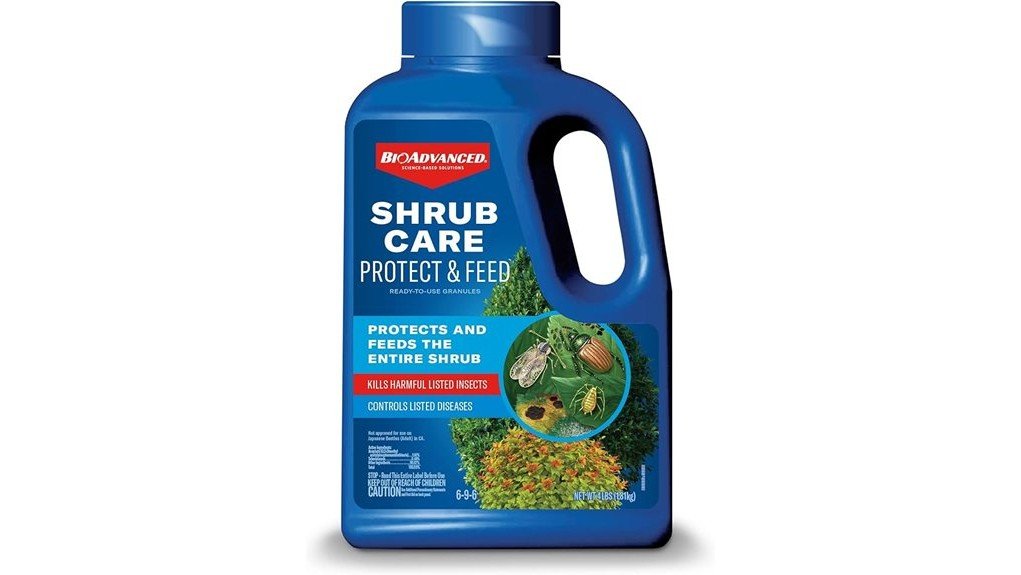
You’ll find BioAdvanced Shrub Care Protect & Feed a convenient single-granule option that treats chewing and sucking pests systemically, offers preventative fungal protection, and supplies a 6-9-6 feed for about six weeks per application. You’ll apply granules around drip lines, water them in, and wear gloves; avoid plants not on the label and keep pets off treated areas until dissolved. It’s efficient for beds but consider pollinator-safe alternatives; more detail follows.
Some Key Takeaways
- Combines acephate insecticide, tebuconazole fungicide, and 6-9-6 fertilizer for systemic pest, disease suppression, and nutrition in one granular product.
- Provides up to six weeks of protection and steady feeding per application when applied at label rates and watered in.
- Effective against aphids, thrips, leafhoppers, and helps prevent powdery mildew and black spot on new growth.
- Convenient for large beds and planters but has environmental risks, scent during application, and potential pollinator exposure.
- Use gloves, avoid runoff and off‑label plants, and consider soaps, oils, or organic feeders as lower‑impact alternatives.
Quick Verdict: Is BioAdvanced Shrub Care Protect & Feed Worth Buying?
If you want a single, easy-to-apply product that combines systemic insect control, fungicide action, and balanced feeding for shrubs, BioAdvanced Shrub Care Protect & Feed is worth considering. You’ll appreciate its convenience: one granule application covers large beds and supplies up to six weeks of protection and nutrition. Compare cost comparison metrics against separate insecticide, fungicide, and fertilizer buys—this often saves money and time. You’ll also weigh environmental impact; using one targeted product can reduce overall chemical volume if applied responsibly. If you want reliable, community-minded garden care, this product fits practical, shared stewardship goals. Consider organic alternatives and integrated methods like eco-friendly fungicide use to further minimize chemical exposure and support sustainable lawn and garden practices.
What It Contains and How the Formula Works (Acephate, Tebuconazole, 6-9-6)
Because it combines a systemic insecticide, a preventative fungicide, and a balanced 6-9-6 fertilizer, BioAdvanced Shrub Care Protect & Feed delivers multi-pronged protection and nutrition in a single granular application. You get acephate for systemic action against chewing and sucking pests, and tebuconazole to prevent common fungal diseases by protecting new tissue. The 6-9-6 NPK supplies steady Nitrogen, Phosphorus and Potassium for roots and foliage, maintaining nutrient balance for seasonal growth. Granules let you treat beds uniformly; application follows label rates for coverage and safety. That combination simplifies routine care so you can confidently maintain healthy shrubs. For homeowners applying this product, choosing the right fungicide sprayer and following proper application techniques can help ensure even coverage and safe use.
Real-World Performance: Pest Control, Disease Control, and Feeding Results
Having covered what’s in the bag and how the ingredients work together, let’s look at how that blend performs in real gardens. You’ll see reliable pest resistance against aphids, thrips and leafhoppers when granules establish systemic protection; results often last up to six weeks. Disease control for powdery mildew and black spot is measured and consistent rather than dramatic. The 6-9-6 feeding component supports roots and steady topgrowth, improving soil health over time. Foliar uptake follows from systemic movement, so you’ll notice fewer surface symptoms. Track application frequency and observe responses to time treatments to fit your beds and community. These systemic solutions are especially useful for homeowners maintaining lawns and landscapes who want systemic insect preventatives that protect plants from within.
How to Use It Safely and Effectively (Coverage, Application, Timing, Plants to Avoid)
When you apply BioAdvanced Shrub Care, follow label rates and timing to get safe, effective protection; granular placement, watering-in, and reapplication intervals determine both coverage and plant response. You’ll cover up to the labeled area, spread evenly around drip lines, and water to activate—monitor soil moisture so granules dissolve without runoff. Wear protective gloves when handling granules and wash hands after. Apply at proper timing—early season or at first sign of pests/disease, repeating per label (about every six weeks). Avoid plants not listed on the label. Keep pets off treated areas until granules dissolve for pet safety. Use professional-grade granular products for consistent results and proper lawn maintenance.
Pros, Cons, Alternatives, and Final Buying Recommendation
If you want a single, easy-to-apply product that combines systemic insect control, disease suppression, and fertilizer, BioAdvanced Shrub Care delivers predictable, long-lasting results for ornamental beds and planters. You’ll like the convenience: granular feed plus acephate and tebuconazole protect up to six weeks and cover large areas. Cons: active ingredients raise scent concerns during application and have measurable environmental impact; avoid use where pollinator exposure or runoff is likely. Alternatives include targeted insecticidal soaps, horticultural oils, or organic compost-based feeders. Recommendation: buy if you value simplicity and scale, but use cautiously and follow label limits. For safe storage and responsible handling, keep products in a secure chemical storage cabinet away from children and pets.
Some Questions Answered
Can I Use These Granules on Edible Fruit Bushes or Berry Plants?
You shouldn’t use these granules on edible ornamentals or berry bushes unless the product label explicitly allows edible plant use and lists a safe pre-harvest interval; otherwise you’ll risk harvest safety and contaminate fruit. Read the label for permitted crops, directions and withholding periods, and contact the manufacturer or your local extension if unsure. Join other gardeners who check labels and follow recommended reentry and harvest safety intervals to protect family and community.
How Long After Rainfall Should I Reapply the Product?
You should wait 24–48hrs after rainfall before reapplying; avoid watering immediately afterward to let granules settle. Check that the soil surface is dry enough to accept granules and that previous material hasn’t been washed away. If heavy rain occurred, inspect coverage and reapply only where granules were lost. Follow label rates and safety precautions, and don’t apply repeatedly in short intervals—space applications per product directions for best results.
Is This Product Safe to Use Around Pets and Children Once Applied?
No — you shouldn’t let pets or children access treated areas until granules dissolve and foliage is dry; follow label reentry intervals and avoid contact during application. For pet safety, keep animals and kids away during application and for the recommended waiting period (usually until rain or irrigation has washed in granules and surfaces are dry). Check the product label for specific application timing, reentry restrictions, and local restrictions before use.
Can the Granules Be Mixed With Other Granular Fertilizers or Soil Amendments?
You shouldn’t mix the granules directly with other granular fertilizers or amendments. For mixing compatibility, apply BioAdvanced granules separately as directed to avoid chemical interactions and uneven release. Space application timing so you spread one product, water it in, then wait a few days before applying another amendment. That way you protect plant health, prevent overfeeding, and keep your gardening group confident that everyone’s following safe, practical application practices.
How Should I Store Leftover Granules Between Uses?
Store leftover granules in a sealed container in a cool location with dry conditions to keep them effective. You’ll want an airtight plastic or metal container, labeled and out of reach of children and pets. Keep it away from heat sources and direct sunlight, and avoid damp basements or garages. Check the label for specific shelf-life guidance, and join fellow gardeners by keeping a small, well-maintained stash for future applications.