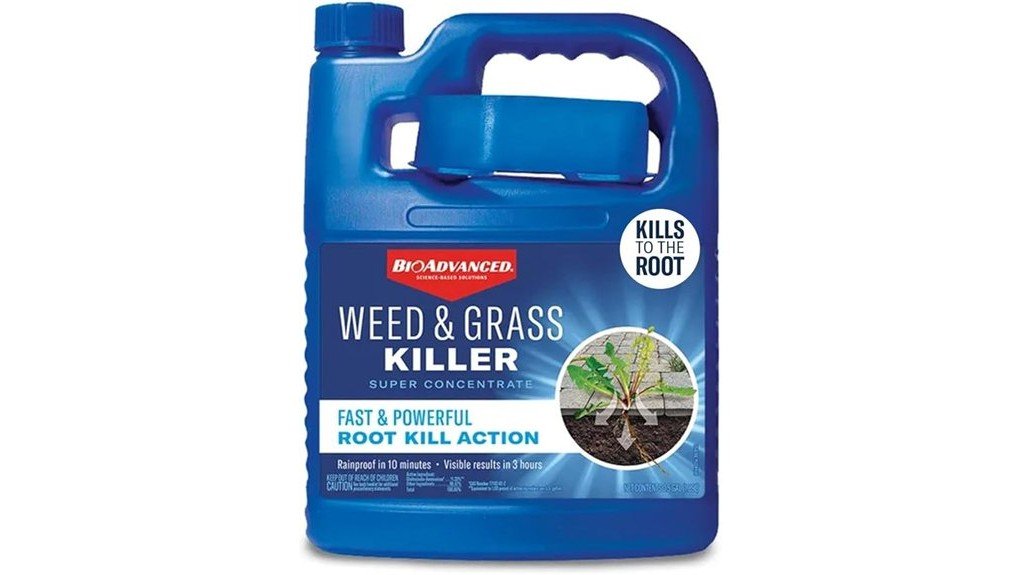
You’ll find BioAdvanced Weed & Grass Killer Super Concentrate is a fast, precise spot‑treatment option if you need quick knockdown of tough grasses and perennials. It contains 11.33% glufosinate‑ammonium in a 64 fl oz concentrate that dilutes to about 21.3 gallons, and it’s best for targeted spraying around hardscapes and beds. Use label dilutions, treat actively growing weeds above 50°F, and avoid non‑target contact; more detailed guidance and caveats follow.
Some Key Takeaways
- Contains 11.33% glufosinate‑ammonium; fast foliar desiccant effective on tough grasses and perennial weeds.
- 64 fl oz concentrate dilutes to about 21.3 gallons, enabling broad spot-treatment coverage.
- Visible wilting in as little as three hours; dependable root decline over subsequent days when plants are actively growing.
- Best for precise spot spraying around hardscapes and beds; not recommended for whole lawns.
- Follow label for dilution, PPE, and rainproof timing to minimize non‑target exposure and environmental impact.
Quick Verdict and Who Should Use BioAdvanced Weed & Grass Killer Super Concentrate
While it’s potent enough to tackle tough grasses and perennial weeds, BioAdvanced Weed & Grass Killer Super Concentrate is best for homeowners and landscapers who need targeted, fast-acting spot treatments around hardscapes, beds, and plantings rather than for lawn-wide use. You’ll appreciate rapid visible results and precision application that limits treated-area exposure. Use it when you want efficient control with easy storage of a single 64 fl oz concentrate bottle. Be mindful of environmental impact and follow label directions to minimize non-target contact. This product suits those seeking community-aligned, responsible weed management with measurable, cautious outcomes. Homeowners should understand that non-selective herbicides can affect any green plant they contact, so apply them carefully to avoid harming desirable plants.
What’s in the Bottle: Key Specs, Active Ingredient, and Product Claims
Because it contains 11.33% glufosinate‑ammonium in a concentrated spray formulation, the 64 fl oz BioAdvanced bottle delivers a potent, targeted herbicide you’ll dilute for spot treatments rather than pour-and-walk applications. You’ll find clear labeling details including EPA number, manufacturer, and dilution rates; the bottle makes up to about 21.3 gallons. The product claims fast visible effects, root‑kill on listed weeds, and precision application to treated areas. Read safety precautions on the label: use gloves, avoid drift, and keep pets and people away until dry. Join others who apply it responsibly for specific, controlled weed removal. Consider combining these treatments with other leaf spot management practices for a healthier lawn and landscape.
Real‑World Performance: Speed, Root‑Kill, Targets, and Where It Works Best
When you apply BioAdvanced Weed & Grass Killer Super Concentrate according to label directions, you can expect visible wilting in as little as three hours and dependable root‑kill on many listed annuals, perennials, grasses, and brush over subsequent days. You’ll notice fast, localized results thanks to glufosinate‑ammonium; trials and product claims support rapid foliar desiccation and subsequent root decline. Be mindful of application timing to align with active growth for best uptake. Plant safety studies are limited; stay cautious near desirable plants and use targeted spot treatments. In shared gardens, communicate plans so neighbors feel included and informed. This product is commonly used with homeowner spot sprayers for precise treatment of unwanted weeds and grasses spot weed treatment.
How to Use It Effectively: Dilution, Application Sites, Timing, and Rainproof Timing
If you want reliable results, follow the label‑recommended dilutions and apply only to actively growing weeds above 50°F, targeting foliage and avoiding desirable plants. Measure dilution ratios precisely per instructions; the 64 fl oz concentrate makes large volumes, so calculate needed mix before filling a sprayer. Use spot spraying timing to hit young growth for faster visible control and root kill. Apply around patios, foundations, driveways, beds and fences—never on lawns. Work with others responsibly: communicate plans if treating shared spaces. Wait ten minutes for rainproof set‑up, and avoid rewetting or mowing immediately after treatment. Consider timing applications in spring when pre‑emergent preventers are used to stop crabgrass before it germinates.
Coverage, Cost per Area, Limits, and Purchase Recommendations
Although the 64 fl oz bottle concentrates to as much as 21.3 gallons of spray, your actual coverage will depend on the label dilution you choose and how heavily you spray; manufacturer estimates range from about 32,000 to 64,000 sq ft, so plan based on the higher-use rate for thicker vegetation to avoid running short. Use a simple coverage calculation: divide treated square feet by gallons prepared to estimate bottle needs. Expect variable cost per area based on dilution and sprayer overlap. Buy before peak season—purchase timing matters—to secure availability and share experiences with neighbors for bulk savings and responsible use. Consider comparing bulk lawn fertilizer options and bag sizes online to find the best value for your lawn maintenance.
Some Questions Answered
Is This Concentrate Safe to Use Around Edible Plants?
No — you shouldn’t use this concentrate around edible plants. It contains glufosinate‑ammonium, which can harm crops, affect soil health, and risk residues on food. You’ll want to protect pollinator safety and avoid drift by treating only non‑edible areas, following label restrictions, and waiting recommended intervals. If you’re unsure, contact the manufacturer or local extension for guidance so you and your community can feel confident and safe.
How Long Before Pets Can Reenter Treated Areas?
You should keep pets out until the treated area is completely dry; reentry timing is typically about 10 minutes to an hour depending on conditions, but longer in cool or humid weather to minimize pet exposure. Check the product label for specific pet exposure guidance and, if in doubt, wait several hours and ventilate the area. You’ll protect your animals best by keeping them away until you’re sure surfaces are dry and safe.
Does It Require Any Special Personal Protective Equipment?
Yes — you should wear skin protection and eye protection when handling or applying this product. Use long sleeves, long pants, chemical-resistant gloves, and safety goggles to avoid contact. Mix and pour carefully to prevent splashes, and consider a face shield if using a sprayer. Wash exposed skin and clothing after use. Follow label instructions and manufacturer guidance to protect yourself and others in your household and neighborhood.
Can Leftover Diluted Mix Be Stored for Later Use?
No — you shouldn’t store leftover diluted mix for later use. Diluted solutions lose storage stability, may degrade or separate, and can pose safety and environmental risks. If you must keep any, use only compatible, clearly labeled containers and follow manufacturer guidance, but best practice is mixing only what you’ll apply. You’re part of a responsible group when you dispose of leftovers per local regulations and rinse containers according to instructions.
Is This Product Effective on Moss or Algae?
No — it’s not labeled for moss control or algae treatment, so you shouldn’t expect reliable results. You’ll want products specifically formulated for moss control and algae treatment or physical removal plus cultural fixes (improve drainage, reduce shade). If you’re unsure, test a small area and consult the label or manufacturer. You’re part of a group aiming for safe, effective results, and cautious, label‑guided use protects plants and the environment.