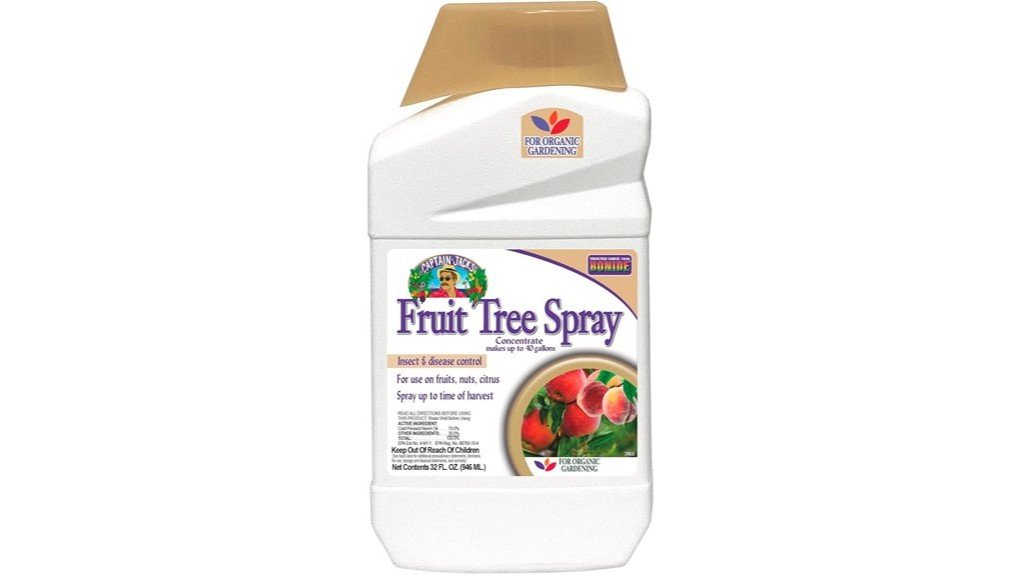
You’ll find Bonide Captain Jack’s Fruit Tree Spray is a cold-pressed neem concentrate that works on contact and ingestion to disrupt aphids, whiteflies, mealybugs, thrips, spider mites, leaf miners, some caterpillars, and powdery mildew. Shake before diluting; one 32‑oz bottle makes up to 40 gallons of spray for foliar or soil drench use. Apply evenings, reapply every 10–14 days, wear gloves and eye protection, and avoid blooms to protect pollinators. Keep reading to get mixing rates, timing, and pros and cons.
Some Key Takeaways
- Cold-pressed neem-based concentrate (azadirachtin) provides broad organic control for aphids, mites, whiteflies, caterpillars, and some fungi.
- Shake concentrate before diluting; one 32-oz bottle can yield up to 40 gallons of finished spray.
- Works as foliar spray or soil drench, acting by contact and ingestion to disrupt feeding and development.
- Reapply every 10–14 days or at first pest signs; spray evenings to protect beneficial insects and avoid bloom.
- Economical and organic-friendly, but avoid overapplication to limit foliage residues and follow preharvest intervals.
How Bonide Captain Jack’s Fruit Tree Spray Works and What’s in the Bottle
Because it combines cold-pressed neem oil with a concentrate formulation, Bonide Captain Jack’s Fruit Tree Spray works as a multi-action, broadly applicable treatment you can mix and apply as either a foliar spray or soil drench. You’ll find a cold pressed composition that retains active azadirachtin and related compounds; the label directs shaking to make certain consistent emulsion behavior when diluted. You’ll measure concentrate per instructions, mix into water, and apply before problems escalate. The bottle’s liquid concentrate is practical for diverse plantings, lets the community of gardeners share a reliable protocol, and supports organic-minded routines with clear, repeatable steps. This product is suitable for homeowners looking to maintain a child-safe lawn using eco-friendly products.
Which Pests and Diseases It Actually Controls (Real-World Scope)
In practice, Bonide Captain Jack’s Fruit Tree Spray gives you broad-spectrum control against many common garden pests and fungal problems by acting on contact and through ingestion; it’s effective in dampening populations of soft-bodied insects like aphids, mealybugs, thrips, whiteflies and spider mites, while also repelling or reducing chewing pests such as caterpillars and certain beetles, and suppressing nematodes when used as a soil drench. You’ll see reliable aphid suppression, reduced leaf miner activity, and control of powdery mildew and other foliar fungi. It also helps manage root nematodes and general mite, caterpillar, and beetle pressures. Many homeowners pair sprays like this with beneficial insects releases to enhance long-term pest management in lawns and landscapes.
How to Mix and Apply the 32 Oz Concentrate Safely and Effectively
When you’re ready to mix and apply the 32 oz concentrate, always start by reading the label and donning protective gear—gloves, eye protection, and a long-sleeve shirt—to minimize exposure. Measure per label: one quart yields up to 40 gallons; dilute as directed and shake concentrate first. Use a calibrated sprayer, mix in clean water, and strain if needed. Follow safety precautions: avoid drift, keep children and pets away, and wash gear after. Time applications for early morning or late evening to protect pollinators; reapply every 10–14 days or at first sign of pests. Stay consistent and connected to fellow gardeners. For best results, choose a sprayer designed for fungicide application that offers adjustable nozzles and accurate calibration.
Performance, Pros and Cons From Use Cases and Organic Gardening Standards
Although results vary by pest pressure and environmental conditions, you’ll find Bonide Captain Jack’s Fruit Tree Spray delivers reliable, multi-target control when used as directed. You’ll appreciate quick knockdown of common pests and measurable reduction in fungal issues with regular 10–14 day applications. Pros: broad-spectrum action, concentrate stretches far, and organic approval fits certified gardens. Cons: repeated sprays can raise residue concerns on foliage if overapplied; follow label intervals and preharvest limits. Be mindful of timing to protect beneficial insects—spray evenings and avoid bloom. Overall, it’s practical, effective, and fits community-minded organic practices when used responsibly. Consider integrating eco-friendly pest control practices from your lawn and landscape routine to support beneficial insects and minimize chemical inputs.
Buying Tips: Coverage, Cost-Per-Gallon, Alternatives, and When to Choose It
If you want efficient coverage without overspending, calculate how much spray you’ll need before buying the 32-oz concentrate: one quart makes up to 40 gallons, so a single bottle treated at label rates will cover large orchards or many home beds and potted plants. Do price comparisons per gallon of finished spray, not per bottle, to see true value; compute cost-per-gallon from the concentrate price and your coverage estimates. Consider alternatives (ready-to-use, pyrethrin products, horticultural oils) when you need convenience, faster knockdown, or different organic certifications. Choose Captain Jack’s when broad, economical, organic control fits your plan. Our site offers quick-fix grass products and tips to help homeowners maintain lawns and landscapes efficiently.
Some Questions Answered
Is This Spray Safe Around Pets and Livestock?
Yes — you can use it around pets and livestock with care. You’ll follow label directions to minimize pet safety and livestock exposure risks: keep animals away during mixing and application, allow sprays to dry fully, store concentrate securely, and wash equipment and hands. Reapply only as directed and avoid treating areas where animals graze until residue has dried. If animals show irritation, contact your vet promptly.
Can It Be Used on Edible Herbs Kept Indoors?
Yes — you can use it on indoor herbs, and you’ll preserve edible safety when you follow label directions. Dilute the concentrate exactly, shake well, and apply as a foliar spray or soil drench sparingly. Wait the specified pre-harvest interval before consuming leaves, ventilate the room, and avoid spraying near pets. You’ll protect plants from pests and fungi while keeping your herb harvest safe and shared with others.
How Long After Application Is It Safe to Handle Treated Plants?
You can handle treated plants once spray has dried, typically 1–2 hours, but respect the product’s reentry interval and check label for exact timing. Since residue persistence varies with temperature, sunlight and watering, avoid contact for longer after heavy application or on sticky residues. Wear gloves until you’re sure residue has dissipated. Reapply only per label intervals and wash hands after touching plants to protect yourself and others in your gardening circle.
Will It Stain or Damage Garden Tools and Clothing?
No, it’s unlikely to permanently stain or damage tools and clothing if you act promptly. The cold-pressed neem oil has some staining potential on fabrics if left to sit; you should do fabric testing on inconspicuous areas and wash treated clothing quickly with detergent and warm water. For tools, wipe off residue after use and rinse; occasional oiling prevents rust. You’ll protect your gear by cleaning immediately.
Does It Have a Noticeable Odor After Spraying?
Yes — you’ll notice a strong scent after spraying, especially when it’s fresh. You shouldn’t ignore it; work upwind, and avoid breathing the mist since some people report respiratory irritation if exposed. Wear a mask and gloves, and keep family or pets away until the spray dries. You’ll feel reassured knowing these precautions protect your garden community and let you treat plants confidently without risking health or comfort.