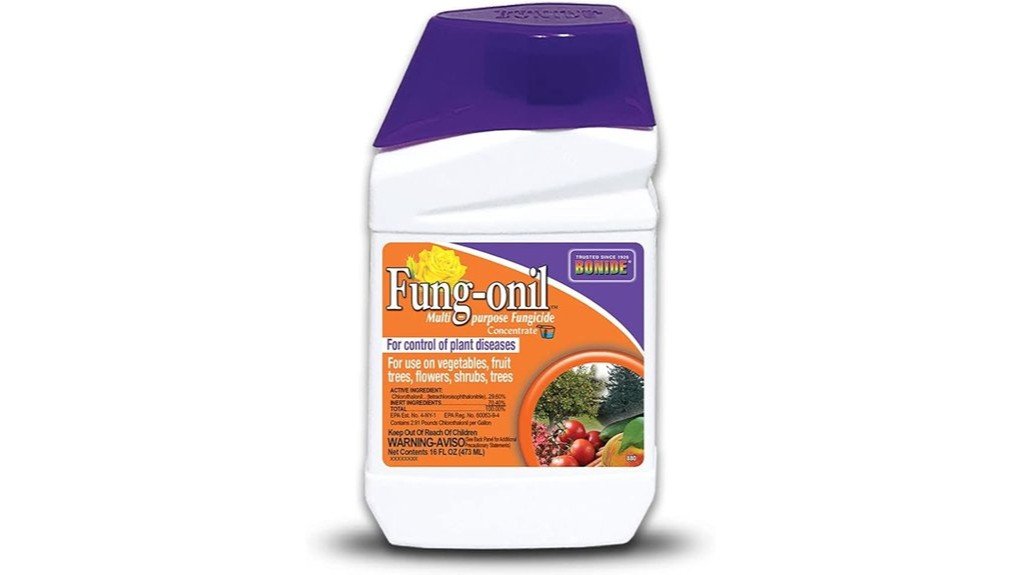
Bonide Fung‑Onil is a chlorothalonil-based contact fungicide that gives fast, broad-spectrum suppression of leaf spot, blight, mildew and scab when mixed and applied exactly per label. You’ll use precise dosing, a calibrated sprayer and protective PPE; it’s protective not systemic, so timing and coverage matter. Rotate with non‑chlorothalonil materials to manage resistance and avoid runoff to protect people and ecosystems. Continue for application details, crop limits, storage and safety specifics.
Some Key Takeaways
- Broad‑spectrum contact fungicide (chlorothalonil) that rapidly suppresses common garden fungi when mixed and applied per label.
- Best used protectively or at first signs of disease for leaf spot, blight, mildew, and scab; not systemic.
- Mix precisely in a calibrated sprayer, add to half a tank of water, agitate, and spray for uniform foliage coverage.
- Rotate with non‑chlorothalonil products and document applications to manage resistance and follow buffer/runoff guidance.
- Follow label PPE, reentry/preharvest intervals, storage rules, and local purchase/use restrictions to ensure safety and compliance.
Performance Summary: How Well Bonide Fung-Onil Controls Common Garden Fungi
Typically, Bonide Fung‑Onil (chlorothalonil concentrate) delivers rapid, broad‑spectrum suppression of common garden fungi when mixed and applied per label instructions. You’ll see consistent disease suppression across leaf spot, blight, mildew, and scab when you adhere to recommended application timing and coverage. Measure rates precisely, rotate with non‑chlorothalonil products for resistance management, and document applications. Expect contact‑action efficacy—protective not systemic—so timing before infection peaks matters. Evaluate runoff and follow buffer recommendations to limit environmental impact. Use calibrated sprayers, maintain community spray schedules, and share records to support collective garden health and stewardship. For homeowners maintaining lawns and landscapes, consider summer fungicide concentrates as part of an integrated disease management plan.
What’s in the Bottle and How It Works (Active Ingredient, Spectrum, and Safety Basics)
Although it acts as a contact protectant rather than a systemic agent, Bonide Fung‑Onil’s active ingredient, chlorothalonil, provides broad‑spectrum, non‑selective inhibition of fungal spore germination and mycelial growth by covalently modifying thiol-containing enzymes and disrupting cellular metabolism. You’ll find chlorothalonil chemistry well characterized: tetra‑chloro nitrile core enabling multi‑site reactivity limits resistance development. The concentrate targets leaf spots, blights, mildews, scabs and molds on ornamentals, fruits and vegetables via surface deposition. You should follow safety precautions on the label: PPE, avoid inhalation and drift, restrict reentry intervals, and prevent runoff to protect people, pets and ecosystems. Many homeowners prefer eco-friendly fungicide options when treating lawns and landscapes.
How to Mix and Apply the 16 Oz Concentrate for Vegetables, Fruits, and Ornamentals
Having covered how chlorothalonil acts on fungal spores and mycelia, you now need clear, label‑aligned mixing and application steps to get effective coverage without exceeding rates. Read the label; it dictates plant-specific mix ratios (typically tablespoons or teaspoons per gallon) and maximum seasonal use. Measure concentrate precisely, prefill sprayer tank with half the water, add product, then top up while agitating. Apply with a calibrated sprayer for uniform coverage of foliage and undersides. Observe spray timing: begin at first disease signs or preventatively at label intervals, avoid application during bloom if prohibited, and respect reentry and preharvest intervals. Choose the appropriate sprayer type for your yard and maintain it for consistent coverage.
Real-World Pros and Cons From Gardeners: Effectiveness, Phytotoxicity, and Ease of Use
Gardeners often report that Bonide Fung‑onil gives reliable, broad-spectrum control when applied at label rates, reducing leaf spot, mildew, and blight on vegetables, fruits, and ornamentals within the expected residual window. You’ll find efficacy consistent when you follow recommended application frequency; chlorothalonil’s contact activity suppresses sporulation rapidly. Phytotoxicity is uncommon when you dilute per label and avoid high temperatures or tender growth stages, but test sprays on sensitive cultivars. Ease of use rates high: concentrate mixes predictably and sprays dry cleanly. Shared user concerns center on residue concerns for harvest-sensitive crops and the need for proper protective equipment. This product is commonly recommended as part of preventative turf fungicide programs for homeowners maintaining lawns and landscapes.
Buying, Storage, and Legal/Safety Considerations Before You Spray
Before you buy or store Bonide Fung‑onil, review label restrictions, required personal protective equipment (PPE), and local regulations so you can plan safe, legal use and avoid costly mistakes. You’ll confirm purchase restrictions—age limits, retailer rules, or quantity caps—and verify that chlorothalonil concentrate is authorized for your crops and jurisdiction. For legal storage, follow label temperature, ventilation, and secondary containment specifications to prevent leaks and comply with hazardous-material rules. Store locked, upright, original container, away from food and children. Maintain application records, dispose of rinse water per label, and wear specified PPE to minimize exposure and regulatory risk. Consider installing a lockable pesticide storage unit to ensure compliance and keep children and pets safe.
Some Questions Answered
Can I Use This Fungicide Around Edible Herbs in Containers?
Yes — you can use it on edible herbs in containers, but you’ll need to follow label directions precisely to guarantee herb safety and minimize container leaching. Mix the concentrate as specified, avoid spraying edible parts near harvest, and observe pre-harvest intervals. Use impermeable containers or rinse thoroughly to reduce residue transfer. You’ll protect plants while keeping your community of gardeners safe and informed about responsible fungicide use.
Is Chlorothalonil Safe for Pets if Applied Outdoors?
No — chlorothalonil isn’t inherently pet safe when applied outdoors; you should assume risk and restrict access until spray dries and residues dissipate. Use pet safe practices: keep animals away during mixing, application, and for the reentry interval on the label. Consider runoff and wildlife impact—avoid treating flowering plants and waterways, and follow label precautions to minimize exposure to birds, pollinators, and aquatic organisms for community safety and inclusion.
How Long After Application Can I Harvest Treated Produce?
You should follow the product label’s pre-harvest interval (PHI); typically wait the specified days after application before harvesting to guarantee residues decline below tolerances. Residue persistence depends on chlorothalonil rate, crop, weather and washing; evidence shows variable half-lives, so adhere strictly to label PHI and any local tolerances. If you’re unsure, contact manufacturer or extension services so your harvest meets safety standards and community norms.
Will This Concentrate Stain Clothing or Garden Equipment?
Yes — concentrated splashes can cause clothing discoloration and may accelerate equipment corrosion if not rinsed promptly. You should treat spills immediately: launder contaminated clothes separately using detergent and hot water, and flush sprayer parts, nozzles, and metal tools with plenty of clean water after use. Wear protective gear to avoid contact. Follow label cleanup and storage guidance to minimize staining, chemical residues, and long-term corrosion risk.
Can I Tank-Mix Fung-Onil With Insecticidal Soap?
Yes — you can tank-mix fung-onil with insecticidal soap, but you should test first. Perform a small jar compatibility test (mix labeled rates, observe for separation or precipitate). Check spray compatibility and label restrictions; avoid mixing if either label prohibits. Watch for foliage sensitivity on tender plants by spray-testing a few leaves and waiting 24–48 hours. Use appropriate agitation, correct pH, and follow safety and tank-cleaning procedures.