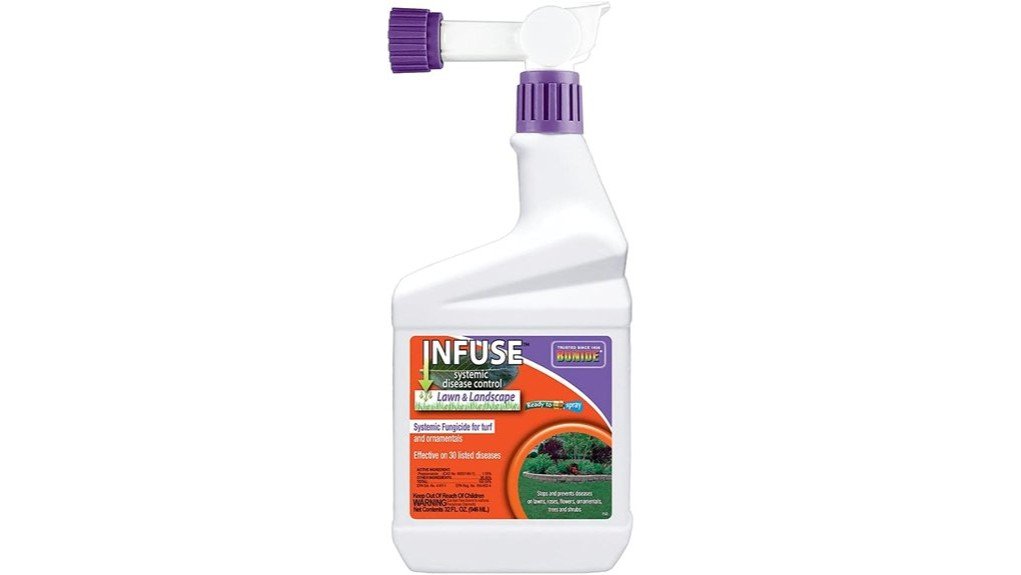
You’ll find Bonide Infuse is a ready-to-spray systemic fungicide that gives broad-spectrum control for lawns and ornamentals, handling rust, powdery mildew, blight, leaf spot and 30+ diseases with up to four weeks’ protection per application. One quart hooks to a hose-end sprayer and treats up to 3,200 sq. ft., so it’s convenient and cost-competitive for DIY and pros. It’s not organic, so rotate modes of action and follow the label, and more practical usage and comparison details follow.
Some Key Takeaways
- Ready-to-spray systemic fungicide that attaches to a hose-end sprayer and treats up to 3,200 sq. ft. per quart.
- Controls 30+ diseases (rust, blight, powdery mildew, scab, leaf spot) on lawns, roses, ornamentals, trees, and shrubs.
- Provides systemic protection lasting up to four weeks with visible symptom reduction in 3–7 days.
- Best used proactively after mowing in cool, dry conditions; avoid watering for 24 hours and check rain timing.
- Pros: wide-spectrum, convenient application; cons: synthetic (not organic) and requires mode-of-action rotation for resistance management.
Quick Verdict: Is Bonide Infuse Worth Buying for Lawns and Ornamentals?
If you want reliable, long-lasting disease control for lawns and ornamentals, Bonide Infuse is worth considering: it’s a ready-to-spray, systemic fungicide that controls over 30 common diseases and can protect turf and landscape plants for up to four weeks per treatment. You’ll find it practical: one quart treats up to 3,200 sq. ft., attaches to a hose-end sprayer, and fits routine maintenance. In a cost comparison it’s competitive with pros and DIY options. User testimonials praise ease and visible results, and you’ll join neighbors who trust a single, straightforward product for seasonal disease management. When selecting fungicides, prioritize broad-spectrum protection and proper application timing to get the best results.
What Diseases and Plants Bonide Infuse Actually Controls
Wondering exactly what diseases Bonide Infuse tackles? You’ll get systemic, broad-spectrum control across ornamentals and turf: rust, blight, powdery mildew, scab, leaf spot and over 30 listed diseases. Use it on roses, flowers, trees, shrubs and lawns—so it’s practical whether you care for beds or turf. It addresses common roses diseases that wreak havoc on blooms and foliage, and it suppresses major turf pathogens that cause thinning, spots, and discoloration. You’ll appreciate reliable, long-lasting protection up to about four weeks per application when used as directed on the label. Join others who expect solid, predictable results. It’s an option homeowners can use as part of a preventative turf fungicide program to protect lawns and landscape plants.
How to Use Bonide Infuse: Coverage, Timing, and Application Tips
When you’re ready to protect beds or turf, start by confirming coverage—one quart of Bonide Infuse ready-to-spray treats up to 3,200 sq. ft.—and attach the bottle to a hose-end sprayer for even application; apply to lawns after mowing and follow label rates for ornamentals to get up to about four weeks of systemic control. Before you spray, do sprayer calibration to make certain even delivery. Apply in cool, dry conditions and avoid watering for at least 24 hours; check rain timing to prevent wash-off. Treat proactively at first disease signs and maintain a seasonal schedule so your garden feels reliably protected. For homeowners, choosing the right fungicide sprayer can improve application accuracy and coverage.
Performance, Longevity, and Real-World Results From Lawns and Gardens
Expect reliable, long-lasting results from Bonide Infuse in both lawns and landscape beds: treated areas typically see systemic suppression of common fungal issues for up to four weeks per application, with many users reporting visible reductions in rust, powdery mildew, leaf spot, and blight within 3–7 days. You’ll notice rapid bounceback in stressed turf and ornamentals as symptoms retreat and growth resumes. Real-world users report consistent seasonal persistence when applications follow label timing, yielding fewer outbreak cycles. Apply as directed, monitor results, and you’ll join neighbors who trust Infuse for predictable, community-minded disease management across lawns and gardens. Regular preventative applications and proper cultural practices help maintain lawn disease prevention and reduce the need for corrective treatments.
Pros, Cons, and When to Choose Bonide Infuse Versus Alternatives
Although no single product fits every garden situation, Bonide Infuse gives you a strong, user-friendly option when you need broad-spectrum, systemic disease control that lasts up to four weeks. You’ll like its ready-to-spray convenience, wide disease spectrum, and long coverage—ideal for lawns, roses, shrubs, and ornamentals. Consider alternatives if you need organic labels, different active ingredients, or lower cost per treatment. Time your application timing after mowing and before disease peaks. Rotate modes of action and follow resistance management practices to protect efficacy. Choose Infuse when you want reliable, simple protection; pick alternatives for specific constraints or philosophies. Many homeowners prefer eco-conscious choices and seek organic fungicide alternatives when reducing synthetic inputs in their lawn and landscape.
Some Questions Answered
Is Bonide Infuse Safe for Edible Plants Like Vegetables and Fruit Trees?
Yes — you can use it on edible safety grounds, but you’ll follow label directions and observe the harvest interval. You’ll treat fruit trees and some vegetables, but you won’t spray close to harvest unless the label permits. You’ll check specific crop listings, application rates, and reentry/harvest intervals on the label to guarantee safety. You’ll protect pollinators and use gloves, avoiding drift to nearby edibles for shared garden safety.
Can Children or Pets Enter Treated Areas Immediately After Spraying?
No — you shouldn’t let children or pets enter treated areas immediately after spraying. Follow the product’s post application reentry interval and post warning signage or safety interval signs until the spray has dried and the label’s specified time has passed. You’ll protect your household by keeping everyone out, posting clear safety interval signs, and only allowing reentry when the label and drying time confirm it’s safe for people and pets to return.
Does Bonide Infuse Have Any Odor or Stain Surfaces/Fabrics?
You won’t notice a strong chemical smell after application; any odor is mild and fades as it dries. You should still avoid contact until treated areas are dry to prevent transfer. Infuse generally won’t stain surfaces or fabrics, but you should wipe accidental sprays immediately since lingering residue could discolor sensitive materials. Follow label directions and test on an inconspicuous spot if you’re worried about staining.
How Should Leftover Product Be Stored and What Is Its Shelf Life?
Store leftover product in a cool, dry place at the recommended storage temperature (avoid freezing and extreme heat), keeping the original label intact and preserving container integrity. You’ll want the cap tightly closed and the bottle upright, away from children and pets. If the container is damaged, transfer to an approved, labeled container. When stored properly, you can expect reasonable shelf life—generally a few years; always check the label for specific expiration guidance.
Is Bonide Infuse Compatible With Other Lawn Care Products or Fertilizers?
Yes — you can tank mix Bonide Infuse with some lawn care products, but you’ll check label directions first and test a small area. Timing compatibility matters: don’t apply fertilizers or other pesticides too close to fungicide treatment; wait recommended intervals to avoid phytotoxicity and reduced effectiveness. You’ll follow compatibility charts, do a jar test for mixtures, and coordinate applications so your lawn care routine stays safe, effective, and community-minded.