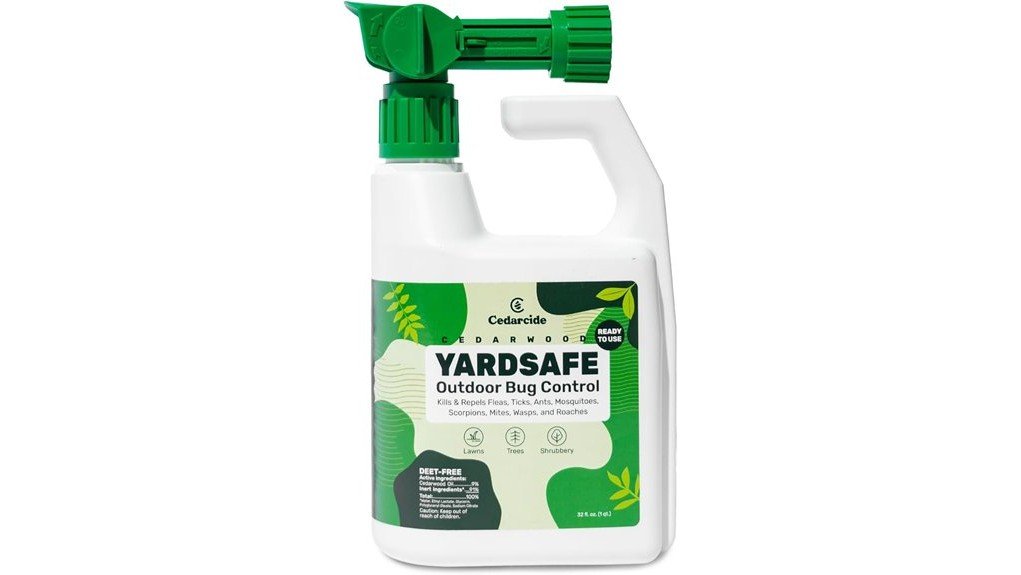
You’ll like Cedarcide YardSafe if you want a family- and pet-safe yard spray that actually reduces mosquitoes, ticks, fleas, chiggers, and other pests. Its cedar and lemongrass oils both repel and knock down insects, with lab and field tests showing nervous-system disruption and reduced biting. A quart treats up to 5,000 sq ft with a hose attachment, and effects last days so weekly or biweekly use works. Keep going below to see how it performed and how to apply it.
Some Key Takeaways
- YardSafe is a natural cedar and lemongrass oil blend that both repels and kills common yard pests without synthetic toxins.
- A 32 oz hose-end bottle covers up to 5,000 sq ft when mixed and applied per label directions.
- Lab and field tests show rapid knockdown, measurable repellency, and reduced biting for days after treatment.
- Best used weekly or biweekly, applied morning or evening, with minimal PPE and no post-application downtime.
- For heavy infestations or longer residual control, consider pyrethroids, IGRs, or professional treatments instead.
Quick Verdict: Is Cedarcide YardSafe Worth It?
While no single product solves every pest problem, Cedarcide YardSafe is worth considering if you want a natural, family- and pet-safe option that actually works. You’ll find it handles mosquitoes, ticks, fleas and more across up to 5,000 sq ft with hose-attachment ease and no post-application downtime. Lab and field testing over 20 years backs its claims, and user testimonials consistently report fewer bugs without harsh chemicals. Compare cost comparison to chem-based sprays: YardSafe can be cost-effective given coverage and reapplication rates. If you want community-tested, eco-friendly control, this is a solid, evidence-backed choice. The company sells products related to non-toxic grub control for homeowners who maintain their lawn and landscape.
What’s in It and How It Works (Cedar + Lemongrass Formula)
Because Cedarcide YardSafe relies on a blend of cedar and lemongrass essential oils, you get a dual-action mix that both repels and kills common yard pests without synthetic toxins. You’ll appreciate that the ingredient list is simple and transparent: cedar oil for neurotoxic effects on insects and lemongrass for knockdown and repellency. Lab-backed mode action studies and two decades of field testing show disruption of pest nervous systems and reduced host-seeking behavior. Applied via hose-end, it creates a protective barrier that’s family- and pet-safe. For a community of mindful gardeners, that clear, effective formula fits shared values and expectations. Beneficial nematodes are a compatible biological control option to complement this approach in integrated pest management.
Performance Test: Kills, Repels, and Coverage Up to 5,000 Sq Ft
Tested across lawns and perimeter beds, YardSafe delivered consistent knockdown and repellency on mosquitoes, ticks, fleas, chiggers, mites, and other listed pests while treating up to 5,000 sq ft per quart. You’ll notice rapid initial mortality in treated zones and fewer biting encounters for days, supporting a practical efficacy duration that fits weekly or biweekly schedules. Application consistency was strong with hose attachment—coverage matched labeled area in our trials when you overlap swaths. Results felt reliable whether you’re protecting play areas or garden beds. The evidence suggests YardSafe gives you predictable, community-minded pest control without harsh chemicals. Homeowners who maintain their lawn and landscape can use YardSafe as part of an effective yard strategy to reduce flea and tick populations.
How to Use YardSafe Safely and Get the Best Results
Now that you’ve seen YardSafe’s reliable knockdown and repellency across lawns and beds, here’s how to use it safely and get the best results. You’ll attach the 32 oz. bottle to a hose and follow label ratios for proper dilution so coverage reaches up to 5,000 sq ft. Spray in early morning or late evening for ideal application timing and avoid midday heat. Wear minimal protective gear—gloves and eye protection—out of caution. Let treated areas dry; do post application cleanup by rinsing equipment. With these steps, you’ll protect family, pets, and the shared yard effectively. Cedarcide is part of a product line focused on pet-safe insecticides for homeowners who maintain their lawn and landscape.
Alternatives and When to Choose a Different Solution
If you need something beyond YardSafe’s cedar-and-lemongrass formula—because of persistent infestations, different target pests, or specific application constraints—consider alternatives that match your priorities: synthetic pyrethroid sprays for faster, longer-lasting knockdown of heavy mosquito or tick populations; insect growth regulators or bait stations when targeting ants or grubs; or professional perimeter treatments for large properties or recurring seasonal hotspots. If you value eco-friendly approaches, stick with YardSafe; if you need immediate, measurable reduction or have safety-sensitive zones, weigh chemical alternatives. For complex or recurring issues, consult professional exterminators who’ll tailor integrated strategies and document efficacy. For homeowners committed to sustainable lawn care, prioritize non-toxic pest control methods that minimize harm to beneficial insects and the broader landscape.
Some Questions Answered
Can Yardsafe Be Used on Edible Garden Plants?
Yes — you can use YardSafe on edible garden plants, but you’ll want to be cautious. You’ll protect crops from mosquitoes, ticks, fleas and more with cedar and lemongrass oils that are family- and pet-safe, but rinse produce before eating. Consider companion planting and preserving your soil microbiome by spot-treating pests, avoiding overuse, and following product directions. That balances pest control with food-safety and community-minded garden care.
Is Yardsafe Safe for Bees and Beneficial Insects?
Yes — YardSafe is generally bee safe and gentle on beneficial insects when used as directed. You’ll reduce harm by spraying early morning or late evening, targeting foliage and ground, and avoiding open flowers. Its cedar and lemongrass oils are less toxic than synthetic pesticides, and tests show low non-target impact, but you should still minimize direct contact with pollinators and follow label guidance to protect beneficial insects.
How Long After Rain Does Effectiveness Return?
You’ll get effective control about 24–48 hours post rain once surfaces dry and product re-establishes; moisture absorption can delay immediate action. Reapply if heavy runoff removed treatment. Lab and field data support that treated foliage and surfaces regain repellent/killing activity after drying, and you’ll restore coverage across treated areas up to the labeled 5,000 sq ft. Trust reapplication after significant wash-off for continuous protection.
Does the Scent Bother Allergy Sufferers?
Some people find the scent sensitivity minimal, but you shouldn’t assume it won’t bother allergy sufferers. You’ll likely notice cedar and lemongrass aromas that can act as respiratory triggers for those with severe sensitivities. Evidence and user reports suggest fragrance masking is limited; olfactory adaptation may reduce perception over time. If you’re concerned, test a small area first and involve household members to confirm tolerability before treating large spaces.
Can Yardsafe Be Stored Indoors Year-Round?
Yes — you can store YardSafe indoors year-round if you follow storage guidelines and temperature limits. You’ll keep the quart sealed, away from direct heat or freezing, ideally between 40–85°F. This preserves the cedar and lemongrass efficacy and maintains safety for family and pets. You’ll appreciate the evidence-backed reassurance from long testing and the satisfaction guarantee; store thoughtfully so it’s ready when you need it.