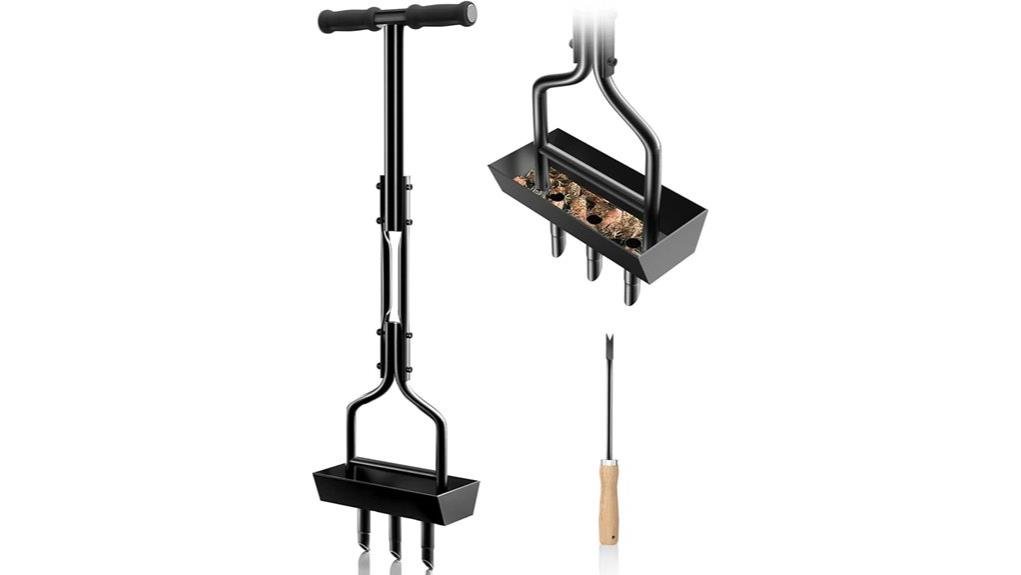
You’ll find the EEIEER manual lawn aerator a sturdy, no-frills choice if you’ve got a compacted or patchy small yard and want effective coring without gas or electric machines. Its three sharp tines and 38″ ergonomic handle cut down bending and steps, while the soil basket keeps plugs contained. It handles loam and sandy soil easily but needs pre-soaking or extra effort on hard clay; clear plugs often to keep tines working — keep reading for full tips and alternatives.
Some Key Takeaways
- Durable one-piece construction and reinforced tines resist bending and reduce seam failures for long-term use.
- Ergonomic 38″ handle and 4.3″ elevated foot pedal reduce bending and leverage strain during coring.
- Three sharp tines per press speed coverage and improve aeration efficiency on small to medium yards.
- Performs well on loam and moderately compacted turf; pre-soak very hard or clay soils for easier penetration.
- Built-in soil basket and cleaning stick simplify plug collection and routine maintenance.
Quick Verdict: Who the EEIEER Manual Lawn Aerator Is Best For
If you’ve got a compacted lawn or small yard and want a low-cost, low-effort way to improve drainage and root health, the EEIEER Manual Lawn Aerator is a solid pick — especially if you prefer manual tools over gas or electric machines. You’ll find it suits beginner gardeners and urban renters who need a tidy, effective solution without heavy equipment. The ergonomic 38″ handle and three-tine coring make whole-yard use easier, while the soil basket keeps shared spaces clean. Pre-soak very hard ground, use the cleaning stick as needed, and empty the basket promptly to keep performance consistent. This tool fits well for homeowners who enjoy their outdoor spaces and want to choose the best aerator for routine lawn care.
How the EEIEER Aerator Performs on Different Soils and Lawns
While the EEIEER aerator handles average loam and moderately compacted turf with steady, efficient coring, you’ll need to adjust technique for extremes: pre-soak very hard, dry ground to let the three sharp tines penetrate without excessive force, and expect quicker, easier passes on sandy or well‑tilled soils. For heavy clay or deep compaction depth you’ll make slower, deliberate steps and remove accumulated plugs often to keep tines effective. On patchy, thin lawns the tool creates targeted holes that encourage root recovery without overworking fragile turf. You’ll appreciate consistent results and the simple care routine that keeps performance reliable. For routine upkeep, follow the manufacturer’s guidance on cleaning and storing the spike aerator to extend its life and preserve spike aerator performance.
Build Quality and Design Details That Affect Longevity
Because the EEIEER aerator uses an integrated one-piece patented bottom structure and thicker high-density alloy walls, you’ll see fewer stress points and a markedly lower risk of weld-related failure over time. You’ll appreciate the high strength alloy construction paired with reinforced tines that resist bending during repeated use. The 4.3″ elevated foot pedal ergonomics reduce force spikes that cause metal fatigue. Soil basket drainage limits trapped moisture that accelerates rust, and the integrated bottom design prevents seam failures common in welded tools. Treat the handle to anti-corrosion care to keep joints solid, and you’ll own a dependable tool. Choose the right manual aerator by considering lawn and garden needs to match the design features to your yard.
Real-World Usability: Comfort, Speed, and Maintenance Tips
When you push the EEIEER manual aerator across your lawn, the 38″ ergonomic handle and 4.3″ elevated foot pedal cut down on bending and leverage strain so you can cover more ground with less fatigue. You’ll notice reduced foot fatigue when you adopt a steady step rhythm—three tines per press means fewer steps for full coverage. Make simple handle adjustments to match your height and stance; that keeps posture consistent and pace efficient. Use the built-in soil basket and included cleaning stick as storage solutions and maintenance aids. Empty and clear tines promptly to prevent clogs and prolong service life. For homeowners, choosing tools designed for home gardeners helps ensure comfort and durability.
Final Pros, Cons, and Whether It’s Worth Buying (Alternatives to Consider)
If you want a durable, no-frills manual aerator that reduces bending and speeds up coring, the EEIEER is worth strong consideration. You’ll get solid construction, a 38″ handle, three sharp tines, and a soil basket—great for shared projects and pride in your yard. Pros: efficient coring, reduced strain, easy cleaning tool. Cons: manual effort on very hard ground, you’ll need pre-soaking sometimes, and routine maintenance frequency matters to avoid buildup. Check warranty coverage for peace of mind. If you want alternatives, consider powered aerators for large yards or spike shoes for quick touch-ups. This tool fits well with homeowners who enjoy their outdoor spaces and want better, cleaner lawn edges lawn edging tools.
Some Questions Answered
Does It Work With Thatch Buildup or Only Compacted Soil?
Yes — it helps with thatch removal but it’s best for compacted soil. You’ll dig cores that lift some thatch and promote turf rejuvenation, and the three tines speed the job. For heavy thatch you’ll want a dedicated dethatcher first, then use this aerator to improve root access. Pre-soak very hard areas, empty the soil basket, and clean tines so you and your neighbors can share healthier, revived turf.
Can You Aerate Right After Fertilizing or Seeding?
You should wait 24–48h after fertilizing or seeding before aerating to let products settle and seeds establish. Avoid wet soil—working muddy ground compacts soil more and clogs tines. If soil’s very dry, pre-soak lightly, then wait the 24–48h window. Clean and empty the basket after use to keep things tidy. You’ll protect your lawn and get better results while staying part of a caring gardener community.
Is It Suitable for Rocky or Root-Filled Yards?
Not ideal — rocky terrain and heavy root obstruction will limit this aerator’s effectiveness. You’ll struggle to insert the tines into stones or thick roots, risking bent tines or stalled progress. If your yard has scattered rocks or surface roots, you can still use it cautiously: pre-clear large stones, trim exposed roots, and pre-soak compacted patches. For very rocky or root-filled areas, consider a heavier-duty or powered aerator instead.
Can the Handle Be Shortened or Removed for Storage?
Yes — you can remove the handle for compact storage. The aerator’s 38″ handle detaches so you’ll reduce storage length and fit it in tight spaces. Handle removal is straightforward; follow the included instructions and keep the hardware together so you can reattach easily. You’ll appreciate the shorter storage length in a shared garage or shed, and the simple process helps everyone feel confident using and caring for the tool.
Are Replacement Parts or Extra Tines Available?
Yes — you can get replacement tines and spare hardware for the aerator. You’ll want to buy manufacturer-approved replacement tines or a spare hardware kit to guarantee fit with the patented one-piece base and three-tine setup. Keep an extra cleaning stick and bolts on hand so you and your neighbors can swap parts quickly. Order before heavy season; having spares keeps your shared lawn work uninterrupted and more inclusive.