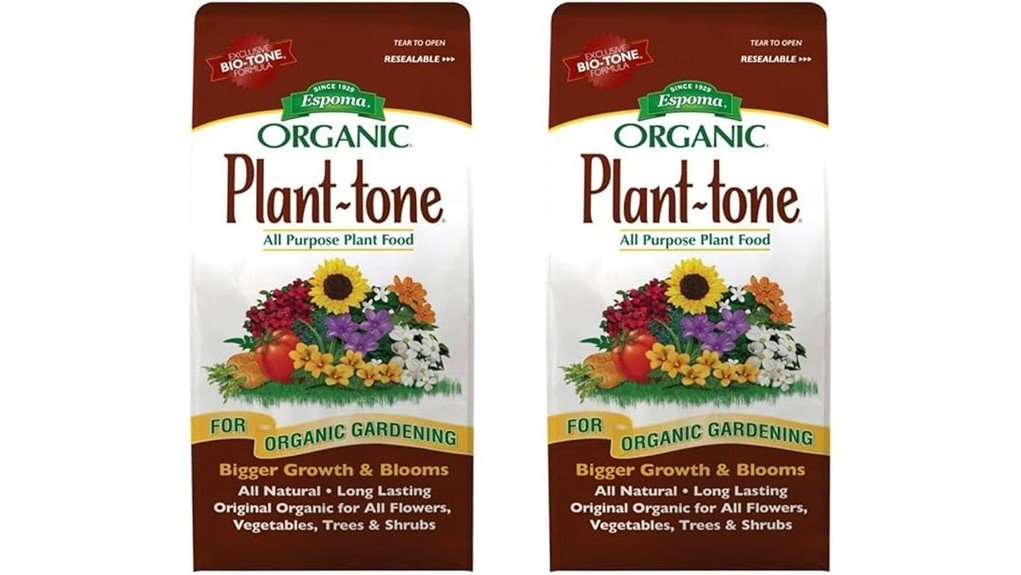
You’ll find Espoma Organic Plant-Tone 5-3-3 a dependable, slow-release granular fertilizer that’s great if you want steady, eco-friendly feeding for flowers, vegetables, trees, shrubs and containers. It’s a 5-3-3 blend with 5% calcium plus organic matter that needs microbes to free nutrients; Espoma’s Bio-Tone adds root-colonizing microbes to boost uptake and resilience. Apply monthly in season or around drip lines for trees, water in, and expect gradual, consistent results — more tips and specifics follow.
Some Key Takeaways
- Certified organic 5-3-3 granular fertilizer with added 5% calcium and Bio-Tone microbial inoculant for healthier roots.
- Slow-release, microbe-dependent nutrient delivery promotes steady growth without rapid foliage spikes or fertilizer burn.
- Improves bloom duration, fruit set, transplant success, and overall soil microbiome for predictable garden performance.
- Best for flowers, vegetables, trees, shrubs, and containers when applied monthly during the growing season.
- Drawbacks: slower acting than synthetics and limited NPK for heavy feeders needing quick high-nitrogen boosts.
What Espoma Plant-Tone 5-3-3 Is and Who It’s For
While Espoma Plant-Tone 5-3-3 is formulated as an all-purpose organic granular fertilizer, it’s especially well suited for home gardeners who want a safe, easy-to-use option for flowers, vegetables, trees, and shrubs. You’ll find a 4 lb granular bag that’s ready to apply around the drip line; water after spreading. It’s registered organic and free of sludge or toxic fillers, so organic beginners feel confident. Container gardeners appreciate gentle feeding for tomatoes, peppers, and annuals. Use it monthly in the growing season or in spring and fall for trees and shrubs to maintain steady, balanced growth. This product aligns well with creating a child-safe lawn using eco-friendly products for homeowners who maintain their lawn and landscape.
How Plant-Tone Works: Ingredients, NPK, and Bio-Tone Benefits
Because Plant-Tone combines a modest 5-3-3 N-P-K with organic matter and Espoma’s Bio-Tone inoculant, it feeds plants steadily while improving soil biology rather than forcing rapid, short-lived growth. You’ll get balanced nitrogen for leaf growth, phosphorus for roots and blooms, and potassium for overall vigor, plus a 5% calcium boost to strengthen cell walls. The granules release nutrients slowly as microbes mineralize organic ingredients. Bio-Tone supplies organic microbes that colonize roots, improving nutrient uptake and disease resistance. Apply around the drip line and water in; you’ll nurture soil life and resilient plants season after season. This product is well-suited for homeowners maintaining lawns and landscapes seeking liquid organic fertilizers and other organic amendments.
Real-World Performance: Results on Flowers, Vegetables, Trees, and Shrubs
Having covered how Plant-Tone feeds plants and builds soil biology, let’s look at how that translates in the garden. You’ll notice extended bloom duration on annuals and roses, with petals lasting longer between deadheading. Vegetables show steady fruit set and balanced foliar health—leaf color improves without excessive lushness. Trees and shrubs report gradual, resilient root development and better transplant success when used over seasons. Much of this ties to an improved soil microbiome that releases nutrients more predictably, so you get consistent growth rather than spikes. Overall, results feel reliable, approachable, and supportive for community gardeners. Child-safe weed pullers also complement these benefits by reducing chemical exposure and promoting safer lawn maintenance.
Application, Timing, and Coverage Tips for Best Results
When you apply Plant-Tone, work it into the top inch of soil around the plant’s drip line and water thoroughly so the granules start releasing nutrients and activating the Bio-tone microbes. For established shrubs and trees use drip line placement to guarantee roots access nutrients; apply in spring application and again at fall timing for root stores. For annuals, vegetables, and roses follow label rates and practice monthly feeding during the active growing season. Spread evenly, avoid contact with stems, and adjust rates for container-grown plants. Keep a simple calendar so your community of gardeners stays consistent and confident in results. Espoma’s starter fertilizer and seed offerings are designed specifically for homeowners maintaining their lawn and landscape, making it easier to establish healthy turf and plantings with starter fertilizer.
Pros, Cons, Price Value, and Buy-or-Pass Verdict
If you want reliable, all-purpose organic feeding without fuss, Espoma Plant-Tone delivers consistent results for a wide range of plants. You’ll appreciate pros like certified organic ingredients, Bio-tone microbes, easy granular application, and a balanced 5-3-3 with added calcium. Cons include slower release than synthetics and limited NPK for heavy feeders. In a cost comparison it’s competitive for quality organic fertilizer, especially in a 2-pack. User testimonials praise improved blooms and soil health. Price-to-performance favors buyers who value organic certification and simplicity. Verdict: buy if you want steady, eco-friendly feeding; pass if you need rapid, high-N boost. It’s a solid choice for homeowners focused on improving lawn and garden health with organic compost topdressing.
Some Questions Answered
Can I Use This on Indoor Houseplants and Potted Containers?
Yes — you can use it on indoor varieties and in potted containers, but you’ll want to adjust rates and monitor container watering. You’ll apply granules sparingly to potting soil surface, then water thoroughly to activate nutrients without drowning roots. Use monthly during active growth, reduce in winter, and watch for salt buildup. You’ll join other growers who get steady, organic feeding while keeping roots healthy and soil balanced.
Is This Safe for Pets and Around Children After Application?
Yes — when you follow label instructions, it’s considered pet safety-friendly and child-safe after application once granules are watered in and dry. You should apply at recommended application timing (spring/fall or monthly in season), water thoroughly to dissolve granules, and keep pets and kids off treated soil until it’s absorbed. Store bags securely. If ingestion occurs, contact your vet or poison control for guidance — you’re not alone in taking precautions.
How Long Does One 4 Lb Bag Typically Last for a Home Garden?
A single 4 lb bag typically lasts 2–4 months for a small home garden. You’ll follow the application frequency: monthly for vegetables, flowers and roses, spring/fall for trees and shrubs. Coverage area depends on rates you use, but expect about 100–200 square feet per bag at light feeding rates; heavier feeding reduces that. You’ll feel confident sharing tasks and stretching the product across beds and containers.
Does It Require Special Storage or Have a Shelf Life?
No, it doesn’t need special storage, but you should keep it dry and in cool storage to preserve quality. You’ll want to seal the bag, protect it from moisture and pests, and store off the ground. There aren’t formal expiry indicators, but watch for clumping, foul odor, or mold—those signal reduced effectiveness. Treat it like community garden supplies: share tips, rotate stock, and you’ll keep your fertilizer reliable.
Can Plant-Tone Be Mixed With Other Fertilizers or Soil Amendments?
Yes — you can mix Plant-Tone with many organic amendments, but you’ll want to do compatibility testing first. You’ll blend granules into soil or compost rather than mix chemically with other fertilizers, and you’ll respect application timing — spring or monthly during growth for veggies and flowers. You’ll avoid overlapping high-salt synthetics, monitor plants, and adjust rates. You’ll feel confident sharing results with fellow gardeners.