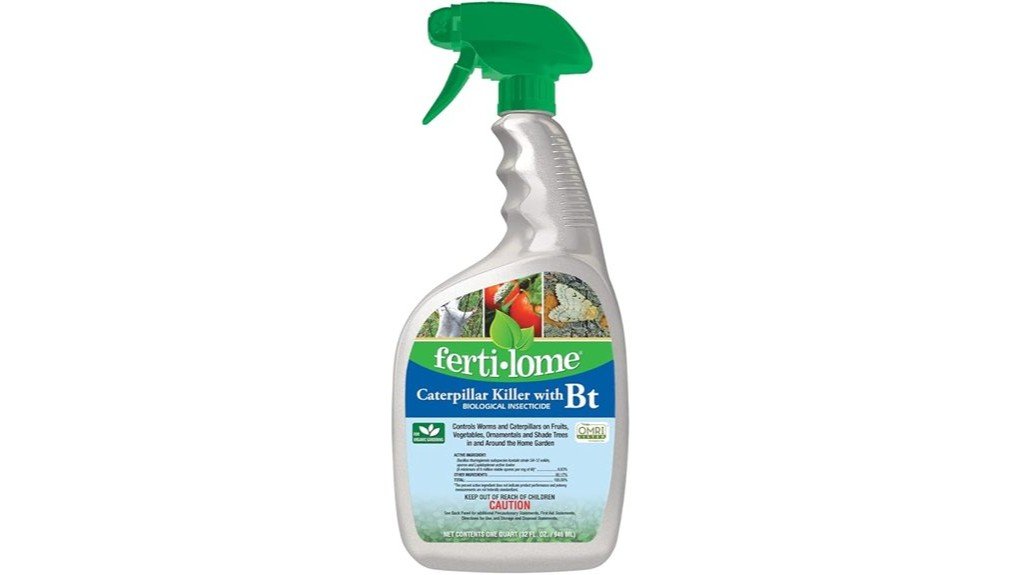
Fertilome Caterpillar Killer (RTU 32 oz, code 16016) works reliably when you spray thoroughly and on schedule; it’s an OMRI‑listed Bt product that quickly stops feeding and kills common leaf‑chewing larvae like hornworms, loopers, bagworms and gypsy moths. Use it on vegetables, fruits, ornamentals and shade trees, targeting tops and undersides of leaves and reapplying after heavy rain. It’s safe for people and pets when used as directed and fits into integrated pest plans—keep going to learn application tips and limits.
Some Key Takeaways
- Fertilome Caterpillar Killer (Bt, 32 oz RTU) quickly stops caterpillar feeding and causes mortality when thoroughly sprayed on foliage.
- Works reliably on tomato hornworm, cabbage looper, tent caterpillars, bagworms, and gypsy moth larvae when labeled rates are followed.
- Best results require complete coverage of tops and undersides of leaves and reapplication after heavy rain or per label intervals.
- OMRI‑listed Bt formulation is safe for people, pets, and many beneficials, but timing reduces harm to non‑target caterpillars and pollinators.
- Suitable for vegetables, fruits, ornamentals, and shade trees; available as product code 16016 at garden centers and online.
Does Fertilome Caterpillar Killer Actually Work on Caterpillars?
Although no product eliminates every pest, Fertilome Caterpillar Killer does work reliably on caterpillars when applied correctly. You’ll see prompt feeding cessation and mortality because the Bt formulation targets larval gut systems. Field trials back those outcomes across common outbreaks, so you can trust practical efficacy rather than promises. Follow label rates and spray contact areas thoroughly; that consistency matters for results. Integrate this tool into a wider program—rotate tactics and monitor populations—to support resistance management and prolong effectiveness. You’ll join other gardeners who protect crops responsibly, using a selective product that fits into organic and integrated plans. Quick-germinating repair seeds can help restore turf quickly after caterpillar damage, providing a fast way to recover lawn health.
Which Pests and Plants Is It Labeled to Control and Use On?
When you read the label, you’ll see Fertilome Caterpillar Killer is specifically aimed at leaf‑chewing caterpillars—things like tomato hornworm, cabbage looper, tent caterpillar, bagworms and gypsy moth—so it’s intended for direct control of those larvae. You’ll appreciate the clear target pests list; it narrows focus so you can act confidently. The label also names suitable plants: vegetables, fruits, ornamentals and shade trees, making it practical across your garden. Use it where leaf‑feeding caterpillars threaten foliage and harvests. Follow label directions to protect beneficials and maintain the shared stewardship of your garden community. For managing turf pests like sod webworms, consider integrating effective cultural practices such as proper mowing, watering, and monitoring to reduce infestations.
How to Apply the Ready-To-Use 32 Oz. Spray for Best Results?
Before you spray, shake the 32 oz. bottle well and test the nozzle so you get an even, fine mist; then apply the Ready‑To‑Use solution directly to the tops and undersides of infested leaves until they’re thoroughly wet but not dripping. Aim applications at first signs of feeding; early application timing gives the best control. Use short, overlapping sweeps and maintain consistent distance for full coverage. Focus on affected plants—vegetables, fruits, ornamentals, shade trees—and treat all larvae hotspots. Reapply according to label intervals, especially after heavy rain. Mastering nozzle technique and timing makes you an effective member of the garden care community. Consider pairing care routines with the right large-capacity seeder to maintain your lawn and landscape.
Safety, Organic Certification, and Non-Target Impacts You Should Know
Curious how safe Fertilome Caterpillar Killer really is for your garden and family? You’ll appreciate that its Bt biological active ingredient supports strong human safety—it’s not toxic to people or pets when used as directed. Its OMRI-listed organic status means you can include it in community and certified organic gardens with confidence. It targets leaf-chewing pests while sparing many beneficials, but be mindful of timing to reduce impacts on non targets like caterpillar-feeding natives. Environmental persistence is low, breaking down relatively quickly, so retreatment—not long-term residue—drives control. Follow label instructions to protect pollinators and your ecosystem. Our range of biological thatch reducers and lawn-care products can help maintain a healthy turf that supports beneficial insects and reduces pest habitat, including options for thatch management.
Verdict: Who Should Buy It and Where to Get Product Code 16016
So who should buy Fertilome Caterpillar Killer? You should if you’re part of the gardeners worldwide community seeking an OMRI-listed, Bt-based control for caterpillars on vegetables, fruits, ornamentals, and shade trees. It fits group gardens and backyard plots, protects tomato hornworm, cabbage looper, bagworms, tent caterpillars, and gypsy moth without harming pets or non-leaf-eating insects. Budget shoppers will appreciate the ready-to-use 32 oz spray (product code 16016) for straightforward applications. Buy at garden centers, farm stores, or reputable online retailers that list product code 16016; join fellow stewards protecting plants with a proven, selective option. Many homeowners who maintain lawns and landscapes also pair this product with compost tea brewing practices to enhance overall plant health and soil biology.
Some Questions Answered
How Long Before Harvest Is It Safe to Use on Edible Crops?
You can safely apply it up to the day before harvest in most cases; follow labeled pre harvest interval guidance and local rules. Because it uses Bt, residue degradation is rapid and it targets caterpillars without leaving harmful residues on edible crops. You’ll want to rinse produce as usual. Check your product label for any crop-specific PHI and confirm organic-certification handling if you’re producing for a certified program.
Can It Be Mixed With Other Garden Sprays or Fertilizers?
Yes — but you should test first. You can tank mix Fertilome Caterpillar Killer with some sprays, yet compatibility testing matters because mixes can reduce efficacy or harm plants. Put a small jar test of proportional amounts before full application, watch for separation or reaction, then apply if stable. Stick to label directions, avoid unknown fertilizers or harsh chemicals, and join other gardeners in sharing proven, safe combinations.
Does It Harm Beneficial Caterpillars Like Monarchs?
No — you shouldn’t assume it’s harmless to monarchs. Monarch impact can occur because Bt targets caterpillars broadly, so nontarget insects like monarch larvae may be affected if they eat treated leaves. You’ll want to avoid spraying milkweed and apply selectively, at times or locations away from feeding larvae, to protect pollinator and conservation-minded gardeners. You belong to those who safeguard beneficial species; act with targeted, cautious use.
How Often Should Treatments Be Repeated During Heavy Infestations?
You should repeat treatments every 5–7 days during heavy infestations; adjust repeat intervals based on visible feeding damage. Your application frequency starts weekly, then increases to twice weekly if caterpillar numbers remain high or new damage appears. Stick with the labeled directions and reapply after heavy rain. You’ll protect your plants while supporting fellow gardeners’ standards by keeping consistent, observed, and community-minded practices.
What Storage Conditions Extend the Product’s Shelf Life?
Store the product in cool storage and a dark location to extend shelf life. Keep the sealed 32 oz. bottle upright, tightly closed, away from heat, freezing, and direct sunlight. You’ll want a consistent, temperate spot—like a garage shelf or shed cabinet—where kids and pets can’t access it. Rotate stock by date, use older bottles first, and you’ll preserve potency while protecting your garden community.