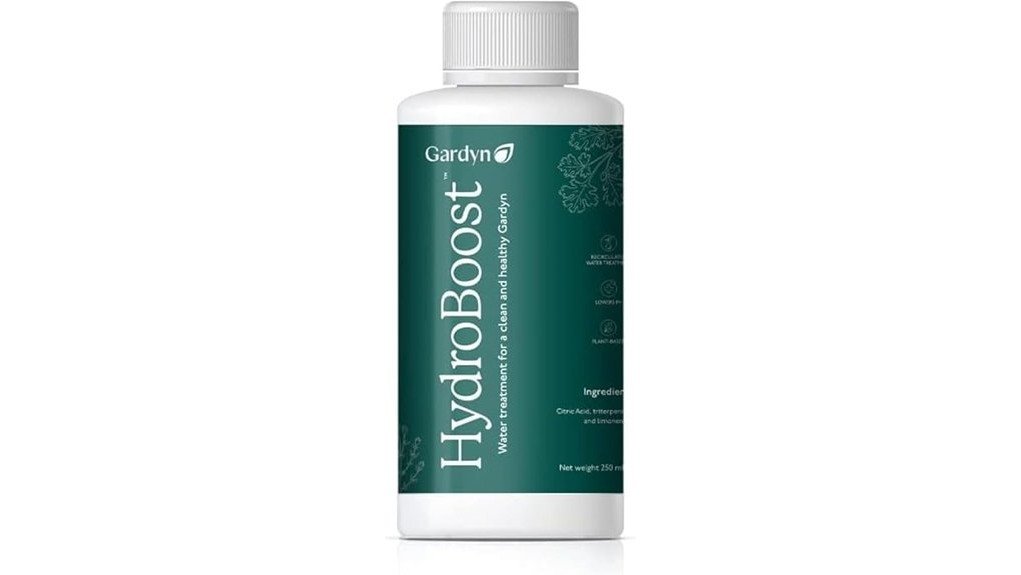
Gardyn HydroBoost is a simple, plant-safe weekly additive that’ll help keep your Gardyn hydroponic system cleaner and more stable. It uses plant-derived saponins, citric acid, and limonene to lift residues, chelate bound nutrients, lower pH gently, and reduce biofilm so you get fewer clogs and healthier roots. Weekly dosing during tank top-off is enough for most users, with more frequent use for heavy systems, and the benefits and alternatives are worth a closer look.
Some Key Takeaways
- Weekly Hydroboost dosing lowers pH, chelates nutrients, and prevents biofilm for smoother Gardyn system operation.
- Plant-derived saponins and citric acid clean hoses and roots without harming plants when used as directed.
- Users report clearer water, fewer clogs, and healthier roots with reduced deep-clean frequency.
- Baseline recommendation: add weekly during tank top-off; every three days for heavy-use systems.
- Safe for beginners, available from Gardyn, Amazon, and hydro shops; use gloves, eye protection, and label storage.
Quick Verdict: Is Gardyn HydroBoost Worth It for Hydroponic Gardeners?
If you want a simple, plant-safe way to keep your Gardyn hydroponic system running smoothly, HydroBoost delivers: it lowers pH, balances nutrients, and prevents biofilm so you’ll see fewer clogs and healthier roots with weekly use. You’ll save time and realize cost savings by cutting deep cleans and replacing fewer parts. It’s easy to add during your routine tank top-off, and user testimonials praise improved plant vigor and reduced maintenance. If you value predictable, community-tested solutions, HydroBoost fits. It won’t replace good practices, but it’s a small, effective tool that keeps your system reliable. Monitoring soil and water chemistry with soil pH monitoring helps inform nutrient adjustments and can complement HydroBoost use.
What Gardyn HydroBoost Contains and How It Works for Hydro Systems
Because it blends plant-derived saponins, citric acid, and limonene, HydroBoost works on multiple fronts to keep your Gardyn hydroponic system stable and clean. You get plant based surfactants (saponins) that lift residues and disrupt biofilm, citric acid chelation to free bound nutrients and gently lower pH, and limonene for mild antimicrobial action and odor control. You’ll add a measured dose weekly or as needed to maintain water clarity, reduce deposits in hoses, and support nutrient availability. For community-minded growers, it’s a straightforward, plant-safe formula that helps your system run cleaner with less fuss. It’s also a good companion product for homeowners using compost tea brewing kits to maintain healthy lawn and landscape systems.
Real-World Results: Effectiveness on pH, Nutrient Uptake, and Biofilm
Testing HydroBoost in real gardens shows it reliably nudges pH toward the ideal hydroponic range, improves nutrient availability, and noticeably reduces biofilm build-up when used as directed. You’ll see better pH stability across weekly cycles, which means fewer nutrient lockouts and steadier plant responses. Nutrient uptake feels more consistent—plants green up faster and recover from deficiencies sooner. Biofilm prevention is tangible: less gunk on hoses and roots, fewer maintenance headaches, and longer intervals between deep cleans. As a Gardyn user, you’ll appreciate the practical performance and the confidence it brings to your shared growing journey. For homeowners maintaining lawns and landscapes, pairing HydroBoost with regular use of digital soil pH meters helps you monitor and maintain optimal pH for healthier plants.
How to Use Gardyn HydroBoost : Dosing, Timing, and Safety Tips
Having seen how HydroBoost steadies pH, boosts nutrient uptake, and cuts biofilm in real gardens, you’ll want clear, practical guidance on dosing and timing so you get those results reliably. Use the weekly recommendation as your baseline: add once per week during tank top-off, or every three days for heavy-use systems. Measure by volume and plant load—create a simple dosing calculator spreadsheet so everyone in your group applies the same amount. Apply at mixing, not directly on roots. Keep a safety checklist: gloves, eye protection, label, and secure storage. Track results and adjust modestly; stay consistent. For homeowners maintaining lawns and landscapes, pair HydroBoost dosing with routine soil testing to better tailor nutrient management.
Who Should Buy It, Alternatives, Price, and Where to Buy
If you run a Gardyn hydroponic garden or manage a small-to-medium indoor system and want an easy weekly treatment to stabilize pH, cut biofilm, and improve nutrient uptake, HydroBoost is worth considering. You should buy it if you value low-maintenance water care, germination-safe chemistry, and fewer deep cleans. Beginner gardeners will appreciate simple dosing and predictable results. If price matters, compare budget alternatives like generic citric-acid-based cleaners or plant-safe saponin mixes, though they may need more trialing. Buy HydroBoost from Gardyn’s site or major retailers (Amazon, approved hydro shops). Check return policies and bundle discounts before purchasing. For maintaining consistent performance across your system, also consider testing coverage with sprinkler coverage testers to ensure even distribution and avoid localized buildup.
Some Questions Answered
Is Gardyn Hydroboost Safe for Fish in Aquaponic Systems?
No — you shouldn’t assume it’s safe for fish. Gardyn HydroBoost’s plant-based acids and saponins are formulated for hydroponics, not aquaponics, so they could stress aquatic life and alter water chemistry. You’ll want to test for fish safety, monitor nitrate buildup, and consult Gardyn or an aquatic specialist before use. If you value community-tested solutions, seek products explicitly labeled safe for aquaponic fish to protect your system.
Does Hydroboost Affect Beneficial Microbes in My Reservoir?
Yes — HydroBoost can affect microbial balance, but it’s formulated to reduce harmful biofilm formation without wiping out beneficial microbes. You’ll notice less slime and fewer clogs while helpful microbes that support nutrient cycling generally persist. Use recommended doses and weekly or targeted applications to maintain a healthy reservoir. You’re encouraged to monitor water parameters and adjust frequency so your system and its microbial community stay balanced and thriving.
Can Hydroboost Be Mixed With Other Nutrient Additives?
Yes — you can mix HydroBoost with other nutrient additives, but you should perform compatibility testing first. You’ll want to test small batches and check pH and clarity before full use. Avoid combining with harsh concentrates without dilution, and don’t rely on foliar application unless manufacturer guidance confirms safety. You’ll protect your plants and system by validating mixes, keeping your growing community confident and supported in safe, shared practices.
How Long Does One 250 mL Bottle Last in a Medium System?
About 4–8 weeks, depending on your system size and plant load. You’ll follow the recommended dosage frequency (weekly for most setups, up to every 3 days for heavy use), so a 250 mL bottle covers multiple doses in a medium reservoir. Stay on top of reservoir monitoring to adjust between top-offs and refreshes; you’ll spot needs early and keep plants thriving. You’re part of a community keeping things healthy.
Is Hydroboost Organic or Omri-Listed?
No — HydroBoost isn’t certified organic or OMRI-listed. You’ll notice the plant-based formulation (saponins, citric acid, limonene) but it lacks formal label verification or organic certification. If certified organic or OMRI-listed status matters to you, consider asking the manufacturer for documentation or choosing a product with explicit certification. You’re entitled to clarity, and verifying labels helps you confidently maintain the eco-friendly hydroponic system you belong to.