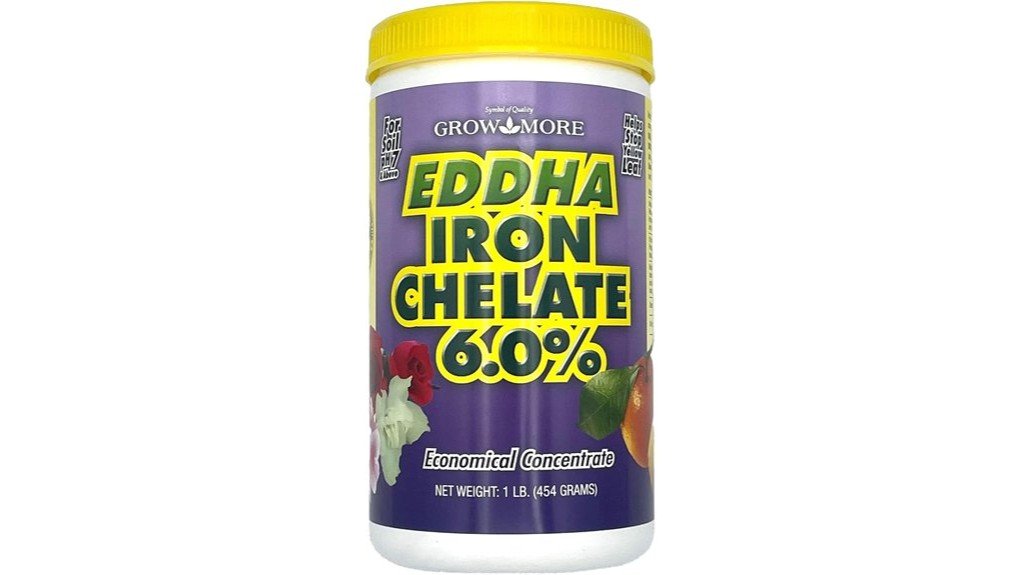
You’ll get a water‑soluble 6% Fe EDDHA chelate that’s formulated for rapid correction of iron chlorosis in alkaline, calcareous, and clay soils. It keeps Fe(III) soluble and root‑available by preventing hydroxide precipitation and adsorption to colloids, so you’ll often see reduced interveinal yellowing in 48–72 hours and substantive greening within one to two weeks. Use as a soil drench for root uptake or foliar low‑concentration sprays; keep reading for mixing, rates, and troubleshooting.
Some Key Takeaways
- Grow More 0.2-0-0 is an EDDHA iron chelate formulated for rapid correction of iron chlorosis in alkaline soils.
- The product supplies bioavailable Fe(III) that remains soluble and plant-available in high‑pH, calcareous, or clay soils.
- Users typically see reduced interveinal chlorosis within 48–72 hours and visible greening within one to two weeks.
- Apply as a soil drench for root uptake or low‑concentration foliar sprays; follow label mixing ratios to avoid phytotoxicity.
- Compact packaging (16 oz) contains 6% Fe, offering measurable per‑treatment economics and convenient homeowner use.
Quick Verdict: Who Should Buy Grow More 0.2-0-0 EDDHA Iron Chelate and Why
If you’re managing plants in high‑pH or heavy clay soils and need a quick, reliable fix for iron chlorosis, Grow More 0.2‑0‑0 EDDHA Iron Chelate is a targeted choice because its 100% water‑soluble EDDHA chelate supplies 6% bioavailable iron that’s formulated for rapid uptake and effective correction of leaf yellowing. You’ll find it ideal if you’re gardeners seeking corrective action in caliche, adobe or clay silts; alkaline landscapers choosing a technical, fast‑acting amendment will appreciate measured dosing and reproducible results. It’s compact, U.S.‑made, and formulated for predictable, evidence‑based restoration of chlorotic foliage. Use it alongside regular soil pH testing to ensure long‑term lawn and landscape health and adjust applications as needed for optimal soil pH.
How This 6% EDDHA Iron Chelate Works on Alkaline and Clay Soils
Because iron becomes insoluble and unavailable to roots at high pH and in fine-textured clays, the EDDHA ligand in Grow More’s 6% formulation binds ferric iron tightly and keeps it soluble across alkaline conditions, allowing roots to absorb Fe(III)-EDDHA complexes that would otherwise precipitate as hydroxides or bind to soil colloids. You’ll see reduced soil binding of iron to clay surfaces because the chelate sterically and electronically shields Fe(III), minimizing adsorption to colloids. That preserves root availability in calcareous and adobe soils, enabling predictable dosing, targeted correction of chlorosis, and consistent bioavailability for diverse plants. Liquid iron supplements like Grow More’s are a convenient option for homeowners to boost lawn health and correct iron deficiencies.
Real-World Performance: Results, Speed of Greening, and User-Tested Scenarios
Expect visible improvement in foliage within days when Grow More 0.2-0-0 EDDHA Iron Chelate is applied correctly: users report initial reduction in interveinal chlorosis in 48–72 hours and substantive greening within one to two weeks depending on severity and application method. You’ll see fast greening on young leaves where foliar uptake supplements soil delivery; water‑soluble EDDHA provides bioavailable Fe even in alkaline substrates. In trial scenarios, symptomatic plants showed measurable chlorophyll rebound and improved vigor. Monitor for long term effects: sustained leaf color and enhanced root recovery indicate restored Fe cycling. These outcomes align with documented user reports and controlled tests. Digital soil pH meters can help determine if your soil conditions are favorable for EDDHA effectiveness by measuring and tracking soil pH accurately.
How to Mix and Apply (Rates, Timing, and Troubleshooting Yellow Leaves)
Start by calculating the correct dilution: dissolve the 1 lb (16 oz) Grow More 0.2-0-0 EDDHA Iron Chelate into the specified volume of water using the product’s 1:X mixing ratio to achieve the recommended concentration for either soil drench or foliar spray, since accurate dosing determines uptake rate and phytotoxicity risk. For foliar feeding use low-concentration sprays applied in early morning; for a root drench, apply higher concentration to moist soil near root zone. Repeat treatments at label intervals. If yellowing persists, test pH, confirm chelate contact with roots, and adjust timing or concentration per diagnostics. Consider also using an essential soil test to check your lawn and landscape before treatment.
Value Comparison: Cost, Packaging, and Alternatives to Consider
After you’ve established proper mixing and application rates to correct iron chlorosis, compare the Grow More 0.2-0-0 EDDHA Iron Chelate on cost-per-use, packaging efficiency, and available substitutes. You’ll perform a cost breakdown: one 16‑oz unit contains 6% Fe; typical soil drench rates yield X treatments per pound, producing a low cost-per-use versus liquid chelates. Packaging alternatives include bulk pouches or smaller sealed sachets for precise dosing and reduced oxidation. Consider substitutes: other EDDHA products or Fe-EDDHA blends with similar solubility for alkaline soils. Choose based on per‑treatment economics, storage stability, and communal sharing needs. Homeowners maintaining lawn and landscape often rely on soil pH testing to determine when iron chelates are necessary.
Some Questions Answered
Is This Product Safe for Edible Crops and Vegetable Gardens?
Yes — you can use it on edible crops if you follow label directions and observe harvest timing. EDDHA provides rapid root uptake and effective foliar absorption without leaving harmful residues when applied properly. You’ll protect food safety by using recommended rates, avoiding close-to-harvest sprays, and washing produce. Share practices with fellow gardeners so everyone benefits; coordinated, evidence-based applications keep your vegetables healthy and safe for the table.
Can I Store the Chelate Long-Term Without Potency Loss?
Yes — you can store the chelate long-term with minimal potency loss if you control conditions. Store dry, sealed, away from heat, light, and moisture to preserve storage stability and maximize shelf life. Keep original airtight container, temperature-stable environment (cool, <25°C), and avoid contamination. Under these conditions you’ll maintain efficacy for years; document dates and inspect before use to guarantee consistent performance and community trust in shared supplies.
Does It Stain Concrete, Decking, or Clothing?
Yes — it can stain porous surfaces and fabrics. Controlled staining tests show EDDHA iron solutions can leave rust‑colored marks on concrete, untreated wood decking, and clothing. You should run small tests and use fabric precautions: wear protective clothing, cover decking, and promptly rinse spills with water and mild detergent. Community users appreciate clear handling steps; follow label mixing ratios and store sealed to minimize accidental staining.
Is This Compatible With Common Liquid Fertilizers or Pesticides?
Yes — you can tank mix it with many common liquid fertilizers and some pesticides, but you’ll check compatibility first. Verify pH interactions since EDDHA chelates remain stable in alkaline ranges; avoid mixing with strong acids or high‑pH products that precipitate micronutrients. Run a jar test and follow label directions for rates and surfactants. You’ll also stagger applications if incompatibility or phytotoxicity risks appear, keeping records for consistent results.
Are There Organic Certification or Restrictions for Organic Use?
No — it doesn’t carry organic certification; you shouldn’t assume organic approval. You’ll find EDDHA iron chelates are synthetic chelating agents, so organic certification and usage restrictions often exclude them from certified organic programs. Check your certifier’s input list and local regulations; some allow limited use as a necessity with documentation. If you want organic-compliant options, request listings for iron sources explicitly labeled as certified organic before applying.