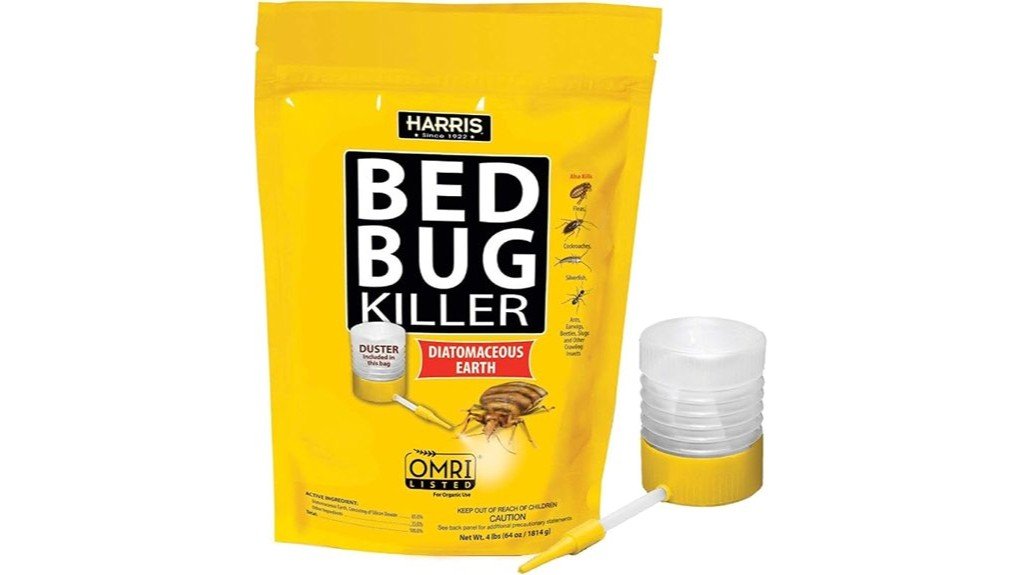
Harris Bed Bug Killer is a 4 lb EPA‑registered diatomaceous earth powder you can use for targeted, nonchemical control of bed bugs indoors and in dry outdoor hotspots. You’ll apply it with the included duster along seams, cracks, and voids while wearing a mask and gloves. It works mechanically by abrading and desiccating insects, often killing within 48 hours, and leaves weeks of residual protection on dry, undisturbed surfaces. Keep reading for application tips and safety limits.
Some Key Takeaways
- Harris Bed Bug Killer diatomaceous earth is a 4 lb EPA-registered, OMRI-listed powder designed for targeted mechanical control of bed bugs.
- It kills by physical desiccation: fossilized silica abrades and absorbs insect cuticle lipids, causing dehydration and death within ~48 hours.
- Includes a powder duster for precise application along seams, cracks, and voids; avoid visible clumps for effective contact.
- Works best on dry, undisturbed areas with residual protection for weeks; moisture or disturbance reduces effectiveness.
- Safe when used per label: wear mask/gloves, keep people and pets away during application, and consider alternatives for severe infestations.
What Harris Bed Bug Killer Is and Who Should Use It
Harris Bed Bug Killer is a 4 lb diatomaceous earth powder (model HDE-64P) that you apply with the included duster to kill bed bugs and other insects on contact; insects that contact the powder typically die within 48 hours, and the product provides weeks of residual protection when kept dry. You’ll find it’s a powder-form option registered with EPA and OMRI-listed, suited for targeted, dry treatments in cracks and crevices. Homeowners, renters, pet owners, and gardeners can use it as a non-chemical physical control tool for indoor and certain outdoor pest hotspots, following label directions carefully. It can be especially useful for maintaining lawn and landscape areas where pet urine and other soil conditions require PH neutralizers and careful, targeted pest control.
How Diatomaceous Earth Kills Bed Bugs and Expected Results
If you’ve decided to use diatomaceous earth after the previous overview, here’s how it works and what to expect: microscopic fossilized silica particles abrade and absorb lipids from a bed bug’s outer cuticle, causing dehydration and death—bugs that contact the powder usually die within 48 hours. You’ll rely on mechanical desiccation and cuticular abrasion rather than chemical toxicity, so insects don’t develop resistance. Results depend on thorough coverage and dryness; contact is essential. Expect a slow, steady reduction in live bugs over days and continued residual protection for weeks if kept dry, supporting confident, collective pest control efforts. This approach aligns with eco-friendly pest control principles promoted for homeowners maintaining lawns and landscapes.
Step-by-Step Application: Using the Included Powder Duster Safely
Before you start, put on a dust mask and gloves, then confirm the room is dry and free of pets and people for application; the included powder duster lets you deliver a controlled, even film of diatomaceous earth into cracks, mattress seams, baseboards, and other hiding spots. Work methodically: fill the duster per instructions, apply thin lines along seams and voids, and avoid visible clumps. Maintain proper ventilation while treating, use protective gloves, and limit air currents to aid dust containment. After application, close treated areas, note timing, and practice pet safety by keeping animals away until dust settles and areas are dry. For homeowners mixing or applying products, always use essential safety gear such as gloves, masks, and eye protection and follow label instructions.
Performance, Residual Effect, and Real-World Effectiveness
When you apply the diatomaceous earth correctly, insects that contact the powder typically die within 48 hours, and the product maintains a residual effect for weeks as long as treated areas stay dry. You’ll see rapid knockdown tied to contact duration; the longer bed bugs brush the powder, the quicker mortality occurs. Environmental persistence is strong on undisturbed surfaces, supporting ongoing control in cracks, seams, and voids. In real-world use you’ll combine thorough application with monitoring; results depend on coverage and dryness. Data and user reports show consistent performance when you maintain treated zones and reapply after disturbance. For homeowners maintaining lawns and landscapes, proper storage of chemical products in chemical storage cabinets helps keep treatments organized and safe.
Safety, Regulations, and When to Choose an Alternative
Although Harris Diatomaceous Earth is EPA-registered for use in homes and OMRI-listed, you should treat it as a dust-based insecticide and follow label directions to minimize exposure. You’ll appreciate regulatory compliance details: EPA registration and OMRI listing mean tested use patterns and manufacturing standards. Apply sparingly, avoid airborne dust, and keep treated zones dry for residual effect. Prioritize pet safety by excluding pets and bedding during application and ventilating afterward. Choose an alternative if respiratory sensitivity, heavy infestations, or moisture-prone areas limit effectiveness; professional integrated pest management or chemical treatments may be more appropriate. Consider lawn and landscape applications with soil acidifiers in mind when planning overall pest and plant health management.
Some Questions Answered
Can It Be Used on Mattresses With Memory Foam?
Yes — you can use it on memory foam, but you should be cautious. The powder works by contact and won’t chemically damage foam, yet it can embed in pores and affect mattress ventilation. You’ll want to apply sparingly to seams and edges, avoid heavy surface dusting, let it sit per directions, then thoroughly vacuum to restore airflow. That keeps effectiveness while preserving comfort and breathability for everyone.
Will It Stain Fabrics or Leave Visible Residue?
No — it generally won’t cause fabric discoloration, but you will see a visible buildup if the powder sits on surfaces. You’ll notice a white, chalky residue after application that can appear on light fabrics; brushing or vacuuming removes most traces. Apply sparingly and test a hidden area to be sure. You’ll protect your fabrics by keeping treated areas dry and removing excess powder once insects are controlled.
How Long Until It’s Safe for Pets to Return After Application?
You can let pets back in once treated areas are fully dry and loose dust is removed — typically a few hours to 24 hours depending on ventilation. For pet safety, vacuum or wipe surfaces after the dust has settled and avoid enclosed spaces until dust is no longer airborne. Follow label reentry timing and precautions; if pets lick treated areas, keep them out longer and consult a vet for any exposure concerns.
Can It Be Mixed With Other Insecticides for Increased Effect?
You shouldn’t mix it with other insecticides; diatomaceous earth has limited chemical compatibility and is mechanical, not chemical. Mixing can reduce physical efficacy and create synergistic risks or unforeseen residues. Use it alone per label instructions, or follow specific product guidance if a professional insecticide combo is approved. If you’re unsure, consult a pest-control professional or the EPA-registered label to keep your household safe and supported.
Is the Powder Effective Against Flea Larvae and Ticks?
Yes — it’s effective against flea larvae and can help with tick prevention. You’ll desiccate and kill soft-bodied flea larvae on contact within ~48 hours and maintain residual activity if areas stay dry, reducing reinfestation. Ticks, being tougher, are less vulnerable but still susceptible when they contact the powder. You’ll get better flea control than with many nonphysical products, and combining mechanical and chemical methods strengthens your prevention efforts.