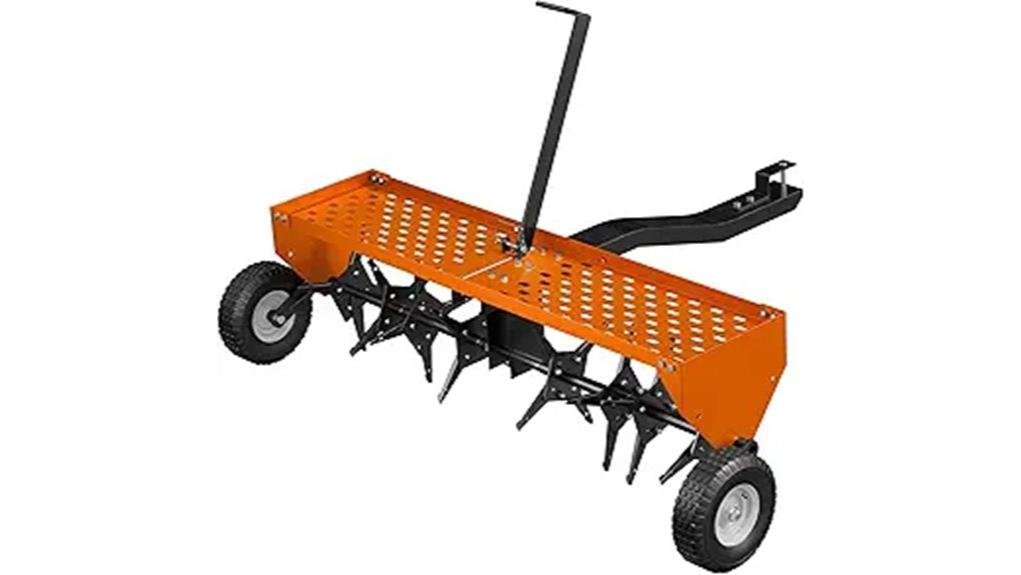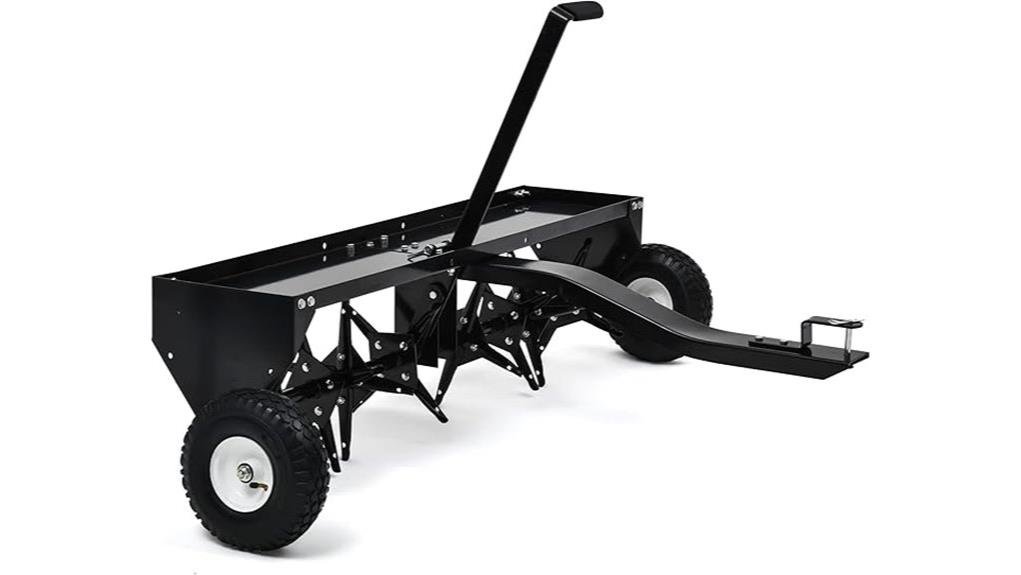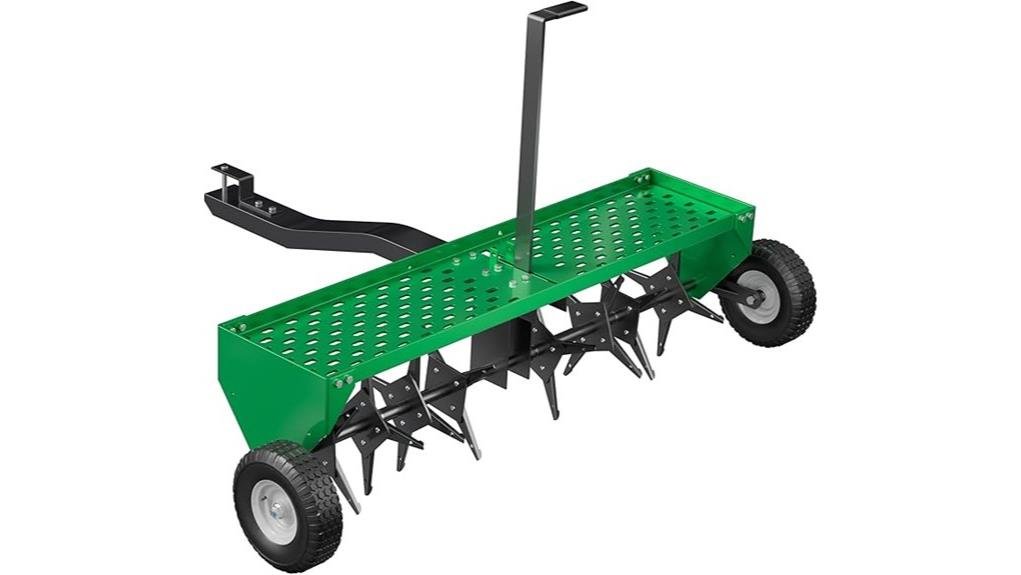
You’ll get a rugged 48″ tow‑behind aerator with all‑steel construction, 32 heat‑treated pole shovels and a 330 lb adjustable weight tray that reliably makes uniform 3″ cores to relieve compaction and improve water, seed and fertilizer uptake. It hooks to tractors, ZTRs and ATVs via a universal hitch, uses a mechanical lever for transport/work modes, and rolls on 10.5″ semi‑pneumatic tires for driveway moves. Continue for setup, adjustment and performance detail.
Some Key Takeaways
- 48″ tow-behind aerator delivers consistent core aeration with 32 heat-treated pole shovels for medium-to-large lawns.
- Adjustable 330 lb weight tray enables predictable penetration up to about 3 inches for varied soil conditions.
- Universal hitch fits lawn tractors, ZTRs, and ATVs with simple tow-pin hookup and reachable operator controls.
- Mechanical transport/work lever and 10.5″ semi-pneumatic tires allow safe driveway movement without turf damage.
- Durable all-steel construction, galvanized panels, and green finish resist corrosion for routine maintenance use.
What the 48 Tow-Behind Aerator Includes and How It’s Built
The 48″ tow‑behind aerator ships as a full, all‑steel unit with a 48‑inch working width fitted with 32 heat‑treated steel pole shovels and a universal hitch that hooks to lawn tractors, most zero‑turn mowers, and ATVs. You’ll inspect steel sourcing notes and a green paint finish on galvanized panels that resist corrosion. Assembly tips are clear: mount wheels, set transport/work levers, and load the weight tray for desired penetration. The design emphasizes robustness; durability testing data supports thickened panels and heat-treated shovels. You’ll join others who expect consistent construction, predictable setup, and long-term serviceability. Many homeowners appreciate the product’s focus on lawn aeration as an essential part of yard care.
Real-World Performance : Penetration, Soil Relief, and Turf Results
When you pull the 48″ aerator across compacted turf, its 32 heat‑treated pole shovels consistently penetrate up to 3” (adjustable with the 330 lb weight tray), creating uniform cores that let water, seed, and fertilizer reach the root zone and measurably reduce surface compaction. You’ll notice faster infiltration, improved drainage, and reduced runoff after a single pass. Cores relieve soil compaction and enhance root oxygenation, supporting denser tiller and root development. Over successive treatments, turf shows improved color, resilience, and recovery from traffic. Performance is predictable, repeatable, and suited to shared community and professional maintenance schedules. Choose the right tool for your needs by comparing manual aerator types to ensure the best fit for your lawn and garden.
Hitching, Compatibility, and Ease of Use on Tractors, ZTRs, and ATVs
Because it uses a universal hitch, you can quickly attach the 48″ aerator to most lawn tractors, zero-turn mowers, and ATVs without special adapters, and the connection stays secure during operation. You’ll find hookup straightforward: align tow pin, insert, and lock; no tools are normally required. Check hitch maintenance periodically—lubricate pivot points and inspect fasteners—to retain safe service life. Tow alignment is simple with the straight tongue and visible mounting points, minimizing lateral pull and uneven wear. Controls for raising and lowering are reachable from the operator station, so you’ll stay integrated with your crew and equipment. Many homeowners who enjoy their outdoor spaces prefer accessories designed specifically for zero-turn mowers because they fit well with existing gear and workflow.
Adjustability, Weight Tray, Transport Wheels, and On-Driveway Handling
Pulling a properly hitched aerator is only part of the job; you’ll also manage depth and transport without leaving the operator seat. You adjust penetration via a weight tray rated to 330 lbs and a clear mechanical lever system, so weight adjustment is predictable and repeatable. Transport/work levers switch the 32-pole assembly to travel mode quickly. Tires are 10.5″ semi-pneumatic with rubber tread; they roll cleanly over driveways and sidewalks while protecting turf. Inspect bearings and maintain air/spring tension as part of routine wheel maintenance. Controls are straightforward, durable, and meant to fit a team mindset. Choose wheels that match your mower’s size and turf needs to ensure a smoother lawn care experience.
Who Should Buy This Aerator (Use Cases, Limitations, and Final Recommendation)
If you maintain medium to large residential lawns or light commercial turf and need consistent core aeration without frequent trips to rental centers, this 48″ tow-behind aerator is a strong fit: its 48″ working width and 32 heat-treated pole shovels deliver up to 3″ penetration to relieve compaction and improve water, seed, and fertilizer uptake, while the 330 lb weight tray and mechanical depth lever give repeatable control. You should buy it if you manage commercial properties, multiple yards, or large acreage and want durable, repeatable results. It’s overkill for small gardens; consider smaller hand or spike tools instead. For homeowners serious about lawn care, pairing this aerator with the right lawn maintenance routine will maximize its benefits.
Some Questions Answered
How Noisy Is the Aerator During Operation?
You’ll find the aerator is relatively quiet since it’s tow-behind and has no engine noise of its own; main sound comes from tines engaging soil and tractor engine. Vibration levels transfer mildly through the frame when shovels penetrate up to 3“, adjustable by weight tray and penetration settings. Tires and galvanized steel dampen impact noise; you’ll feel moderate vibration near the hitch but it won’t be excessive during normal operation.
Are Replacement Pole Shovels Readily Available?
Yes — replacement availability is good; you can usually source pole shovels from manufacturers and aftermarket suppliers. Check shovel compatibility with your 48″ aerator by matching pole diameter, mounting hole pattern, and heat-treated steel spec. You’ll want replacements rated for 3″ penetration and similar thickness to maintain performance. Order spares to guarantee continuous use, and join owner forums or groups to confirm vendor reliability and share tips with fellow users.
Does It Require Regular Lubrication or Maintenance Schedule?
Yes — you’ll need seasonal lubrication and periodic bearing inspection to keep it reliable. Lubricate pivot points, hitch, and wheel bearings at season start and midseason; use recommended grease. Inspect bearings for play, noise, or corrosion every 25 operating hours and before storage. Clean debris, tighten fasteners, and check pole shovels for wear. You’ll stay connected to other owners by logging maintenance dates and sharing tips in your community.
Can It Be Stored Upright to Save Space?
Yes — you can store it upright to save space, but you’ll need proper supports and space-saving accessories to secure it. Tilt the aerator onto its rear transport wheels, lock adjustable levers, and brace the frame against a wall or post using straps or a rack. Make sure weight tray is lowered and shovels are clean. This vertical storage method preserves components, prevents tipping, and helps your group keep a tidy, shared workspace.
Is a Warranty or Customer Support Included?
Yes — you’ll get a limited manufacturer warranty and basic customer support; warranty transferability varies by seller, so check your purchase paperwork. You’ll have access to parts and troubleshooting, and support responsiveness is typically within business days via phone or email. Keep your receipt and serial number to speed claims. If you’re buying used, confirm transfer rules first so you’ll stay covered and connected to technical help.