You’ll get a gel‑formulated copper fungicide that gives preventive, contact protection for fruit trees, vegetables, ornamentals and citrus and bonds into a rain‑fast film once dry. It’s mixed with the included spoon, applied for full wetting and timed before infections; it cuts reapplications but can cause phytotoxicity on sensitive varieties and risks copper buildup long‑term. Use label rates, avoid high humidity or immediate rain, and check tank‑mix compatibility—keep going for detailed application tips and trade‑offs.
Some Key Takeaways
- Gel-formulated copper concentrate provides a rain‑fast, long‑lasting preventive barrier against common fungal and bacterial diseases.
- Best used as a preventive spray for anthracnose, blight, downy mildew, botrytis, and leaf spots.
- Included measuring spoon and clear label rates make mixing and application straightforward for home gardeners.
- Risk of phytotoxicity on sensitive varieties and environmental copper buildup requires cautious, label‑directed use.
- Competitive per‑season cost and suitability for wet climates, high‑value plantings, and shared gardens when used correctly.
Monterey Liqui-Cop at a Glance: What It Is and Who Should Use It
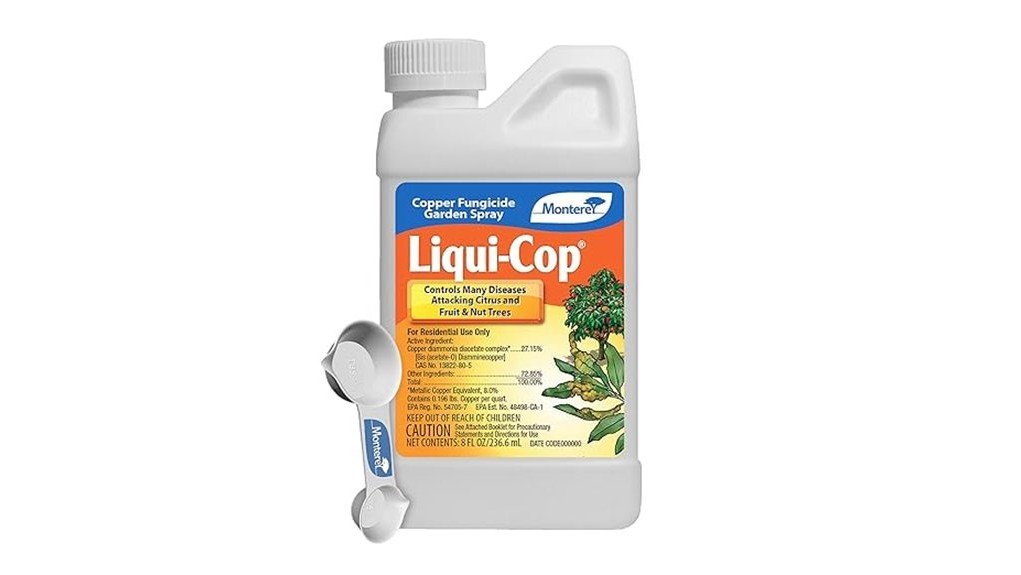
While you’re preventing common fungal diseases on fruit trees, vegetables, ornamentals, and citrus, Monterey Liqui-Cop delivers a gel-formulated copper fungicide concentrate that gives long‑lasting, rain‑fast protection once applied and dried. You’ll recognize it as an 8 fl oz preventive spray suited for growers seeking reliable coverage; label shows mix-with-water directions and a measuring spoon included among application accessories. Evidence-based use is preventive only—complete coverage matters. If you value community-tested, low-residue options, check organic approval status for your program before use. You’ll join others who prefer concise instructions, predictable performance, and shared stewardship of healthy plants. Many homeowners also turn to dollar spot solutions when managing common lawn and landscape fungal issues.
How Liqui-Cop Works: Preventive Copper Gel, Rain‑Fast Coverage, and Target Diseases
Because copper acts on contact, Liqui‑Cop works as a strictly preventive barrier that you must apply before infections take hold. You’ll rely on copper ions to disrupt pathogen cell walls on contact; this gel formulation improves adhesion mechanics, forming a rain‑fast film that resists wash‑off once dry. It’s aimed at preventing anthracnose, blight, downy mildew, botrytis and leaf spots on fruit trees, vegetables and ornamentals. Be mindful of copper phytotoxicity risks on sensitive varieties and rotate tools and modes to limit microbial resistance. Check label for application compatibility with other products to maintain safety and efficacy. This product is suitable for homeowners seeking eco-friendly fungicide options for lawn and landscape care.
Using Liqui-Cop in the Garden: Mixing Rates, Spray Coverage Tips, and Application Timing
Mixing Liqui‑Cop correctly and timing your sprays are critical to getting preventive copper protection without harming plants. You’ll follow label mixing rates—measure with the included spoon, dilute per crop instructions, and use clean water in calibrated application equipment to guarantee uniform droplets. Aim for full wetting of leaves, stems and fruiting surfaces; incomplete coverage reduces disease resistance benefits. Spray at first signs of susceptible periods and on a regular preventive schedule, avoiding applications in high humidity or when rain is imminent. Record applications, rotate materials per label, and involve fellow gardeners for shared vigilance and consistent humidity management. For homeowners managing turf and landscapes, consider integrating proper fungicide selection into your maintenance plan.
Real‑World Performance: Effectiveness on Fruit Trees, Vegetables, Citrus, and Ornamentals
When you use Monterey Liqui‑Cop as directed, it gives reliable preventative protection across fruit trees, vegetables, citrus, and ornamentals by forming a rain‑fast copper barrier that inhibits common fungal and bacterial pathogens; success hinges on thorough coverage and correct timing. You’ll see consistent reductions in leaf spots, blights, and blossom infections when you maintain spray coverage and observe seasonal timing for vulnerable stages. Its gel concentrate improves persistence and offers broad application compatibility with many sprayers and tank mixes (check label). In shared gardens, you’ll appreciate predictable control that helps protect harvests and communal plantings. Consider eco-friendly application practices and timing to minimize exposure and support a child-safe garden.
Pros, Cons, and Buying Guide: Safety, Cost, Alternatives, and When to Choose Liqui-Cop
If you’re weighing Monterey Liqui‑Cop against other options, focus on four practical factors: safety for users and plants, total cost per season, alternative products and modes of action, and specific situations where a preventative copper gel makes sense. You’ll like Liqui‑Cop for durable, rain‑fast protection and straightforward mixing; it lowers spray frequency so per‑season cost can be competitive. Consider worker safety precautions, environmental impact (copper accumulation), and residue management on edible crops. Do compatibility testing before tank mixes. Choose Liqui‑Cop when you need broad preventative control, especially in wet climates or for high‑value fruit and ornamental plantings. For homeowners, selecting the right fungicide sprayer can improve application accuracy and reduce waste.
Some Questions Answered
Is Liqui‑Cop Safe for Bees and Beneficial Insects?
No — Liqui‑Cop can harm bee exposure if bees contact wet spray or treated blossoms; it’s not bee‑safe once applied to flowering plants. You should avoid spraying during bloom, apply in early morning or late evening, and target foliage to reduce bee exposure. Those caring for pollinators will appreciate this cautious approach, which balances disease control with beneficial protection by minimizing contact and timing applications to protect foragers.
Can I Mix Liqui‑Cop With Other Pesticides or Fertilizers?
You can’t assume compatibility; always check label instructions because tank compatibility varies. Don’t mix Liqui‑Cop with alkaline or incompatible pesticides and avoid combining with fertilizers unless label or manufacturer confirms compatibility. Test a small jar mix first and watch for separation. Observe spray timing—don’t tank‑mix if you need different application intervals, and avoid spraying during bloom to protect pollinators. When in doubt, contact Monterey for guidance.
How Long After Application Can I Harvest Produce?
You can generally harvest most produce after the label’s specified wait times; check the product label for exact pre-harvest intervals for each crop. You’ll follow those intervals and observe crop rotation practices to avoid residue build-up and soil copper accumulation. If the label’s unclear, wait several days beyond the shortest interval and rinse produce. You’re protecting yourself, your community, and future harvests by following these evidence-based steps.
Does Liqui‑Cop Leave Visible Residues on Fruit or Foliage?
Yes — you may see a visible bloom or slight residue on foliage and fruit if coverage is heavy or not fully dried. You’ll usually notice a fine metallic film that’s rain‑fast once set; it rarely causes major staining risk on skin or produce but can leave cosmetic marks on delicate fruit. Follow label rates, avoid overapplication, and rinse picked fruit if you prefer to remove any residual film for peace of mind.
What Equipment Is Best for Applying the Gel Formulation?
Use a battery sprayer or hand caulker for the gel formulation; they give controlled, even coverage and resist clogging. You’ll want a fine-to-medium nozzle, agitation or shaking between fills, and PPE. Calibrate flow rate to label rates, apply at low-to-moderate pressure, and avoid spraying in wind. You’ll join other growers in protecting crops effectively when you follow label mixing, coverage, and rain‑fast drying guidance.