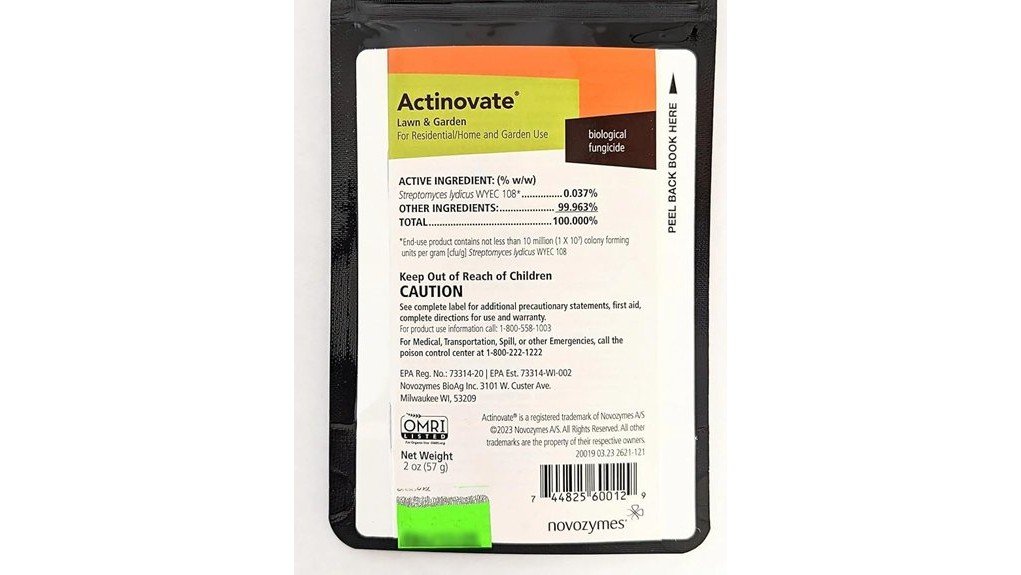
NI30745 Lawn & Garden Fungicide (2 oz) is a low‑toxicity, organic‑approved granular microbial you’ll use preventively to cut root rot and early foliar fungal problems in small beds, lawns, and hydroponic systems. It colonizes roots and foliage, outcompetes pathogens, and stimulates plant defenses; best as a drench for roots and a spray for leaves. Users report reliable prevention but limited cure for advanced outbreaks, and you’ll get better results with cultural controls—more details follow.
Some Key Takeaways
- Actinovate NI30745 is a 2‑oz granular biological fungicide containing patented microbes for preventive root and some foliar disease control.
- Works best as a drench for root rot and a spray for early foliar infections, with limited effect on advanced outbreaks.
- Most reviewers report reliable prevention of root diseases when applied per label and combined with cultural controls.
- Organic‑certified, low‑toxicity option suited for ornamentals, vegetables, lawns, and hydroponics, but treats limited area per bag.
- Requires strict adherence to label doses, protective gear during application, and repeated applications only as directed.
What NI30745 Lawn & Garden Fungicide Is and Who Should Use It
NI30745 Lawn & Garden Fungicide is a 2 oz granular biological fungicide (Actinovate brand) that uses patented, registered microbes to prevent root diseases and tackle foliar fungal problems on ornamentals, vegetables, lawns and in hydroponic systems. You’ll find it suits home gardeners and small-scale growers who want evidence-backed, low-toxicity options. It’s granular, easy to apply as drench or spray, and fits organic certification programs used by many community garden projects. Use it if you value preventative disease control, reduced chemical exposure, and peer-supported recommendations. Expect clear labeling, documented reviews, and compatibility with shared, sustainable gardening practices. It’s sold as part of a range of products designed to boost lawn health with organic fungicide solutions.
How NI30745 Works: Active Technology, Organic Approval, and Suitable Uses
Having outlined what the product is and who benefits, let’s look at how it works and where it fits in your garden. NI30745 uses patented, registered microbes that operate via a microbial mode: they colonize roots and foliage, outcompete pathogens, and stimulate plant defenses. You’ll apply granules as a drench or spray for targeted protection in beds, containers, lawns, and hydroponics. Because it’s approved for organic gardening, you gain certification benefits like compliance with organic standards and safer integration into mixed systems. Use it as a preventive, ecosystem-friendly tool to maintain healthy plants alongside your community of gardeners. It’s part of a broader line of eco-friendly fungicide solutions designed for homeowners maintaining lawn and landscape.
Real-World Performance: Effectiveness on Root and Foliar Diseases (What Customers Report)
While customers report varied results, most reviews indicate the product reduces root rot and some foliar diseases when used preventively and applied as directed. You’ll find customer testimonials describing faster recovery of potted plants, fewer wilted seedlings, and measurable symptom reductions after drench or spray cycles. Reviewers note best outcomes on early infections and in combination with cultural controls like improved drainage. Some users report limited effect on advanced foliar outbreaks. With 226 reviews overall, the evidence leans toward reliable prevention rather than cure. You’ll feel reassured using NI30745 as part of an integrated, evidence-based disease management plan. Systemic application as a soil drench can provide extended protection by moving through the plant’s vascular system and helping prevent new infections.
How to Use NI30745 Safely and Effectively: Dosage, Application Methods, and Hydroponic Tips
Start by choosing the right timing and method: apply this biological fungicide preventively or at first signs of disease, using a drench for root problems and a spray for foliar issues, and follow label rates exactly to guarantee efficacy and safety. You’ll measure per-label dosage for 2oz granules, mix thoroughly, and stick to recommended intervals — good application scheduling prevents resistance and waste. Wear gloves and eye protection; keep children and pets away as a basic safety precautions routine. For hydroponics, pulse-check nutrient reservoirs, apply per-system instructions, and monitor roots; repeat only as directed to protect beneficial microbes. Select appropriate lawn and garden spray equipment designed for homeowner use to ensure even coverage and correct application rates, especially when treating large areas or sprayable granules.
Should You Buy It? Coverage, Value, and Alternatives to Consider
If you want a proven, organic option for preventing root and foliar diseases in a variety of settings, NI30745 (Actinovate, 2 oz) delivers targeted microbial protection that’s especially useful for ornamentals, vegetables, and hydroponics; its small 2‑oz granule bag treats limited areas well but may mean buying multiples for larger lawns or commercial beds. You’ll like the certified-organic profile and flexible spray/drench use. For coverage and price comparison, calculate cost per treatment versus larger-volume biologicals or synthetic fungicides. Consider seasonal timing—apply preventively during wet, warm periods. Choose NI30745 if you value safety and targeted control; otherwise compare alternatives for scale and budget. It’s a popular choice among homeowners seeking child-safe alternatives for treating turf and garden diseases.
Some Questions Answered
Is NI30745 Safe for Pets and Wildlife After Application?
Yes — you can expect low pet toxicity when you follow label directions, but you should keep pets and wildlife off treated areas until spray residues dry to minimize exposure. The biological microbes used reduce chemical hazards, yet runoff risks mean avoid applying before heavy rain or near water to protect aquatic life. You’ll protect your garden and community by storing product securely and observing reentry and watering guidelines.
How Long Does a Single Treatment Remain Effective?
A single treatment’s residual duration typically lasts several weeks, depending on disease pressure and conditions. You’ll usually plan application frequency every 2–4 weeks for ongoing protection, adjusting for heavy moisture or new outbreaks. This biological fungicide works best when you follow label rates and reapply proactively; you’ll maintain healthier plants and feel supported by consistent, evidence-based care. Always monitor and adapt based on plant response and local conditions.
Can NI30745 Be Mixed With Other Garden Pesticides?
Yes — you can mix NI30745 with some products, but you’ll check compatibility first. You’ll perform a jar test to confirm tank compatibility and avoid antagonistic mixes. You’ll also stagger applications by spray timing when combining with fertilizers or insecticides to reduce stress on plants. Follow label directions, respect organic approvals, and join fellow gardeners in sharing observations so you’ll build collective, evidence-based best practices for safe blending.
What Is the Shelf Life and Best Storage Conditions?
You should expect a storage duration of about 1–2 years when unopened; once opened, use within a season if possible. Keep the product dry, sealed, and away from direct sunlight. Maintain temperature control between 40–85°F (4–29°C) to preserve microbial viability. You’ll keep it effective by avoiding freezing or extreme heat, storing with other garden supplies in a cool, stable spot where you and your gardening group can access it confidently.
Are There Any Plant Species Known to Be Sensitive?
Some sensitive plants have been reported; you should watch seedlings closely because seedling sensitivity can occur, especially in acidic soils. Test on a small area or a tray of young plants before broad use. Follow label rates and avoid overapplication on tender ornamentals, certain pelargoniums, and newly rooted cuttings. If you’re unsure, join gardening groups to compare notes and share observed reactions for your specific species and conditions.