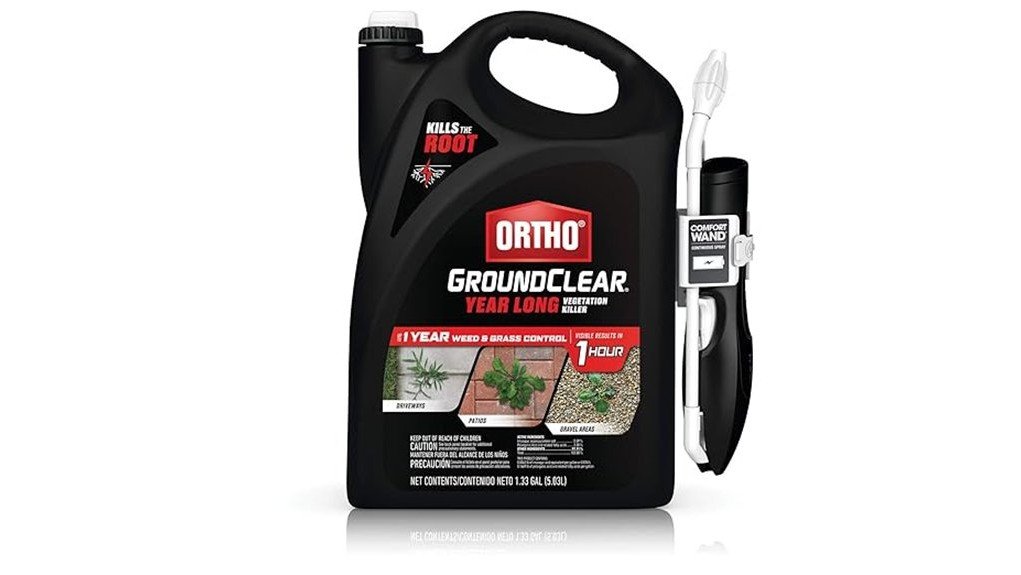
You’ll get fast leaf burn plus systemic root kill for long-lasting bare-ground control with Ortho GroundClear Year Long, ideal for driveways, gravel, and other unplanted zones. It mixes imazapyr and pelargonic acid to hit roots and foliage, comes ready-to-use with a wand, and claims up to 400 sq. ft. Apply on sunny days above 60°F, protect yourself, and watch browning within hours. Keep an eye for sprouts and drift, and read on for full guidance.
Some Key Takeaways
- Ready-to-use bottle with continuous wand targets driveways, gravel, and unplanted areas for quick, efficient application.
- Active ingredients imazapyr (0.09%) plus pelargonic acid provide systemic root kill plus fast foliar burn.
- Visible browning within hours and cleared, root-killed patches within weeks for long-lasting bare-ground control.
- Best applied on sunny days above 60°F, avoiding wind and rain to reduce drift and improve uptake.
- Use caution near desirable plants, follow label, wear protective gear, and monitor for reseeding or surviving sprouts.
Quick Verdict: Is Ortho GroundClear Year Long Worth Buying?
If you want a fast, long-lasting solution for weeds and unwanted grasses in unplanted areas, Ortho GroundClear Year Long is worth considering. You’ll appreciate clear results quickly and a promise of long term efficacy after a single application, which helps you reclaim shared spaces and feel part of a tidy neighborhood. Apply on sunny days when weeds are actively growing; correct application timing boosts performance. The ready-to-use wand makes targeted treatment simple, so you’ll stay efficient and confident. This product suits anyone wanting reliable, low-effort control for driveways, gravel, and other non-planting zones. Consider pairing it with spot weed treatment sprayers designed for homeowners to improve precision and reduce waste.
What’s in the Bottle and How It Works (Ingredients, Coverage, and Performance)
Curious what’s doing the work? You get a blend: active ingredients listed are imazapyr (isopropylamine salt 0.09%) plus pelargonic acid and related fatty acids. Together they attack roots and foliage—one systemic, one fast-contact—so plants die down and regrowth is suppressed.
The ready-to-use 1.33 gal bottle includes a continuous spray wand; stated application coverage treats up to 400 sq. ft. You’ll apply to unplanted areas like driveways and gravel, targeting actively growing weeds on warm, sunny days. Performance balances quick visible burn with longer-term root control, letting your landscape group share maintenance tasks confidently.
For homeowners maintaining turf and beds, pairing treatments with proper lawn care tools like core aeration can improve long-term vegetation management.
Real-World Results and What to Expect After Application
Now that you know what’s in the bottle and how it works, here’s what you can expect in the yard after application. You’ll see browning within hours and dieback over days, with roots failing and patches clearing within weeks. You should perform regular post application monitoring to catch surviving sprouts or drift onto planted areas. Expect bare soil that resists regrowth for months; remember seasonal reseeding risks if nearby plants set seed or windblown seed lands on treated ground. Plan simple follow-up: remove dead material, observe moisture and sun, and join others in shared stewardship to keep treated zones clear. Choose formulations labeled for homeowner use and follow application rates to minimize harm to desirable plants.
How to Apply It Safely and Get Maximum One-Year Control
When you’re ready to apply, work methodically and prioritize safety: wear gloves, eye protection, and long clothing, keep people and pets away, and read the label for local restrictions and reentry times. You’ll wear protection while targeting unplanted areas—driveways, gravel, and under decks—using the continuous spray wand for even coverage. Apply on sunny days above 60°F to actively growing weeds for best uptake; avoid windy or wet conditions. Walk steady lines to treat up to 400 sq. ft., keeping spray off desirable plants. Note precise application timing and follow label intervals to secure year-long control. Also consider using dedicated safety gear such as chemical-resistant gloves, goggles, and a respirator when mixing and applying lawn chemicals.
Alternatives and When to Choose a Different Product
Although Ortho GroundClear works well for large, unplanted areas, you should consider alternatives if you need selective control, spot treatment in lawns, or a shorter residual. If you want to protect desirable plants, reach for selective herbicides formulated for broadleaf or grassy weeds so you don’t damage turf or ornamentals. For community gardens, play spaces, or pollinator-friendly plantings, explore organic alternatives like vinegar- or citrus-based spot treatments and physical removal tools. Choose based on site, persistence, and stewardship: use GroundClear for long-term bare-ground control, selective herbicides for targeted management, and organic alternatives where ecology and community comfort matter most. For homeowners focused on sustainable care, consider integrating eco-friendly solutions that prioritize soil health and pollinator safety.
Some Questions Answered
Can I Use This Product Around Edible Plants or Vegetable Gardens?
No — you shouldn’t use it around edible plants or vegetable gardens. It’s systemic and prevents regrowth up to a year, so drift or root contact can harm nearby fruit beds and container herbs. If you want safety, treat only hardscapes or use physical barriers and apply on calm, sunny days above 60°F. For edible areas, choose a product labeled safe for food crops or use manual removal to protect your garden.
Is It Safe to Use Near Pets Immediately After Application?
No — you shouldn’t allow pet exposure immediately after application. Let treated areas dry completely and stay off them until the label’s reentry time, since residues can transfer by paw contact and indoor tracking. You’ll protect your pets by keeping them away during application, covering nearby beds, and washing paws after they return. This practical, botanical approach helps your household feel safer and included while preventing unwanted harm.
How Long Should I Wait to Reseed Treated Areas?
Wait at least 12 months before reseeding treated areas to respect the reseeding timeline; the product prevents regrowth up to a year. When you do reseed, remove dead vegetation, loosen compacted soil, and amend with fresh topsoil or compost for proper soil preparation. Rake smooth, sow seed evenly, and keep soil consistently moist until established. You’ll help new plants thrive and belong to a resilient, recovering landscape.
Will It Harm Desirable Nearby Trees or Shrubs’ Roots?
Yes — you can harm nearby trees or shrubs if roots contact treated soil. You should avoid spraying within root zones because root absorption of active ingredients can cause root damage and injury. Stay clear of drip lines, apply only to unplanted areas, and keep a buffer distance. If roots extend near pavement, consider physical barriers or spot-treatments to protect desirable plants and preserve shared garden safety and belonging.
Can I Mix This With Other Herbicides or Garden Chemicals?
You shouldn’t tank mix this product unless the label explicitly allows it; always follow label directions. If you’re considering blends, perform compatibility testing with small amounts first and check physical compatibility and efficacy. Respect neighbors and shared spaces by avoiding off-target drift. When in doubt, consult the manufacturer or a local extension agent to confirm safe mixes. You’ll join others who prioritize responsible, botanical stewardship.