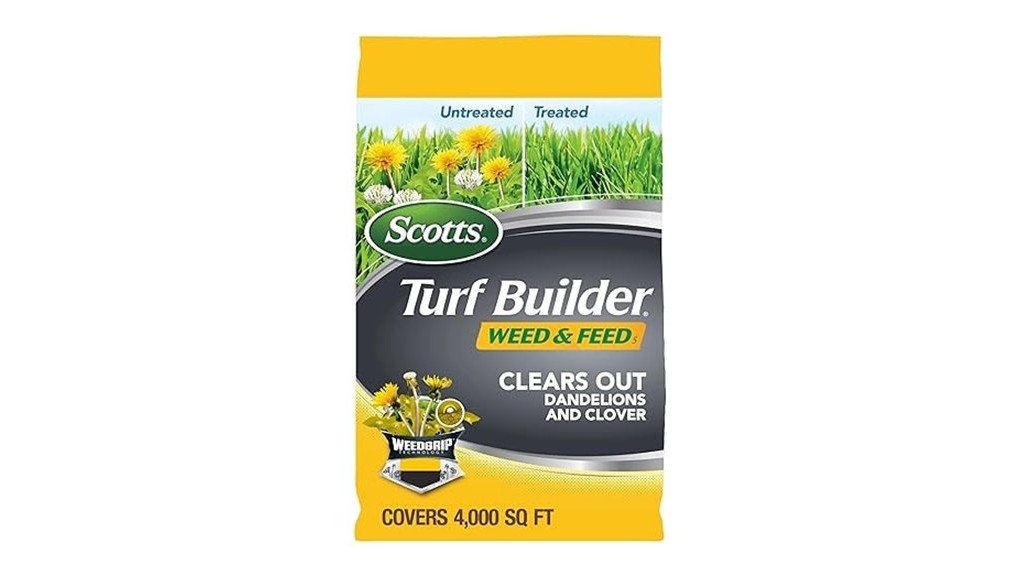
You’ll find Scotts Turf Builder Weed & Feed5 a convenient, all‑in‑one granular option that kills over 50 common broadleaf weeds while feeding and thickening compatible lawns. It uses WeedGrip Technology for better foliar uptake, covers up to 4,000 sq. ft. per bag, and works well on many cool‑ and warm‑season grasses but must be avoided on St. Augustine, dichondra, and a few others. Apply only when weeds are actively growing and avoid watering for 24 hours, and keep reading for application tips and alternatives.
Some Key Takeaways
- Kills 50+ common broadleaf weeds while fertilizing to promote thicker turf and reduce future weed pressure.
- Granular formula with WeedGrip Technology improves foliar adhesion for better herbicide uptake.
- Covers up to 4,000 sq. ft. per bag and is convenient for single-pass application.
- Safe for many warm- and cool-season grasses but avoid St. Augustine, Dichondra, Lippia, Carpetgrass, and Bentgrass.
- Apply when weeds are actively growing (60–90°F), on dew-wet grass, and avoid watering or rain for 24 hours.
Quick Verdict: Is Scotts Turf Builder Weed & Feed5 Worth Buying?
While it won’t fix every lawn problem, Scotts Turf Builder Weed & Feed5 is a solid all-in-one option if you want reliable weed control plus fertilizer in a single pass. You’ll appreciate its clear strengths: broad weed list coverage, convenient granules, and one-bag coverage up to 4,000 sq. ft., which reviewers cite in user reviews. Weigh the benefits against limitations—grass type restrictions and timing sensitivities—then run a cost comparison with separate herbicide and fertilizer purchases. If you value simplicity, community-tested results, and predictable scheduling, this product earns a pragmatic recommendation for many DIY lawn stewards. Many homeowners find combining weed and feed into one application simplifies seasonal lawn care planning.
What It Does: Weed Control, Feeding Benefits, and WeedGrip Technology
When you apply Scotts Turf Builder Weed & Feed5, it kills more than 50 common broadleaf weeds while simultaneously feeding your lawn to promote thicker turf that can crowd out future weeds. You’ll appreciate that WeedGrip Technology improves foliar adhesion, so granules stick to leaves for more reliable herbicide uptake. At the same time the fertilizer portion supplies a measured nutrient balance—typically higher nitrogen—to boost shoot growth and fill bare spots. That dual action treats existing weeds and supports recovery, letting you and your neighbors share pride in a denser, healthier lawn without overcomplicating routine care. This product is part of a range of crabgrass barrier products designed for homeowners to protect their lawn and landscape with targeted solutions like crabgrass barriers.
Which Lawns It’s Safe For : and Which to Avoid
Knowing what the product does helps you pick the right lawn types for safe use. You’ll find Scotts Turf Builder Weed & Feed5 fits common grasses: Bahiagrass, Bermudagrass, Bluegrass, Centipede, Fescue, Rye, and Zoysiagrass—so Zoysia compatibility is strong. That means you can treat typical yards confidently without guessing. Avoid using it on St. Augustine (including Floratam), Dichondra, Lippia, Carpetgrass and especially Bentgrass—Bentgrass caution matters because damage risk is real. As a homeowner you’ll appreciate clear boundaries: use where listed, skip where warned, and you’ll protect your neighborhood lawn aesthetic and shared standards. We also offer St. Augustine grass plugs and related products to help repair and enhance affected lawns.
How to Apply for Best Results (Timing, Spreader Settings, and Precautions)
Because timing and technique determine whether you get thick, weed-free turf or risk injury to desirable grasses, apply Scotts Turf Builder Weed & Feed5 only when weeds are actively growing and daytime temperatures are consistently between 60°F and 90°F. Work on dew-wet grass so granules stick; don’t water for 24 hours and avoid rain within that window. Set spreader per recommended settings for even coverage, follow apply frequency (no more than twice yearly), and mark treated zones. Keep family and pets off the lawn until dust settles; consider pet safety by storing product securely and washing paws if contact occurs. Many homeowners boost early lawn success by using spray-on starter fertilizers to help establish new grass alongside granular treatments.
Alternatives and When to Choose Something Else
After you’ve followed the timing and spreader guidance to get the best results from Scotts Turf Builder Weed & Feed5, consider whether a different product might better match your lawn’s needs or constraints. If you favor eco-friendly care or have pets, explore organic alternatives like corn gluten meal or compost-based fertilizers; they’re gentler but slower and won’t control established broadleaf weeds. If you need targeted control of specific species or have sensitive turf (e.g., St. Augustine), pick selective herbicides formulated for your grass and the weed species. Choose based on urgency, turf compatibility, and your long-term lawn care goals. If minimizing chemical exposure is a priority, consider eco-friendly weed control options and practices tailored to home lawns.
Some Questions Answered
Will This Product Stain Driveways, Patios, or Clothing?
It can stain driveways, patios, and clothing if granules or dust contact surfaces, so you should act promptly. You’ll minimize stain potential by sweeping or rinsing granules off hard surfaces and by keeping kids and pets away until dust settles. For fabric safety, avoid kneeling on treated lawn and launder clothes quickly if they get product on them; test hidden fabric areas for discoloration before full washing.
Can I Use It on Newly Seeded or Sodded Lawns?
No—you shouldn’t use it on newly seeded or sodded lawns. You’ll want to protect new grass while root establishment and seed germination occur; this product can stress tender shoots and slow turf recovery. Wait until sod is firmly rooted and seeded lawns have been mowed at least three times and show robust growth. Then treat cautiously, following label timing so you’re supporting long-term lawn health and belonging to careful stewards.
Is It Safe Around Edible Gardens or Fruit Trees Nearby?
You should avoid using it right next to edible gardens or fruit trees because granules can make soil contact and potentially lead to root uptake. Use a buffer zone, cover edible plants during application, and keep granules off fruit and vegetables. If drift or runoff reaches garden soil, lightly remove affected topsoil and rinse plants. You’ll protect your harvest by keeping application at least several feet away and following label precautions.
How Long After Application Can I Mow the Lawn?
You can mow 24 hours after application, but wait until granules are dry and dust settled to protect effectiveness and grass recovery. For best results, plan application timing when weeds are actively growing and no rain is expected for 24 hours. Mow gently the first cut to avoid disturbing treated foliage. You’ll help the lawn recover and benefit from feeding while staying considerate of neighbors and fellow gardeners.
Does It Affect Pollinators Like Bees or Butterflies?
Yes — it can harm pollinators if they contact treated foliage or granules. You should prioritize bee safety and minimize butterfly exposure by keeping pollinators off the lawn until granules fully settle and plants aren’t wet. Don’t apply during bloom or when bees are active; avoid irrigation or rain within 24 hours so granules stick. You’ll protect neighbors’ pollinators by timing applications and communicating with nearby gardeners.