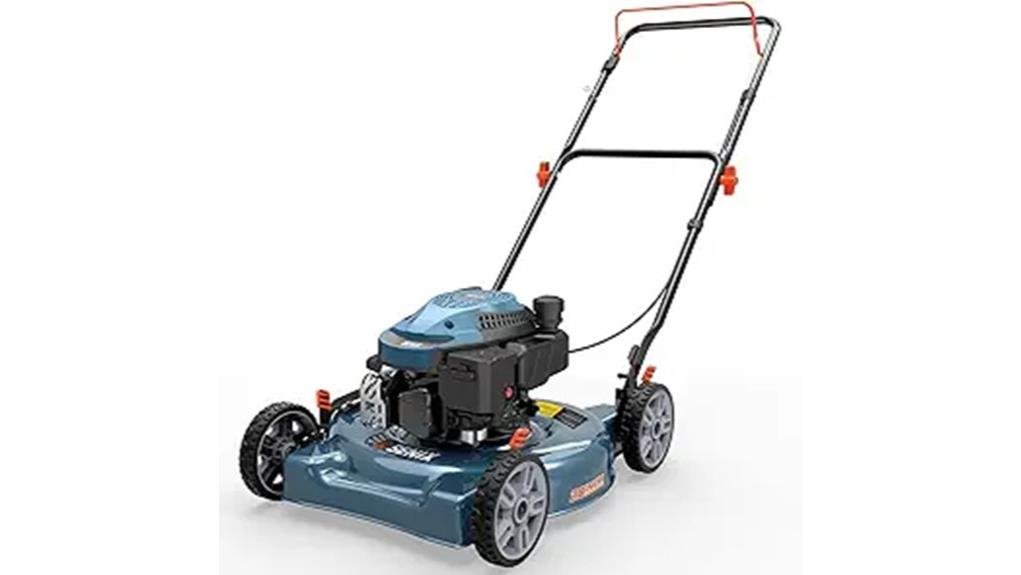
You’ll get a reliable, low‑maintenance 20‑inch mower with a fuel‑efficient 144 cc 4‑stroke engine that runs cooler and uses about 20–30% less fuel than older two‑strokes. It’s practical for small-to-medium yards, community greens, and light commercial work, handles gentle slopes up to ~15° with 7‑inch wheels, and gives a clean cut from a heavy‑duty steel deck and replaceable high‑carbon blade. Maintenance is straightforward, warranty’s two years, and more specifics follow if you want them.
Some Key Takeaways
- Reliable 144 cc 4-stroke engine delivers steady torque, cooler running, and about 20–30% lower fuel use than similar 2-strokes.
- 20-inch heavy-duty steel deck gives clean, even cuts and durable rust-resistant construction for small-to-medium lawns.
- Matched 7-inch wheels and low-profile tread provide smooth rolling, predictable handling, and stability on gentle slopes (~15°).
- User-friendly maintenance: snap-out air filter, accessible parts, replaceable high-carbon blade, and vibration-dampening mounts.
- Two-year warranty and solid resale potential make it a practical, low-maintenance choice for homeowners and light commercial use.
Which Yards Is the SENIX 144 Cc Mower Best For?
If you’ve got a small-to-medium lot or need a reliable machine for uneven ground, the SENIX 144 cc is a practical choice. You’ll find it ideal for small yards, community greens and managed edges where power and steady torque matter. The 20-inch deck covers more ground per pass, while 7-inch wheels help you tackle rough patches and gentle slopes without struggle. It’s robust enough for light commercial properties that need consistent, low-maintenance work without heavy industrial demands. You’ll appreciate straightforward upkeep, quick assembly, and a two-year warranty that makes you part of a dependable user community. For homeowners who enjoy caring for their outdoor spaces, this model pairs well with essential gear to keep maintenance simple and efficient.
Real-World Engine and Cutting Performance (Fuel Use, Noise, 20 Deck)
Having covered where the SENIX 144 cc excels in yards and terrain, let’s look at how it actually performs on the job — fuel consumption, noise level, and how that 20-inch deck handles real grass. You’ll notice fuel use is economical: the 4-stroke 144 cc runs cooler and uses about 20–30% less fuel than older 2-strokes, so you’ll finish more lawn time per tank. Noise stays moderate; you can chat while mowing without shouting. Engine vibration is low if you keep mounts tight. The 20-inch deck and proper blade balance deliver clean, even cuts across varying thicknesses of grass. This makes it a solid choice for homeowners looking for reliable gas mower gear for regular yard maintenance.
Handling, Terrain, and Mobility: 7 Wheels and Slope Capability
When you push the SENIX across uneven ground, the matched 7-inch front and rear wheels roll smoothly over bumps and shallow ruts so you stay in control without having to slow to a crawl. You’ll notice firm wheel traction on grass, gravel, and compacted soil; the low-profile tread resists slipping while you steer. On gentle slopes up to about 15°, the mower maintains slope stability provided you walk steadily and avoid sudden turns. Handling feels predictable—easy to maneuver around beds and trees, confident on wider paths. That dependable mobility helps you feel part of a neighborhood of practical, capable mower owners. For best results on similar home lawns, choose tires designed for a smooth ride and reliable grip like those featured for mower tires.
Build, Maintenance, and Durability (Steel Deck, Blade, Air Filter)
Because the deck’s heavy-duty steel construction stands up to knocks and moisture, you’ll get reliable service on rough turf without constant touch-ups. You’ll appreciate rust prevention measures like factory-applied coating and sealed seams; touch up with paint after scratches. The high-carbon steel blade swaps out via an easy-access mount — keep it sharp, balanced, and torqued to spec to avoid wobble. The accessible air filter snaps out for cleaning or replacement, prolonging engine life. Thoughtful mounting and rubber isolators provide vibration dampening, so parts and hands take less stress. You’ll feel confident maintaining this mower together with others who care. For homeowners who enjoy their outdoor spaces, using the right mower blades helps keep lawns pristine.
Value Verdict: Cost, Warranty, and Who Should Buy It
Those durable materials and easy service points won’t just save you time — they cut long-term ownership costs too. You’ll find the SENIX offers strong value in an affordability comparison with similar 144 cc mowers: lower fuel use and a steel deck reduce running expenses. The two-year warranty gives clear protection, and easy part access supports DIY upkeep. Consider long term resale if you upgrade; a well-maintained unit holds value. Accessory compatibility is decent for basic carts and mulchers, though check regional availability for parts. Buy this if you want rugged, serviceable performance and to join a practical-owner community. Elevate your setup with the right mower lift to make maintenance and storage easier.
Some Questions Answered
Does It Include a Mulching Kit or Side Discharge Option?
No, it doesn’t include a mulching kit, but it’s designed for mulching compatibility and discharge adaptability. You’ll be able to fit an aftermarket mulching plug or kit and switch to side discharge if you prefer. You’ll appreciate the heavy-duty deck and easy blade access when installing parts. Follow the manual for safe assembly, and know the 2-year warranty and accessible maintenance points make upgrades feel supported and community-minded.
Is the Starter Recoil or Electric?
It uses a pull start recoil; there’s no battery start option. You’ll grab the sturdy recoil handle to spin the 144 cc engine, and you’ll appreciate the simple, reliable mechanics that avoid battery upkeep. Keep the air filter accessible and the blade sharp to guarantee easy starting. If you want electric convenience, consider adding an aftermarket battery start kit, but know it’ll need proper mounting and wiring for safe operation.
What Fuel-Oil Mix Does the Engine Require?
It doesn’t need a fuel-oil mix — it’s a four-stroke, so you use straight unleaded gasoline and change oil separately. You’ll still want to run a synthetic blend oil for break-in and regular service if you prefer longer life. When tuning, avoid a too-lean setting; keep carburetor adjustments within manual specs. Follow break-in rpm and oil-change intervals, and you’ll feel confident maintaining it alongside fellow owners.
Are Replacement Parts Readily Available Locally?
Yes — you’ll usually find replacement parts locally through local dealers and independent small-engine shops, and you can often swap in common components like filters, blades, and wheels. Check compatibility with generic warranties and keep receipts so you’ll belong to the service network if claims arise. Be hands-on: call shops first, bring your model info, and ask about blade sizes, carb kits, and air filters to avoid surprises.
How Loud Is It in Decibels at Operator Position?
You’ll hear about 85–95 dB at the operator position during normal operation. That noise level sits high enough that you should wear hearing protection for extended use and when working near others. You’ll appreciate the practical trade-off: robust 144 cc power with somewhat louder operation. Keep spare earplugs or earmuffs in your kit, follow maintenance to minimize extra noise, and include hearing protection in shared-yard etiquette.