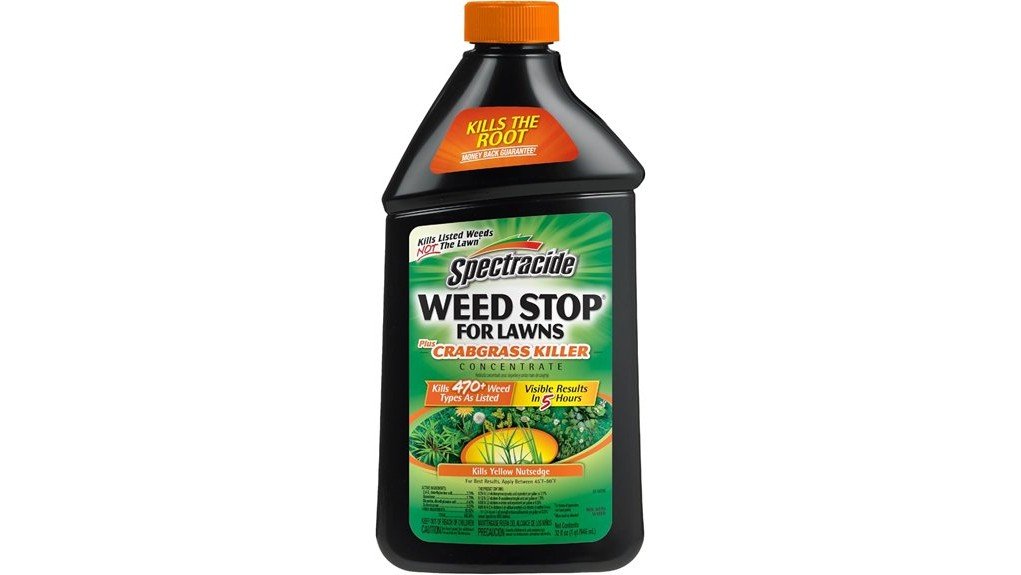
You’ll get fast, broad-spectrum knockdown of crabgrass and many common broadleaf weeds with Spectracide Weed Stop for Lawns + Crabgrass Killer Concentrate when you follow the label. One 32-oz bottle treats up to 5,000 sq ft, shows browning in hours, and’s rainfast in about three hours. Apply at 45–90°F, avoid drift and high heat, and wear protection to limit off-target damage. Keep going for details on timing, mixes, and pros and cons.
Some Key Takeaways
- Effective, fast-acting concentrate that kills crabgrass and many broadleaf weeds, with browning visible within about five hours.
- One 32-oz bottle treats up to 5,000 sq ft; six-pack covers up to 30,000 sq ft for better per-area value.
- Apply when temperatures are 45–90°F, avoid use above 90°F to reduce risk of lawn injury.
- Rainfast after three hours; spray to wet but avoid runoff and prevent drift into flower beds or native plants.
- Best used with proper PPE and label directions; consider pairing with pre-emergent strategies for season-long control.
Quick Verdict: Is Spectracide Weed Stop + Crabgrass Killer Worth Buying?
Although no product fits every yard, Spectracide Weed Stop + Crabgrass Killer is a solid, cost-effective choice if you want fast, broad-spectrum control for common lawn weeds and crabgrass. You’ll appreciate visible results quickly and coverage that treats up to 5,000 sq ft per 32-oz bottle, so cost-per-area is reasonable. Use correct application timing—apply when temperatures are 45–90°F and avoid heat above 90°F—to protect your lawn. Follow the label for safety; that minimizes unintended environmental impact and keeps neighbors’ yards and local pollinators safer. If you want reliable, practical control, this concentrate earns a cautious recommendation. Consider pairing treatment with a crabgrass barrier strategy to maintain long-term lawn health.
What Weeds and Lawns Does This Concentrate Actually Control?
Spectracide Weed Stop concentrate targets a wide range of common lawn invaders—over 470 listed species—including broadleaf weeds like dandelion, clover, chickweed and plantain, as well as grassy pests such as crabgrass and yellow nutsedge. You’ll get control of both broadleaf and grassy weeds on cool season grasses when you follow label directions; it’s labeled to kill weeds down to the root with visible results fast. It’s effective against many invasive species that crowd turf, but you should avoid drift into flower beds or onto native plants you want to keep. Check the complete label list for specifics. For homeowners maintaining turf, consider systemic insect preventatives as part of an integrated approach to protect overall lawn health.
How to Use One 32‑Oz Bottle Safely and for Best Crabgrass Control
Now that you know which weeds the concentrate tackles, here’s how to get the best crabgrass control from a single 32‑oz bottle while protecting your lawn. Measure your yard: one bottle covers up to 5,000 sq ft, so split mixes for smaller areas to avoid waste. For application timing, spray at first sight of crabgrass when temps are 45–90°F; avoid >90°F. Use a consistent nozzle adjustment to get even wetting—spray until surfaces are wet but not runoff. Wait three hours before watering or expected rain. Read the label, wear protective gear, and keep neighbors informed for shared spaces. Consider choosing a product with pre-emergent crabgrass preventers to complement post-emergent treatments for season‑long control.
Real Performance: Speed, Coverage, Limitations, and User Experience
When you spray the concentrate as directed, you’ll usually see visible browning of crabgrass and many broadleaf weeds within about 5 hours, with substantial die-back over the next few days; a single 32‑oz bottle will cover up to 5,000 sq ft, but real-world coverage depends on how heavily you spray and how even your application is. You’ll appreciate quick results and clear instructions, though efficacy variability appears tied to weed stage, lawn type, and weather. Mind application timing—apply between 45°F and 90°F and avoid high heat. Users report straightforward mixing and predictable control when following label directions. Homeowners often pair this with spot weed treatment sprayers for targeted application and reduced chemical use.
Pros, Cons, and Who Should Buy This 6‑Pack (Value and Alternatives)
Although the six‑pack adds up front cost, it gives you a straightforward, cost‑effective way to treat multiple seasons or several properties without frequent repurchases. You’ll get coverage for up to 30,000 sq ft (six 32‑oz bottles), fast visible results, and consistency across applications. Pros: strong crabgrass control, broad weed list, rainfast in 3 hours. Cons: storage space, unused shelf life, and risk of lawn injury if misapplied in heat. For value, do a cost comparison per 1,000 sq ft versus single bottles; consider bundle alternatives like smaller packs or different brands if you need less volume or organic options. This product line is aimed at homeowners maintaining lawns and landscapes who want effective grass and landscape fertilizer solutions.
Some Questions Answered
Is This Concentrate Safe for Use Around Pets and Children?
Yes — you can use it, but you’ll need precautions: avoid pet exposure during application and keep children away until spray dries and the label’s child reentry interval is met. You’ll want to follow the product label exactly, let treated areas dry (usually a few hours), and keep pets and kids off lawn until then. This evidence-based approach protects your household while letting you join neighbors in safe, effective weed control.
Can I Mix This Product With Other Lawn Treatments or Fertilizers?
You shouldn’t mix it with other lawn treatments or fertilizers; chemical interactions and altered effectiveness can occur. Instead, apply Spectracide alone and wait—follow label guidance on application timing. If you want combined care, space applications: treat weeds first, wait the label-recommended interval or a few days, then apply fertilizer or other products. That keeps results predictable, protects your lawn, and helps everyone in your neighborhood feel confident and supported.
How Should I Store Unopened and Opened Bottles Long-Term?
Store unopened bottles in a cool storage area, upright, away from heat or direct sun; respect temperature limits of 45°F–90°F for best long-term integrity. Once opened, keep the cap tightly sealed, return bottle upright, and store in that same cool storage spot out of reach of children and pets. You’ll protect effectiveness and stay safe when you follow label directions and communal care practices that respect your neighbors and household.
Are There Any Plants or Garden Areas I Must Avoid Spraying Nearby?
Yes — you should avoid spraying near flower beds and vegetable gardens to prevent drift or runoff harming desirable plants. Stay off roots and foliage of ornamentals, nearby shrubs, and young trees; keep a buffer zone and don’t spray on windy days. If treating close to planting areas, shield sensitive plants and thoroughly read the label for specific setbacks. You’re protecting your garden community by taking these precautions.
Does This Product Leave Any Residue Affecting Mowing or Composting?
No — it won’t leave persistent residue that affects mowing or composting when you follow label directions. Residue persistence is minimal; treated grass dries and is rainfast in about 3 hours. You should wait until lawn is fully dry before mowing to avoid clumping. Rinse mower if wet clippings stick to metal to reduce mower corrosion risk. Compost treated clippings as usual; they break down and won’t harm your garden.