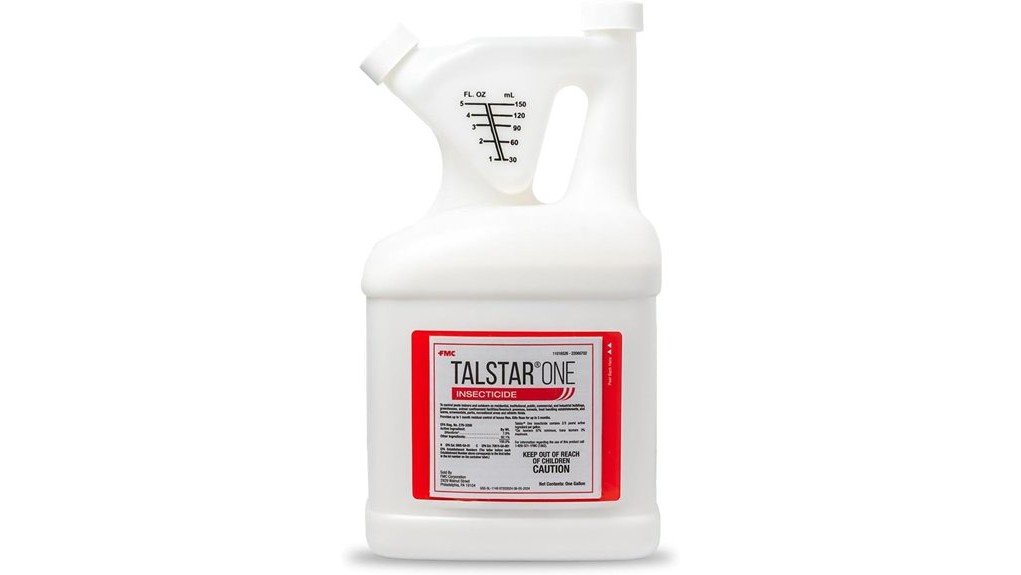
You’ll get a professional-grade bifenthrin spray that gives fast contact knockdown and weeks‑to‑months perimeter and landscape residual control when mixed to label rates. It handles ants, roaches, spiders, fleas, ticks, mosquitoes and more, and treats large linear footage per gallon with calibrated rigs. The water‑based, low‑odor formula dries clear on hard surfaces and is plant‑safe when used as directed. You’ll find clear application parameters, PPE guidance, and comparative performance if you want more detail.
Some Key Takeaways
- Broad-spectrum bifenthrin formula provides rapid knockdown and long-lasting residual control for over 75 common pests.
- One-gallon mixes treat large perimeter linear footage and multiple structures when applied with calibrated equipment.
- Water-based, low-odor formula dries clear with minimal visible residue on hard surfaces at labeled rates.
- Performance longevity varies by surface, UV exposure, and moisture but often lasts weeks to months with proper application.
- Requires PPE, chemical-resistant gloves, and adherence to label rates and reentry intervals for safe use.
What Talstar One Is and Which Pests It Controls
Talstar One is a bifenthrin-based, broad-spectrum insecticide formulated to control more than 75 common pests; you’ll use it against ants, spiders, roaches, fleas, ticks, and mosquitoes, among others. You’ll recognize it as a synthetic pyrethroid within its chemical class, delivering contact and residual knockdown across structural and perimeter zones. You’ll apply it to create a defensive barrier that limits entry and reduces indoor infestations. For a community of users, it offers predictable performance and clear application parameters. Incorporate rotation and label-driven frequency into resistance management to preserve efficacy and protect your long-term control strategy. It is popular among homeowners maintaining lawns and landscapes and is often used as part of grub control programs.
How to Mix and Apply Talstar One for Perimeter, Indoor, and Landscape Use
Having outlined what it is and which pests it controls, next you’ll focus on proper mixing and application rates for perimeter, indoor crack-and-crevice, and landscape treatments to get predictable, long-lasting results. You’ll measure mix ratios per label: typical perimeter mixes are low-concentration broadcast rates; crack-and-crevice uses higher dilution for targeted deposition; landscape/ornamental mixes follow turf and shrub charts. Use calibrated application equipment — pump sprayer, backpack, or hose-end with coarse nozzle for structure and broadcast; syringe or micro-atomizer for cracks. Wear PPE, avoid runoff, and record batch mixes so your team applies consistent, compliant treatments each season. Consider using chemical-resistant gloves when handling concentrates and mixing solutions to protect against accidental exposure.
Real-World Performance: Residual Duration, Coverage per Gallon, and Pest Results
While no single treatment eliminates every infestation, you’ll see consistent, season-long suppression when you apply the labeled mix rates and follow recommended equipment and placement. You’ll notice some residual variability driven by surface type, UV exposure, and moisture; expect best performance on shaded foundations and porches. Real world longevity typically spans weeks to months depending on conditions. Coverage testing shows one gallon, properly mixed, treats substantial perimeter linear footage and multiple structures when using calibrated spray rigs. Use correct application equipment, pressure, and nozzle selection to guarantee uniform deposition. Results: rapid knockdown of listed pests and durable barrier protection. For homeowners maintaining lawns and landscapes, pairing treatments with city-approved pest controls and proper application practices helps ensure compliance and optimal results.
Safety, Formulation, and Appearance: Odor, Drying, and Residues on Patios and Plants
Because it’s water-based and low-odor, you’ll find applications are less intrusive around patios and outdoor living spaces while still delivering effective coverage; the formula dries clear and leaves minimal visible residue on hard surfaces when applied at labeled rates. You’ll appreciate that low odor supports comfortable use around people and pets. Its clear drying characteristic reduces staining and aesthetic impact. When mixed and applied per label, it’s plant safe for ornamentals and shrubs—avoid direct application to blooms and sensitive seedlings. Expect minimal residue with proper technique; wear PPE, follow reentry intervals, and rinse equipment to maintain both efficacy and community trust. For homeowners, choosing the right respirator for lawn care can improve safety during application of sprays and pesticides, so consider using a certified NIOSH-approved respirator when needed.
Who Should Buy Talstar One and Quick Comparison to Alternative Insecticides
If you need a broad-spectrum, long-lasting barrier for both indoor cracks and outdoor perimeters, Talstar One is a strong choice: it gives professional-grade control of ants, roaches, spiders, fleas, ticks and many more with a bifenthrin-based formulation that mixes readily and dries clear. You should buy it if you want reliable residual protection, economical coverage per gallon, and a low-odor, clear finish—ideal for budget conscious homeowners and professional applicators who value consistent results. Compared to pyrethrins or azadirachtin options, Talstar delivers longer residual efficacy; compared to neonicotinoids, it offers broader structural control with established field performance. It is commonly used by homeowners and professionals for effective lawn insect control.
Some Questions Answered
Can Talstar One Be Used Around Edible Vegetable Gardens?
No, you shouldn’t apply Talstar One directly in edible beds; it’s designed for perimeter and structural use, not direct vegetable contact. You can protect crops by using vegetable safe alternatives for in-bed treatment and maintaining edible plant bufferzones between treated areas and garden rows. Follow label directions, allow treated surfaces to dry, and wash produce thoroughly. You’ll minimize contamination risk while still managing perimeter pests effectively.
How Long After Application Can Pets Re-Enter Treated Areas?
You should keep pets out until treated surfaces are fully dry—typically 1–2 hours—then allow extra time for ventilation. To minimize pet exposure, restrict access during application and monitor drying time; re entry after 24 hours is safest for sensitive animals. Follow label directions for application timing and rates, avoid treating bedding or food areas, and invite household members to confirm surfaces are dry before allowing pets back.
Is Talstar One Compatible With Other Garden Pesticides or Fertilizers?
Yes — you can often mix Talstar One, but you should verify chemical interactions and tank compatibility before mixing with other garden pesticides or fertilizers. You’ll consult the label and do a jar test to confirm no separation, precipitation, or pH issues. If compatibility’s confirmed, mix insecticide with water first, then add others slowly. You’ll protect efficacy and communal safety by following label restrictions and using recommended rates and PPE.
Does Talstar One Affect Beneficial Insects Like Bees or Pollinators?
Yes — Talstar One can harm bees and other pollinators if they’re exposed. You should treat bee safety and pollinator impact as high priorities: avoid spraying flowering plants, apply during early morning/evening when bees aren’t active, and restrict broadcast use near hives or pollinator habitats. You’ll protect beneficial insects by using targeted treatments, following label precautions, and timing applications to minimize contact with foraging pollinators.
Are There Special Storage or Disposal Instructions for Leftover Concentrate?
Yes. You should follow container labeling for storage and disposal, keeping concentrate in its original, tightly sealed container in a cool, dry, locked area away from children and pets. For disposal, follow label directions or contact local waste authorities; never pour concentrate down drains. If a spill occurs, contain and perform spill cleanup immediately using absorbent materials, then collect and dispose as hazardous waste per label. You’ll protect your community.