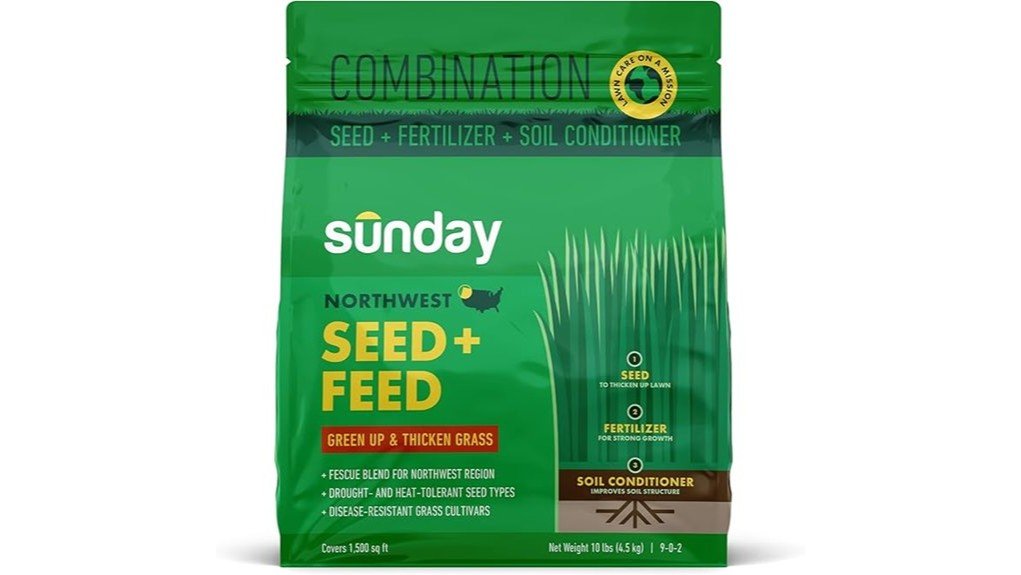
You’ll like Sunday Northwest Seed + Feed if you want a low-fuss, pesticide-free fix for cool-season lawns. You get tall fescue and perennial ryegrass with a 9-0-2 starter, plus limestone, gypsum, and poultry matter to boost soil structure and biology. One 10 lb bag covers about 1,500 sq. ft.; expect greening in 8–21 days with consistent light watering and good seed-to-soil contact. Keep going to see application tips, limits, and alternatives.
Some Key Takeaways
- Blend of tall fescue and perennial ryegrass with 9-0-2 starter fertilizer promotes quick establishment and long-term durability.
- Includes limestone, gypsum, and organic poultry matter to improve soil structure, pH, and microbial activity.
- Covers ~1,500 sq. ft. per 10 lb bag, ideal for small lawn refreshes or patching.
- Germination typically in 8–21 days with consistent light watering and good seed-to-soil contact.
- Pesticide-free, Northwest-focused formula best used in spring or early fall for regional success.
Sunday Northwest Seed + Feed At a Glance: Key Specs and Claims
Think of Sunday Northwest Seed + Feed as an all-in-one lawn rescue: a 10 lb blend (9-0-2 NPK) combining tall fescue and perennial ryegrass seed with fertilizer, limestone, gypsum, and organic poultry matter to cover about 1,500 sq. ft. You get a product built for Northwest conditions, with regional branding that signals climate fit and community care. Specs list seed types, soil conditioners, and pesticide-free promise; claims note easy application and durable turf. Packaging aesthetics feel homey and trustworthy, reinforcing belonging. Use it for spring revitalization, follow watering guidance, and expect practical, low-fuss lawn improvement. It’s a practical starter option for homeowners looking for starter fertilizer combined with seed.
Does It Work Fast? Expected Greening and Germination Timeline (8–21 Days)
Curious how quickly you’ll see results? You’ll usually notice greening and new shoots in about 8–21 days when you match seed types and local conditions. Germination variables like soil temperature, sunlight, and seed-soil contact determine timing, so plan realistic expectations. Stick to a consistent watering schedule: light, frequent sprays to keep the topsoil moist until seedlings root, then taper to deeper, less frequent soaks. You’ll speed success by preparing the bed and protecting tender sprouts from pets and foot traffic. This approach helps you and your neighbors share pride in a lawn that comes back strong, fast. For best results, choose repair seed and mulch products designed for homeowners maintaining their lawn and landscape, such as repair seed mixes that combine seed with mulch for improved establishment.
How the Formula Helps Your Soil and Lawn: Seed Mix, Limestone, Gypsum, and Poultry Matter
Once those first green shoots appear, you’ll want to know what’s working below the surface — Sunday Northwest’s combo of tall fescue and perennial ryegrass gives the lawn a mix of deep-rooting durability and quick establishment, while limestone and gypsum adjust soil chemistry and structure so those roots can access nutrients and water more reliably. You’ll see how poultry matter feeds the soil microbiome, boosting nutrient cycling so applied NPK and native reserves become available. That synergy supports steady root development, improves moisture buffering, and makes your yard more resilient. You’ll feel confident sharing tips with neighbors. This approach fits well with homeowners focused on premium lawn grass seed and practical soil amendments.
Real-World Use: Application Steps, Coverage, Watering, and Results in Northwest Yards
When you’re ready to roll up your sleeves, start by loosening compacted soil and raking debris so the seed-to-soil contact is good. You’ll follow simple application timing: spring or early fall gives best establishment in Northwest yards. Measure 1,500 sq. ft. per 10 lb bag, then spread seed-fertilizer evenly, focusing extra on bare spots. For patch preparation, chop out dead turf, loosen topsoil, and blend seed in. Water lightly twice daily until sprouts appear, then reduce to deep, less frequent soakings. Expect green-up in 8–21 days; monitor moisture and celebrate neighborhood lawn improvement together. Transform your landscape with fall overseeding blends designed for Northwest climates and lawn care needs, including seed and fertilizer combos for improved establishment and coverage like Sunday Northwest Seed + Feed for fall overseeding.
Who Should Buy It and Alternatives: Best Use Cases, Limitations, and Comparable Products
Although it’s aimed at Northwest yards, you should buy Sunday Northwest Seed + Feed if you want a quick, low-fuss way to revive cool-season lawns—especially tall fescue and perennial ryegrass—across a full 1,500 sq. ft. area; it’s ideal for homeowners who prefer an all-in-one mix (seed, fertilizer, limestone, gypsum, and organic matter) that speeds greening in 8–21 days with routine watering. You’ll appreciate its shade tolerance, simple 20-minute application, and pet safety once watered. Best for patching or full refreshes on sun-to-partial-shade lawns. Limitations: small 10 lb bag, regional blend. Alternatives: regional seed-only blends or higher-NPK starter fertilizers. It’s a convenient option for homeowners looking to Boost Your Lawn With quick-germinating ryegrass seeds without mixing separate products.
Some Questions Answered
Is This Product Safe for Edible Garden Areas Nearby?
Yes — you can use it near edible garden areas with caution. You’ll appreciate that the formula’s pesticide-free claim reduces worries about chemical residues, and seed safety is supported by organic matter and natural conditioners. Still, avoid direct seed or fertilizer contact with edible beds, water thoroughly after application, and wait a few irrigation cycles before harvesting nearby produce to minimize transfer. You’ll feel reassured and included in careful gardening.
Can Sunday Northwest Seed + Feed Be Used Over Existing Sod?
Yes — you can use it over existing sod, but you’ll get better results with proper over seeding techniques. Rake or aerate to relieve soil compaction, thin thatch, and slice seed into contact with soil. Keep the area moist, protect seedlings from pets, and mow carefully once established. You’ll join fellow gardeners seeing greener patches in weeks when you follow these practical, community-minded steps.
Is This Blend Suitable for Pet Urine Burn Repair?
Yes — you can use it to repair pet urine burns. You’ll want to overseed damaged spots after diluting and flushing the area; the pet safe formulas and urine resistant varieties in this mix help new grass establish despite occasional spots. Water consistently, avoid heavy fertilizer right away, and protect the patch from pets until roots set. You’ll join others seeing green recovery when you follow the simple, steady care routine.
How Long Should I Wait to Mow After Germination?
Wait 14–21 days after germination before you mow, and only when seedlings reach about 3–3.5 inches. You’ll want to set your Mow height to remove no more than the top third of blade length, keeping clippings light and leaving roots undisturbed. Take it slow with a sharp blade, mowing in a different pattern each time. You’ll encourage thicker, resilient growth and feel part of a gardening community that cares.
Does the Product Require Soil Testing Before Application?
You don’t strictly need soil testing before applying, but you should. A simple soil test helps you confirm nutrient levels and guides pH adjustment so the seed and amendments perform best. You’ll feel confident knowing whether lime or sulfur’s required, and you’ll join others who steward their lawns wisely. Test kits or lab analysis are affordable and practical; follow recommendations, then apply seed and feed for a healthier, lasting lawn.