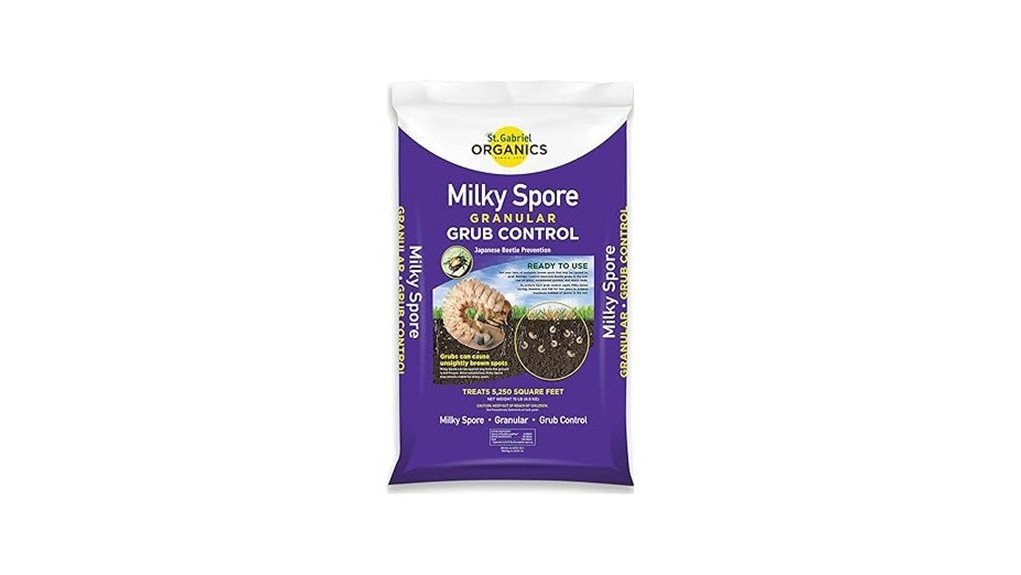
You’ll find St. Gabriel Organics Milky Spore Granular a practical, kid- and pet-safe choice for long-term Japanese beetle grub control; a single 15 lb application establishes Bacillus popilliae in your turf for season‑to‑season suppression and lowers adult beetle numbers over time. It’s USDA‑certified organic, non‑toxic around food crops, and works best when applied late summer or spring with a spreader and light watering. Keep going to learn about timing, application tips, and comparisons with chemical options.
Some Key Takeaways
- USDA-certified organic milky spore granules offer targeted, non-toxic control of Japanese beetle grubs, safe for kids, pets, and food crops.
- One 15 lb application typically establishes Bacillus popilliae in turf, providing season-long to multi-year grub suppression.
- Best applied late summer to early fall (or spring) with a broadcast spreader, then lightly watered to move spores into soil.
- Slower than chemical insecticides but provides long-term persistence, reducing the need for repeated treatments.
- Ideal for sustainable, low-maintenance yards and complements biological controls, though chemicals may be faster for heavy infestations.
Quick Verdict: Is St. Gabriel Milky Spore Worth Buying?
Curious whether St. Gabriel Milky Spore is worth buying? You’ll find it a practical, community-minded choice: USDA-certified organic, safe around kids, pets, and food crops. Evaluate cost comparison against chemical alternatives — initial price is reasonable for a 15 lb bag when you factor single-application convenience and long-term persistence. Customer reviews often praise ease of use and eco-friendly profile, though results take time. You’ll appreciate the warranty and straightforward application by hand or spreader. If you value belonging to a sustainable gardener community and want low-risk, long-term grub control, this product deserves serious consideration. It’s especially well-suited for homeowners focused on lawn and landscape maintenance.
How Well It Controls Japanese Beetle Grubs and How Long Protection Lasts
Having covered whether the product is worth buying, let’s look at how effectively St. Gabriel Organics Milky Spore controls Japanese beetle grubs and how long protection lasts. You’ll find targeted grub mortality after application as Bacillus popilliae establishes in turf; one treatment typically delivers season-long activity without repeat applications. Expect measurable reduction in grub damage and fewer adult beetles over time as infections spread through the grub population. The product offers long term persistence—manufacturer data suggest protection for years—and integrates with existing soil microbiome interactions, so you and your neighbors can rely on steady, community-friendly grub control. For homeowners maintaining lawns, it complements other mole cricket control practices to protect turf and landscape health.
Safety, Organic Certification, and Environmental Impact Explained
Because St. Gabriel Organics Milky Spore Granular carries USDA organic certification, you can trust its formulation meets strict standards. You’ll appreciate that it’s non-toxic and labeled safe around food crops, pets, and people. Practically, environmental safety isn’t just marketing here: Bacillus popilliae targets Japanese beetle grubs specifically, sparing pollinators and wildlife. You’ll find the single 15 lb application supports long-term control without recurring chemical inputs, aligning with sustainable yard care. Evaluatively, this product balances efficacy with stewardship, so you belong to a community prioritizing effective pest control that respects ecosystems and keeps your lawn healthy. This product is ideal for homeowners maintaining their lawn and landscape who want effective biological pest control with beneficial nematodes available for complementary use.
How to Apply the 15 Lb Granules for Best Results (Timing, Spreader vs. Hand)
Now that you know the product’s safety and long-term benefits, let’s look at how to get the most from a single 15 lb application. You’ll aim for best timing: apply in late summer to early fall when grubs are near the surface or spring when larvae are active. Use a broadcast spreader for uniform coverage on lawns; set spread patterns to overlap slightly and avoid gaps. Hand-apply around garden beds, high-value turf, and irregular areas, tossing granules evenly. Water lightly after application to move Bacillus popilliae into soil. Track treated zones so your community of gardeners shares successful routines. For effective grub control and a healthy landscape, integrate product use with regular lawn maintenance practices for long-term benefits.
How It Compares to Other Grub Control Options and When to Choose It
When you’re weighing grub-control options, St. Gabriel Organics Milky Spore Granular stands out for long-term, soil microbiome-friendly control versus chemical insecticides. You’ll find it safer around pets, people, and pollinators, and it builds into the turf ecosystem rather than disrupting it. Choose milky spore if you want one application timing that delivers multi-year protection and communal stewardship of your lawn. If you need immediate knockdown of heavy infestations, synthetic grub killers act faster but require repeat treatments and risk non-target impacts. Use milky spore for sustainable, low-maintenance yards; use chemicals for urgent, large-scale outbreaks. For homeowners seeking eco-conscious products, this approach aligns with non-toxic grub control best practices and retail options for maintaining a healthy lawn.
Some Questions Answered
Can Milky Spore Treat Already-Damaged Turf Quickly?
No — milky spore won’t repair already-damaged turf quickly. You’ll apply a slow acting treatment that targets grubs long-term, not instant turf recovery. You should combine symptom management strategies like reseeding, patching, watering, and temporary pest barriers while the milky spore builds up in the soil. Stick with it; you’ll join others who’ve seen lasting grub control, but expect gradual improvement rather than immediate turf revival.
How Soon Can I Reseed After Application?
You can reseed right away or within a few days after applying; the granules won’t stop seed germination. Aim to seed immediately for best soil contact, then lightly water to encourage root establishment. You’ll evaluate patch recovery over weeks and feel confident—this approach supports both grub control and new grass. If you’re overseeding large areas, coordinate spreader patterns so seeding and granules distribute evenly for consistent results.
Does Granular Product Require Watering-In?
No, you don’t need to water-in granular milky spore after application; it activates when grubs ingest spores in the soil. Still, you should time your application for proper application timing—apply when soil moisture is moderate, not bone dry, so granules settle into the turf. You’ll get better contact with grubs if you avoid heavy irrigation immediately afterward; light watering or natural rain within a day helps move granules into the root zone.
Will It Interfere With Earthworms or Soil Microbes?
No — it won’t interfere with earthworms or soil microbes. You’ll preserve earthworm activity and microbial diversity because Bacillus popilliae targets only Japanese beetle grubs and is benign to non-target soil life. You can apply confidently, knowing it’s organic and safe for food gardens and pets. If you’re caring for a shared yard, this keeps your soil ecosystem healthy while reducing grub damage, supporting community-minded stewardship.
Is There a Recommended Storage Temperature for the Bag?
Yes — store the bag at an ideal storage temperature in a cool, dry place between 40°F and 75°F. You’ll protect the Bacillus popilliae spores and maintain effectiveness by avoiding heat, freezing, or moisture. Keep it sealed, off concrete, and away from direct sunlight. Doing this helps you get season-long results and feel confident that you’re supporting safe, long-lasting grub control alongside neighbors who care about the environment.