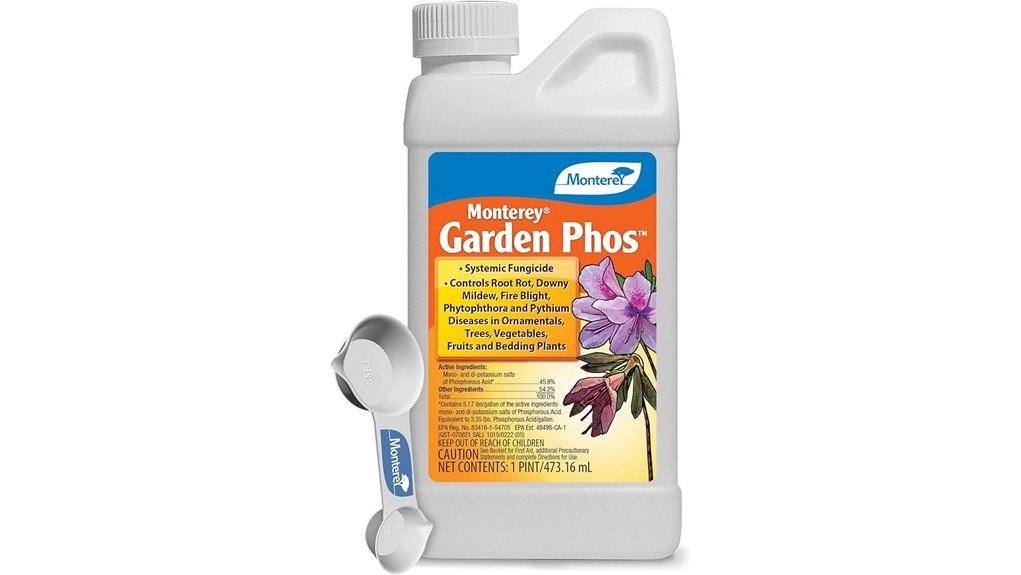
You’ll get a compact, systemic fungicide that protects roots, foliage, and trunks from Phytophthora, Pythium, downy mildew, black spot and early sudden oak death when used exactly as labeled. The 1‑pt bottle includes a measuring spoon and works for soil drench, foliar spray or basal bark applications; follow precise dilution, PPE, and resistance‑management rules. It’s best in rotations and for early infections; keep equipment clean and check plant tolerance — more practical details follow.
Some Key Takeaways
- Systemic 1-pt fungicide protects roots, foliage, and trunks against fungal and oomycete diseases like Phytophthora and Pythium.
- Labeled uses include root/collar rot, downy mildew, black spot, fire blight, and early-stage sudden oak death.
- Use precise label dilution rates, included measuring spoon, and compatible equipment (pump sprayer recommended) for mixing.
- Best results from soil drenches for root rot and foliar sprays for downy mildew, combined with sanitation and monitoring.
- Rotate modes of action, follow reentry intervals and PPE guidance, and avoid treating stressed or newly transplanted plants.
What Monterey Garden Phos Is and Which Diseases It Treats
Monterey Garden Phos is a systemic fungicide formulated to protect roots, foliage, and trunks from a broad range of fungal and oomycete diseases; you can use it against root and collar rot, Phytophthora and Pythium infections, downy mildew, black spot, fire blight, and sudden oak death (S.O.D.), among other listed problems. You’ll find its disease spectrum covers ornamentals, trees, fruits, vegetables, and bedding plants, backed by label indications. Use evidence-based application timing to match disease cycles and plant growth stages. Commit to resistance management by rotating modes of action, following label intervals, and recording treatments to protect efficacy and your gardening community. Consider including preventative programs as part of a regular lawn and landscape care routine.
How to Use the 1‑Pt Bottle: Mixing, Rates, and Application Methods
Now that you know what Garden Phos treats and why resistance management matters, here’s how to use the 1‑pt bottle safely and effectively. You’ll use the included measuring spoon and compatible mixing equipment (pump sprayer recommended). Follow label dilution rates: measure precisely, pre‑mix in a small container, then fill the sprayer. Apply as soil drench, foliar spray, or basal bark per label timing. Wear PPE, avoid drift, and observe plant‑specific restrictions. Clean equipment after use and store the bottle upright in a cool, locked area. Storage tips: keep in original container, sealed, away from children and pets. Many homeowners find that using a pump sprayer designed for garden chemicals improves mixing consistency and application control.
Performance Snapshot: Effectiveness on Root Rot, Downy Mildew, and S.O.D
While no fungicide is a cure‑all, Garden Phos delivers reliable systemic control against several tough pathogens when you follow label directions. You’ll see strong suppression of root rot and Phytophthora-related issues after timely soil drenches, and foliar applications reduce downy mildew pressure on susceptible ornamentals and vegetables. Trials and user reports show notable disease resistance support when used as part of a rotation, lowering inoculum without encouraging rapid resistance. For sudden oak death (S.O.D.) Garden Phos can slow progression on early infections, but you’ll need integrated sanitation and monitoring. Consider application timing and environmental impact when planning treatments. Homeowners maintaining their lawns and landscapes should integrate it with cultural controls and follow recommended practices for curative lawn disease treatments.
Safety, Plant Compatibility, and When Not to Use It
Because Garden Phos is systemic and moves within plant tissues, you should follow label directions closely to avoid phytotoxicity and off‑target effects. You’ll wear recommended personal protective equipment during mixing and application, observe reentry intervals, and avoid treating stressed or recently transplanted plants. Check species-specific tolerance—ornamentals, trees, vegetables, fruits, and bedding plants are listed, but some cultivars can react. Don’t apply before heavy rain or to waterlogged soil to reduce runoff and environmental impact. If you’re unsure about sensitivity, test a small area first or consult extension resources so your garden community stays safe and productive. Consider integrating organic fungicide alternatives and cultural practices to reduce reliance on chemical controls.
Value Verdict: Packaging, Accessories, Cost Considerations, and Buying Tips
Although the product comes in a compact 1‑pint bottle, its included measuring spoon and clear label instructions make accurate dosing straightforward, so you’re less likely to waste concentrate or misapply it. You’ll appreciate the straightforward accessory set and readable directions when treating ornamentals, trees, or vegetables. Consider eco packaging preferences and compare per‑acre efficacy versus larger concentrates; smaller volume suits hobbyists but may cost more per treatment. Use discount strategies like bundle deals, seasonal sales, or bulk purchases with fellow gardeners to lower unit cost. Buy from reputable retailers, verify batch and label integrity, and keep receipts for returns or advice. Homeowners managing irrigation systems should coordinate application timing with zone valve schedules to avoid watering conflicts and maximize fungicide effectiveness.
Some Questions Answered
Does Monterey Garden Phos Have an Organic Certification?
No, Monterey Garden Phos doesn’t carry an organic certification. You should expect no official organic certification or third party verification for this product, so you’ll want to check label ingredients and consult certifying bodies if organic status matters. Use it following safety and label directions; if you’re seeking certified organic options, consider products explicitly labeled with USDA Organic or a recognized third party verification to guarantee compliance with your values and regulations.
Can It Be Tank-Mixed With Fertilizers or Other Pesticides?
Yes — you can often tank-mix it with compatible fertilizers or pesticides, but you’ll check spray compatibility first and run a jar test. You’ll follow label directions for application timing, dilution, and safety; don’t mix with unknown products or pH‑sensitive materials. If you’re unsure, consult the label or manufacturer and test on a small area. That way you’ll protect plants, people, and your sense of stewardship.
How Long After Application Is It Safe to Harvest Produce?
You should follow the label’s harvest interval; many crops require a specific wait before edible safety is assured, often measured in days. Check the product label for exact preharvest intervals per crop and don’t guess. If label info’s unclear, contact the manufacturer or extension service. You’ll protect consumers and comply with regulations by observing those intervals, using correct rates, and recording applications so your harvests stay safe and trusted.
Is There a Recommended Storage Temperature or Shelf Life?
Store the product at room temperature, ideally 50–77°F, to maintain storage temperature and shelf stability. You’ll keep it sealed, dry, and away from direct sunlight or freezing to preserve efficacy. Check the label for any manufacturer-explicit shelf life, but unopened, properly stored systemic fungicides often remain shelf-stable for 2–5 years. If the solution changes color, consistency, or odor, don’t use it—reach out for guidance.
Can Pets Enter Treated Areas After Application?
Yes — restrict pet access until the spray or drench has dried and any reentry timing on the label has passed. You’ll keep pets off treated areas during application and for the specified reentry timing to avoid contact with wet residues. For systemic products, drying usually reduces risk, but always follow the label’s exact pet access and reentry timing instructions, and wash paws if pets contact treated soil or foliage.