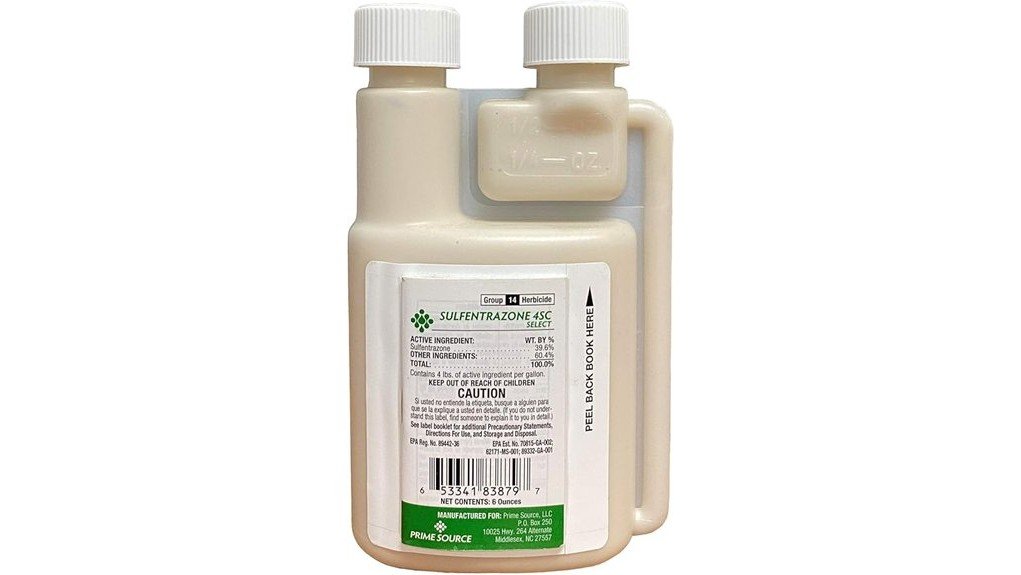
Sulfentrazone 4SC (Dismiss) is a concentrated, fast-acting soil herbicide you can use on labeled turf to control sedges, many broadleaf weeds, and some grasses. It blocks a key enzyme in chlorophyll/heme synthesis, so injury appears in 24–48 hours when weeds are small and actively growing. Follow label rates, calibrate your sprayer, wear PPE, and respect reentry and irrigation intervals. Keep it on approved turf types and check coverage needs—more details follow if you want them.
Some Key Takeaways
- Concentrated 4 lb ai/gal flowable (6 fl oz bottle) provides fast visible weed injury within 24–48 hours.
- Soil-applied mode blocks chlorophyll/heme biosynthesis, offering pre- and post-emergent control of sedges, broadleaves, and some grasses.
- Best results when applied to small, actively growing weeds and calibrated to label-recommended rates.
- Safe on labeled turf species when label intervals and application restrictions are followed; avoid sensitive species.
- Homeowner-friendly packaging, but store safely, follow PPE and reentry directions, and calculate coverage before buying.
Sulfentrazone 4SC (Dismiss): Quick Product Overview and Who Should Consider It
If you need a fast, soil-applied herbicide that controls sedges, broadleaf and grassy weeds in established turf, Sulfentrazone 4SC (Dismiss) is a concentrated flowable you can rely on. You’ll find a homeowner friendly package—6 fl oz bottle—with a 4 lb ai/gal formulation that delivers visible control in 24–48 hours, offering fast knockdown of target weeds. Use it on seeded, sodded or sprigged turf where selective, soil-applied control is needed. It’s practical for residential lawns, athletic fields or commercial sites when you want reliable performance, clear instructions, and community-tested results you can trust. Consider integrating broad-spectrum fungicides as part of an overall turfcare plan to protect treated areas from common lawn diseases.
How Sulfentrazone Works and What Weeds It Controls
Because sulfentrazone blocks a key enzyme in chlorophyll and heme biosynthesis, it disrupts plant metabolism quickly and causes visible injury within 24–48 hours. You’ll appreciate the clear mode specifics: sulfentrazone works through enzyme inhibition that prevents photosynthesis and pigment formation. Its target spectrum covers sedges, many broadleaf weeds, and some grassy weeds, making it versatile for established turf. Evidence supports both soil-applied pre-emergent and post-emergent activity, so plan application timing based on weed type—apply for grasses when small and actively growing, and for broadleaves shortly after emergence—to maximize consistent control. Proper timing and preventive practices can improve disease and weed management outcomes for homeowners maintaining their lawn and landscape.
How to Apply Dismiss 4SC Safely and for Best Results
Now that you know how sulfentrazone acts and which weeds it controls, you’ll get the best results by matching application timing, dosage, and equipment to the weed type and turf situation. Read the label, wear proper PPE, and mix only required amounts. Calibrate your sprayer before each use so rates match label recommendations; that application calibration prevents overdosing or gaps in control. Apply under calm, dry conditions and avoid irrigation or mowing for recommended intervals. Keep records of dates, rates, and weather. Share experience with fellow managers; consistent, measured practices protect turf, people, and the environment while improving outcomes. Use appropriate safety signage to warn others when treatments are in progress and to help maintain buffer zones.
Turf Safety, Timing, and Which Turf Types/Sites Are Compatible
When you match timing and turf type to sulfentrazone’s label, you’ll protect desirable grasses while getting reliable sedge, broadleaf, and grassy weed control; apply to established, seeded, sodded, or sprigged turfgrasses listed on the label and avoid use on sensitive species or newly seeded areas until the label’s specified interval has passed. You’ll time applications when target weeds are small and actively growing for best control. Dismiss shows good cool season compatibility on labeled species and preserves drought tolerance traits when used correctly. Read the label for site-specific restrictions—golf fairways, lawns, athletic fields, sod farms—and follow rates and reentry intervals. For homeowners managing lawns, sulfur products can also be used to lower soil pH and improve soil conditions complementary to herbicide programs.
Buying, Packaging, and Value: Coverage, Size, and Purchase Tips
In choosing Sulfentrazone 4SC (Dismiss), focus on the coverage that a 6 fl oz bottle delivers and how that matches your turf area and application rate: the flowable 4 lb ai/gal formulation is concentrated, so a single 6 oz unit treats a modest lawn or a few athletic-field spots depending on label rates, meaning you’ll want to calculate acres or square feet per application before buying to avoid over- or under-purchasing. Buy when weeds are active—purchase timing affects effectiveness and leftover storage. The single-bottle pack fits homeowners; communal buyers may pool resources. Check refill options, warranty, UPC/ASIN details, and seller return policies before checkout. Consider storing concentrate in a cool, dry place away from children and pets to maintain product stability and safety safe storage.
Some Questions Answered
Can Sulfentrazone 4SC Be Mixed With Other Lawn Chemicals or Fertilizers?
Yes — you can often tank mix it, but you’ll check tank compatibility first and follow label directions. You’ll avoid mixing with incompatible herbicides or fertilizers without a jar test and manufacturer guidance. Mind application timing: apply when turf and weeds are at recommended stages and avoid stress conditions. You’ll also stagger fertilizer or other treatments if label cautions exist, and keep records so your crew feels confident and included.
Is This Product Safe to Use Near Edible Gardens or Vegetable Beds?
No — you shouldn’t use it right next to edible gardens or vegetable beds. For gardening safety and edible proximity, keep treated turf and soil separated from where you grow food; sulfentrazone is soil-active and can move or persist, risking crop injury or residues. Follow label buffers, application rates, and re-entry/plant-back intervals, and consult local extension guidance so you and your community can garden safely and confidently.
How Long After Application Can Pets and Children Re-Enter Treated Areas?
You should wait until spray has fully dried and follow the product re entry interval; typically that’s until treated areas are dry (often a few hours). For safety precautions, keep pets and children off the area during application and while surfaces remain wet. Post-application, ventilate or water-in per label directions if specified, and store the label for exact timing. Staying cautious helps everyone feel safe and included.
Does Dismiss 4SC Have Any Known Environmental Runoff or Groundwater Risks?
Yes — you should be cautious: sulfentrazone can pose groundwater contamination and surface runoff risks under certain conditions. You’ll reduce those risks by following label rates, avoiding applications before heavy rain, and protecting sensitive areas like wells and drains. Use buffer zones, incorporate into soil per directions, and follow local regulations. Doing this helps keep your community safe and minimizes environmental movement of the herbicide.
Are There Temperature or Weather Restrictions for Storing the Unopened Bottle?
Yes — you should store the unopened bottle within the manufacturer’s recommended storage temperature range to preserve stability and avoid degradation. Keep it cool, dry, and out of direct heat or freezing conditions; Moisture sensitivity means you’ll want the cap sealed and the container off damp floors. Treat storage like shared responsibility: follow label directions, monitor temperatures, and rotate stock so everyone in your group feels confident the product stays effective.