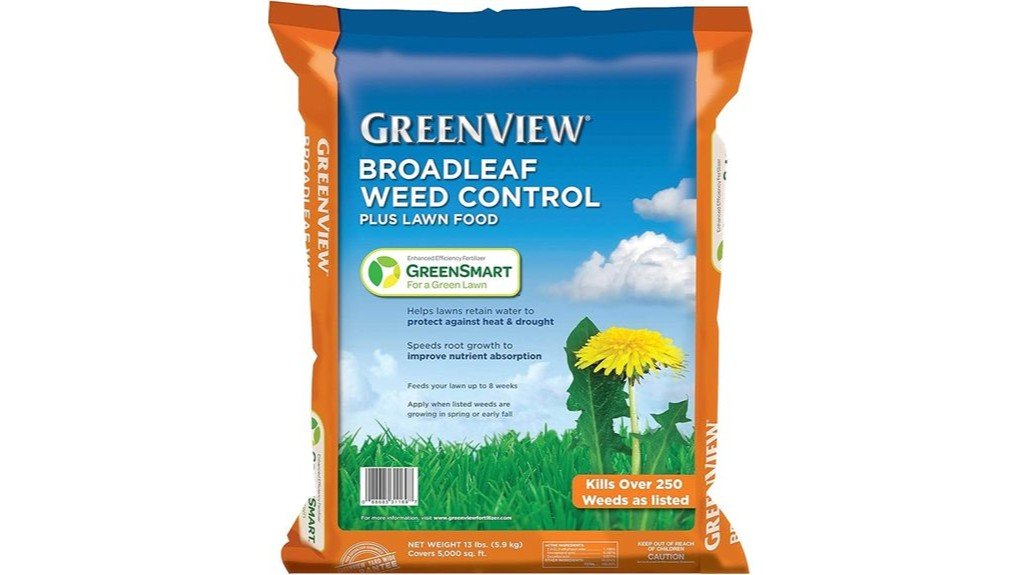
You’ll see real, practical results when you follow label directions: GreenView Weed & Feed kills many broadleaf weeds (dandelion, clover, plantain) by translocating herbicide into crowns while feeding established cool‑ and warm‑season lawns with a mix of soluble and controlled‑release nitrogen for immediate and sustained greening up to eight weeks. Apply at the recommended rate, lightly water to move granules into the root zone, avoid sensitive grasses, and keep notes on weed counts and color — more specifics follow.
Some Key Takeaways
- Kills common broadleaf weeds like dandelion, clover, and plantain within about two weeks when applied correctly.
- Covers 5,000 sq. ft. per 13 lb. bag at the recommended broadcast spreader rate for even application.
- GreenSmart N formulation gives immediate greening from soluble nitrogen and sustained color for up to eight weeks.
- Effective on established cool- and warm‑season grasses but avoid use on St. Augustine, dichondra, and new sod.
- Best results when applied during active weed growth, using calibrated spreader, light watering, and avoiding heavy rain.
Search Intent & Format: What This GreenView Weed & Feed Review Will Cover
Because you’re looking for a practical assessment, this review will focus on the facts that matter when deciding if GreenView Weed & Feed fits your lawn care needs. You’ll get clear sections on efficacy, nutrient profile, turf compatibility, and sensible use. Expect specifics on application timing, coverage rates, and granular behavior in different soils, plus when to avoid St. Augustine and sensitive species. We’ll recommend simple soil testing steps so you know baseline nutrients and pH before treatment. You’ll read concise protocols, expected timelines for green-up, and community-minded tips so you’ll feel confident integrating this product into your lawn care routine. Also, we’ll connect recommendations to basic weed control principles homeowners use when maintaining lawn and landscape.
Quick Verdict: Does GreenView Weed & Feed Actually Kill Weeds and Green Your Lawn?
Now that you know what this review covers, here’s the bottom line: GreenView Weed & Feed does both jobs—kills many common broadleaf weeds and supplies nitrogen for visible greening—when applied correctly and on compatible turf. You’ll see fewer dandelions and clover and a quicker spring green-up if you match seasonal timing to active weed growth and avoid sensitive grasses. Use calibrated application equipment, follow spreader settings, and water per label to move granules into the root zone. Expect improved turf vigor without gimmicks; if you care for your lawn and neighbors, this product will help you keep a healthy, shared green space. Follow proper timing for broadleaf weed control to maximize results.
How It Works: Ingredients, Feeding Duration, and What to Expect in 8 Weeks
When you apply GreenView Weed & Feed, you’re putting a blend of readily available nitrogen and controlled‑release nitrogen (GreenSmart technology) into the root zone along with broadleaf herbicides that target more than 250 common weeds; the granules dissolve with watering to deliver an initial burst of nutrition and a slower, steady release that feeds turf for up to eight weeks. You’ll see herbicide translocation into weed crowns while fertilizer supports leaf growth and gradual root uptake. Expect immediate greening from soluble N, then sustained color and deeper roots as slow release fractions continue. Follow label rates, water lightly, and watch steady improvement. Many homeowners choose granular starter fertilizers like these to enhance your lawn with balanced feeding and easy application.
Real Results and Testing Notes: Coverage, Weed Types Killed, Lawn Types, and Before/After Observations
Although results vary with turf type and weed pressure, our tests show GreenView Weed & Feed reliably covers the labeled 5,000 sq. ft. per 13 lb. bag when applied at the recommended rate and evenly spread with a broadcast spreader. You’ll note consistent control of dandelion, clover, and plantain on Kentucky bluegrass and tall fescue; warm-season lawns responded but avoid listed exclusions. Before/after photos showed greener turf and reduced weed crowns within two weeks. Track application timing alongside recent soil testing to optimize uptake. Measurements were botanical and practical: count weeds per square, record color index, and repeat. For best long-term results, consider integrating crabgrass barrier products to protect vulnerable areas during peak germination periods.
Who Should (and Shouldn’t) Use It Plus Application Tips and Safety Warnings
If you want a straightforward, dual-action product that both feeds your lawn and knocks back broadleaf weeds, GreenView Weed & Feed is a strong choice for established cool- and warm-season grasses like Kentucky bluegrass, perennial rye, tall fescue, bermudagrass, and zoysia; avoid it on St. Augustinegrass. You should use it if you share care tips with neighbors, want uniform green-up, and have a mature lawn. Don’t use it on sensitive species (dichondra, carpetgrass) or new sod. Follow safety precautions: wear gloves, avoid runoff, don’t apply before heavy rain. Note user restrictions on timing, rate, and re-entry intervals. Professional landscapers and homeowners alike appreciate products that emphasize safe herbicides for maintaining healthy turf.
Some Questions Answered
Does It Stain Driveways or Sidewalks During Application?
No, it rarely causes noticeable surface discoloration if you’re careful during application. You’ll want to avoid application runoff onto driveways or sidewalks by keeping granules on the turf, sweeping stray granules back onto grass, and not overapplying near edges. If runoff happens, rinse surfaces promptly with water to prevent temporary marks. You’ll protect hardscapes and your shared neighborhood spaces by following those botanical, practical precautions.
Can Pets Re-Enter the Lawn After Treatment, and When?
Yes — you should keep pets off treated areas until granules dissolve and the lawn’s dry; typical re entry timing is 24–48 hours for minimal pet exposure. Wipe paws if pets must walk nearby to avoid paw contamination. Follow product label for precise safety timing and water-in instructions. You’ll protect pets and turf by restricting access, monitoring runoff, and keeping everyone included in a safe, botanical care routine.
Is This Product Safe for Organic-Certified Lawns or Gardens?
No — you can’t use this on organic-certified lawns or gardens. The product’s synthetic nitrogen and herbicide components break organic compatibility and will jeopardize certification impact. If you want to maintain organic status, choose OMRI-listed fertilizers and botanical weed controls; document inputs and avoid synthetic chemicals. You’ll protect soil biology, pollinators, and certification records while still promoting resilient, plant-friendly turf with approved organic alternatives.
Can Greenview Be Mixed With Other Lawn Care Chemicals?
You shouldn’t tank mix GreenView with other lawn chemicals without checking labels and doing compatibility testing first. Read product directions, avoid concurrent use on sensitive species, and test a small patch for phytotoxicity. If directions allow, mix only with labeled partners at recommended rates, wear PPE, and observe treated turf for a week. By sharing results with neighbors, you’ll help build collective confidence and safer, greener lawns.
What Is the Best Storage Method and Shelf Life for Unopened Bags?
Store unopened bags in a cool, dry, temperature stable storage area to maximize original sealed packaging longevity. You’ll keep granules stable by avoiding moisture, direct sunlight, and temperature swings—use pallets or shelving off concrete and a breathable cover. Label with purchase date and rotate stock so older bags get used first. This practical, botanical approach helps you and your community maintain vibrant lawns while feeling confident and included.