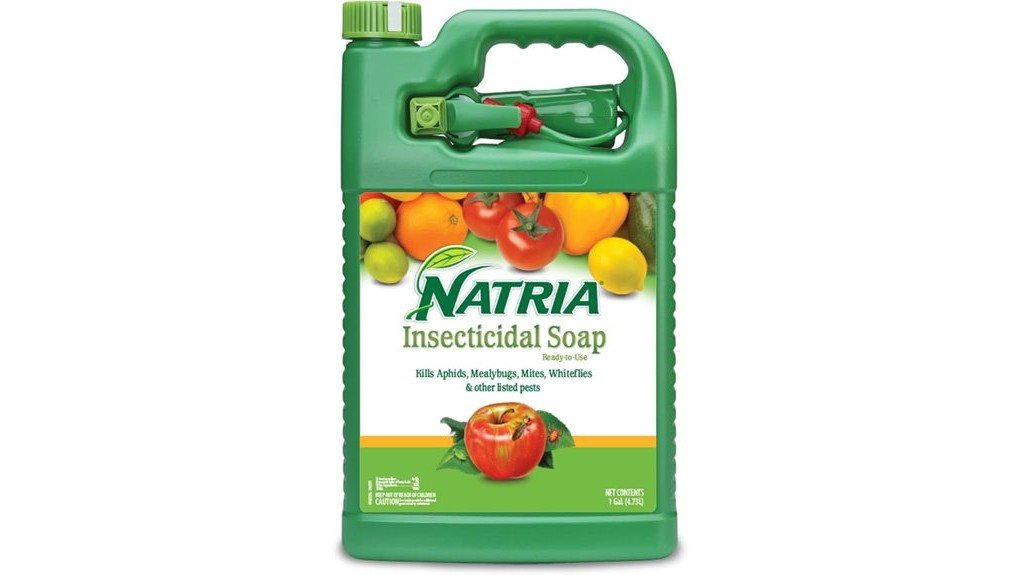
You’ll find NATRIA Insecticidal Soap is a ready-to-use, OMRI-listed 1% potassium-salt formulation that targets soft-bodied pests via cuticle disruption. You’ll spray thoroughly for direct contact kills of aphids, mites, whiteflies and mealybugs within minutes; repeat treatments control successive cohorts. It’s labeled for ornamentals, edibles and houseplants, low-residue and pet-safe when used as directed, though eggs and hidden stages aren’t controlled—keep reading for full application, timing and compatibility guidance.
Some Key Takeaways
- OMRI-listed insecticidal soap using 1% potassium salts of fatty acids for organic gardening and home use.
- Kills aphids, mites, whiteflies, and mealybugs on direct contact within minutes when thoroughly sprayed.
- Ready-to-use 1-gallon sprayer suits beginners, community gardens, and indoor/outdoor applications.
- Limited effectiveness on eggs and hidden pests; repeat treatments needed for complete suppression.
- Gentle on many ornamentals, vegetables, and houseplants when label directions and spot tests are followed.
Quick Verdict and Who Should Buy NATRIA Insecticidal Soap
While it’s labeled for organic gardening, NATRIA Insecticidal Soap delivers a straightforward, technical solution for soft-bodied pests: its 1% potassium salts of fatty acids formulation kills aphids, mites, whiteflies and similar insects within minutes and is OMRI-listed for organic use. You’ll find it ideal if you maintain organic gardens and want a no-fuss, ready-to-use sprayer that’s safe up to harvest. You’ll appreciate clear target pest scope, fast action, and indoor/outdoor versatility. It’s particularly suited to beginner gardeners and community growers who value proven efficacy, regulatory compliance, and simple application that supports collective stewardship. The product is sold by retailers focusing on pet-safe insecticides for homeowners who maintain lawns and landscapes.
What’s in the Bottle and Why the Ingredients Matter (Potassium Salts of Fatty Acids 1%)
Explaining what’s in the bottle starts with the active: potassium salts of fatty acids at 1%, a contact-active surfactant-insecticide that disrupts insect cuticles and cell membranes on direct application. You’ll recognize this formulation as the product of saponification chemistry — fatty acids neutralized to water-soluble potassium salts that reduce surface tension and cause rapid desiccation of soft-bodied pests. At 1% the concentration balances efficacy with phytocompatibility for ornamentals and edibles. The inert components stabilize the spray and support microbial safety in storage and use. You can rely on transparent formulation principles when integrating this OMRI-listed control into your garden regimen. This product is well-suited for homeowners maintaining lawns and landscapes, offering a homeowner-focused option for managing common garden pests.
How to Use the Ready-to-Use Sprayer Effectively and Safely (Indoor/Outdoor, Application Tips, Day-of-Harvest)
Because the NATRIA ready-to-use sprayer delivers a premeasured, aqueous 1% potassium salts of fatty acids formulation, you should apply it as a direct-contact spray to thoroughly wet pest-infested surfaces without runoff. Aim application timing for early morning or late afternoon to reduce phytotoxic risk and avoid midday heat. Indoors, guarantee ventilation practices by opening windows and using fans; outdoors, avoid windy conditions. Perform spot testing on sensitive cultivars before broad use. Hold nozzle 6–12 inches from foliage, coat undersides, and repeat as label directs. Follow sprayer maintenance protocols to preserve seal integrity and prevent contamination. For homeowners prioritizing child safety, choose certified eco-friendly products when maintaining your lawn and landscape.
Real-World Performance: Pests Controlled, Speed of Action, and Plant Compatibility
When you need rapid control of soft-bodied pests, NATRIA’s 1% potassium salts of fatty acids formulation delivers contact kills on aphids, mealybugs, mites, and whiteflies within minutes of thorough coverage. You’ll see reliable aphid suppression when you achieve complete foliar contact; population declines occur after successive treatments. Speed of action is immediate for exposed life stages but limited against eggs and hidden pests. Plant compatibility is broad—roses, vegetables, ornamentals, and houseplants tolerate labeled rates—but you should test sensitive cultivars on a small area. Low persistence minimizes residue buildup, so you can integrate this product into routine, community-minded IPM programs. This product aligns with choosing pet-friendly options for lawns and landscapes sold on specialized websites.
Price, Availability, Warranty/Returns, and Final Buying Recommendation
Although exact street prices fluctuate, you’ll typically find the 1-gallon ready-to-use NATRIA Insecticidal Soap priced competitively with other organic insecticidal soaps sold in bulk, and it’s widely available through major online retailers (including Amazon) and garden-supply outlets. Do routine price checks and enable stock alerts to catch promotions or restocks. The seller offers a voluntary 30-day return policy on Amazon; contact manufacturer for warranty details if product defects appear. For community-minded gardeners seeking reliability, my buying recommendation is favorable: perform a quick value assessment against application rate and pest load, then purchase if coverage meets your needs. Many homeowners buying grass seed and related lawn-care products prioritize product availability when planning seasonal maintenance.
Some Questions Answered
Is NATRIA Safe to Use Around Pets and Children?
Yes — you can use it around pets and children with precautions. The product’s active ingredient (potassium salts of fatty acids 1%) is low-toxicity, OMRI-listed, and formulated for organic gardening, minimizing acute risks to pet safety and reducing child exposure hazards. You should keep kids and animals away during application, let treated surfaces dry, store the container securely, and follow label instructions and harvest safety timelines to guarantee ongoing household safety.
How Long Should Treated Plants Stay Out of Direct Sunlight?
Keep treated plants out of direct sunlight for at least 24–48 hours to avoid sunburn; reduce exposure immediately after spraying. You’ll want gradual acclimation back to full sun over several days, increasing light by a few hours daily. Monitor leaves for stress and resume normal watering and care. This technical, community-minded approach helps protect sensitive foliage while maintaining effective pest control and shared gardening success.
Can This Soap Be Tank-Mixed With Other Pesticides or Fertilizers?
Yes — but you should test first. You’ll perform compatibility testing because NATRIA’s potassium salts have pH sensitivity and can react with alkaline or incompatible chemistries. Mix small proportions of products in a jar at labeled ratios, observe separation, precipitation, or color change, and conduct a phytotoxicity trial on representative plants. Don’t tank-mix with unknown or strongly alkaline products; follow label restrictions and manufacturer guidance to stay safe and effective.
Does It Leave Residue on Edible Produce After Harvest?
No — when used as directed, you shouldn’t have persistent residue on edible produce after harvest. Residue testing for potassium salts of fatty acids typically shows low residues; wash efficacy remains high with simple rinsing. You’ll want to follow label directions and rinse produce thoroughly before eating to make certain any surface residue or soap film is removed. This keeps your group safe and aligned with organic practices and harvest-day use.
What’s the Shelf Life Once Opened and How to Store It?
You should use opened product within 1–2 years for peak potency; storage duration beyond that may reduce effectiveness. Keep the sprayer capped and store in a cool, dark place away from freezing or direct heat. Use original container material (HDPE/LDPE plastic) or compatible non-reactive containers; don’t transfer to metal. Label date opened, inspect before use, and discard if clarity, odor, or separation changes to maintain safety and performance.