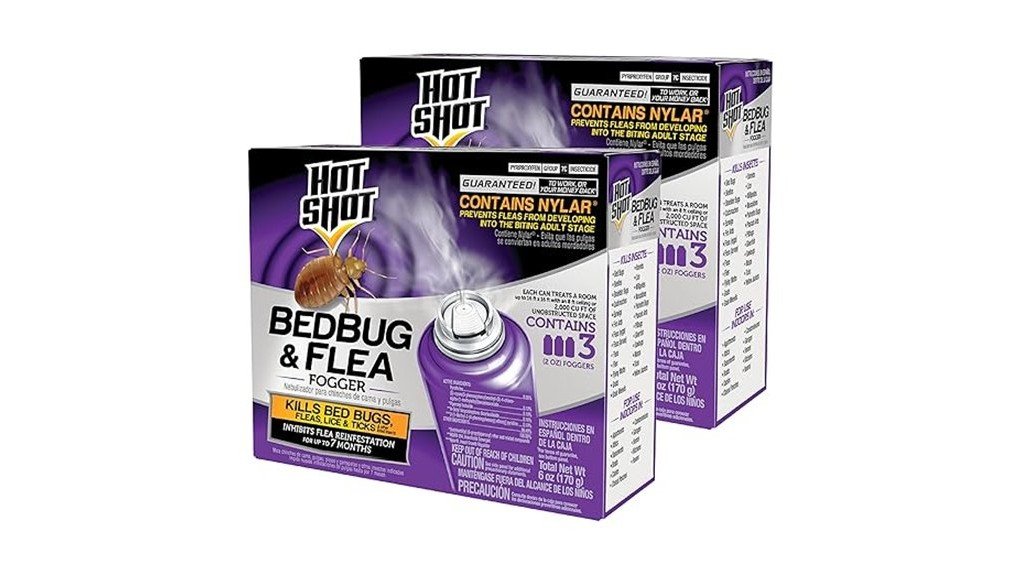
If you’ve got a small to moderate indoor infestation, Hot Shot BedBug and Flea Fogger gives fast knockdown and adds Nylar IGR for months of egg‑stage control, but it won’t reach deep seams, wall voids, or heavy harborages. Use it only as part of a broader plan: vacuum, steam, encase mattresses, and monitor. Follow label safety—remove people, pets, and food, seal the area, ventilate afterward. Keep going to learn effectiveness limits and complementary steps.
Some Key Takeaways
- Effective for fast broad‑spectrum knockdown of many household pests, including bed bugs and fleas, when used as part of a larger plan.
- Each 2‑oz can treats roughly 2,000 cubic feet and includes Nylar IGR for up to seven months of flea development inhibition.
- Limited penetration into mattress seams, wall voids, and heavy clutter reduces fogger effectiveness against bed bug harborages.
- Must follow label: vacate people/pets, remove food/aquariums, place cans elevated, seal area, then ventilate before reentry.
- Best used with vacuuming, encasements, steam, diatomaceous earth, and monitoring; call a pro for persistent or widespread infestations.
Quick Verdict : Is Hot Shot BedBug and Flea Fogger Worth Buying?
While no single product solves every infestation, Hot Shot BedBug and Flea Fogger is worth buying if you need a fast, broad-spectrum indoor treatment that also helps prevent flea reinfestation—each 2 oz can treats up to 2,000 cu ft and includes Nylar to inhibit flea development for up to seven months. You’ll appreciate clear guidance on coverage and use locations, and you’ll fit this into a larger control plan. Do a cost analysis versus professional service and multi-can needs. Scan user reviews for repeated efficacy or failures in similar spaces. If you want reliable, affordable adjunct control, this’s a solid option. For homeowners maintaining lawns and landscapes, consider integrating rodent and vole solutions into your overall pest-management strategy to reduce outdoor pressures that can influence indoor infestations.
What’s in the Can and What It Kills (Ingredients, Targets, and Coverage)
Because you want to know exactly what you’re releasing into your space, here’s a concise breakdown: The Hot Shot BedBug and Flea Fogger is an aerosol containing pyrethroid actives plus Nylar as an insect growth regulator. Those active ingredients target bed bugs, adult fleas, lice, ticks, cockroaches, flies, mosquitoes, wasps, ants and many stored‑product and household pests; it also controls flea eggs and larvae, inhibiting reinfestation for months. Each 2‑oz can treats up to about 2,000 cubic feet — think of the effective treatment radius per can in typical rooms. Use this info to fit the fogger into your broader pest plan. Consider integrating the fogger with city‑approved pest controls and other landscape management practices for comprehensive protection.
How to Use This Fogger Safely and Effectively (Step‑by‑Step)
Before you release the fogger, read the label and prepare the space so the product can work safely and effectively: remove people, pets, aquariums, and exposed food or utensils; cover or remove electronics and open flames; close doors and windows; and plan exits so treated rooms remain sealed for the recommended time. Place cans elevated and unobstructed, activate per instructions, then leave immediately. Seal the area for the labeled duration. After airing, follow recommended precautionary ventilation before reentry. Dispose of cans per local rules. If you need alternatives, consider pet safe alternatives and integrated sanitation as part of your shared pest plan. Consider wearing appropriate protective gear when mixing or handling lawn and landscape chemicals at home.
Real Performance : Results, Limitations, and When to Expect Effectiveness
Although foggers can knock down many pests quickly, you should expect mixed results against bed bugs and only partial control of fleas—the aerosol reaches exposed insects but won’t penetrate deep into mattress seams, wall voids, or cluttered hiding spots. You’ll see immediate knockdown on exposed adults and reduced flea larvae where spray contacts surfaces; residual activity from the Nylar IGR helps prevent development of new biting adults for months. Expect a staged response: quick reduction within 24–48 hours, ongoing suppression for weeks. Plan application timing around occupancy and reentry intervals, and integrate fogging into a repeated, coordinated treatment cycle.
Alternatives, Complementary Products, and When to Call a Pro
Given the mixed knockdown and limited penetration you saw with fogging, consider pairing the Hot Shot fogger with targeted tools and knowing when to call a pro. You’ll want mattress encasements, steam treatment for seams, diatomaceous earth in voids, and vacuuming to remove live bugs and eggs. Use chemical alternatives like silica gel or IGR sprays where label permits; rotate modes to limit resistance. Monitor with interceptors and logs. If bites persist after integrated efforts, infestations spread between units, or you detect heavy harborages, engage professional services. That shared step protects your space and community health. For secure storage of pesticides and to protect household members, follow safe pesticide storage practices recommended for homeowners.
Some Questions Answered
Is This Fogger Safe to Use Around Indoor Plants?
No, you shouldn’t expose indoor foliage or potted succulents directly to the fogger. You’ll need to remove or cover plants and ventilate thoroughly; foggers deposit residues that can harm sensitive leaves and soil biota. Follow label directions, keep plants out of treated rooms until surfaces are wiped and air is exchanged, and consider spot-treatments or targeted methods instead to protect plants and maintain a shared, safe indoor environment.
Can I Use It in Rooms With Electronic Equipment?
No — you shouldn’t use it around electronic equipment. The aerosol can cause electronic interference while particles settle, and residues can promote equipment corrosion over time. If you must treat the room, unplug and remove or tightly cover devices, allow full ventilation and follow label reentry times. You’ll protect your gear and others by using spot treatments or professional services for areas with sensitive electronics.
How Long Before Re-Entering Treated Closets or Cabinets?
Wait at least 2 hours before re-entering treated closets or cabinets with ventilation timing in mind; longer if the space felt heavily fogged. After re-entry, air cloth items separately — cloth airing outdoors or in a well-ventilated area for several hours reduces residues. You’ll want to open doors and run fans to speed ventilation, and only return stored clothes or delicate items after thorough airing to protect you and your household.
Will It Stain or Damage Fabrics and Mattresses?
It shouldn’t stain or cause color transfer on fabrics or mattresses if you follow label directions and ventilate before returning. Spot-test in an inconspicuous area first to check for fabric discoloration, especially on delicate or dyed materials. Use mattress encasements for protection and avoid direct saturation; foggers are meant to disperse fine mist, not soak surfaces. If you notice any change, launder or consult a professional cleaner promptly.
Is This Product Pet-Safe for Aquariums and Birds Nearby?
No — you shouldn’t use it near aquariums or birds. Aerosol foggers pose aquarium toxicity risks from airborne residues settling into water and contain ingredients that can harm fish. Birds have extreme avian sensitivity to inhaled pesticides; even small exposures can be fatal. You’ll want to remove or fully seal aquariums, relocate birds to a different building, ventilate thoroughly, and follow label directions or consult a vet or aquatic specialist before treating indoor spaces.