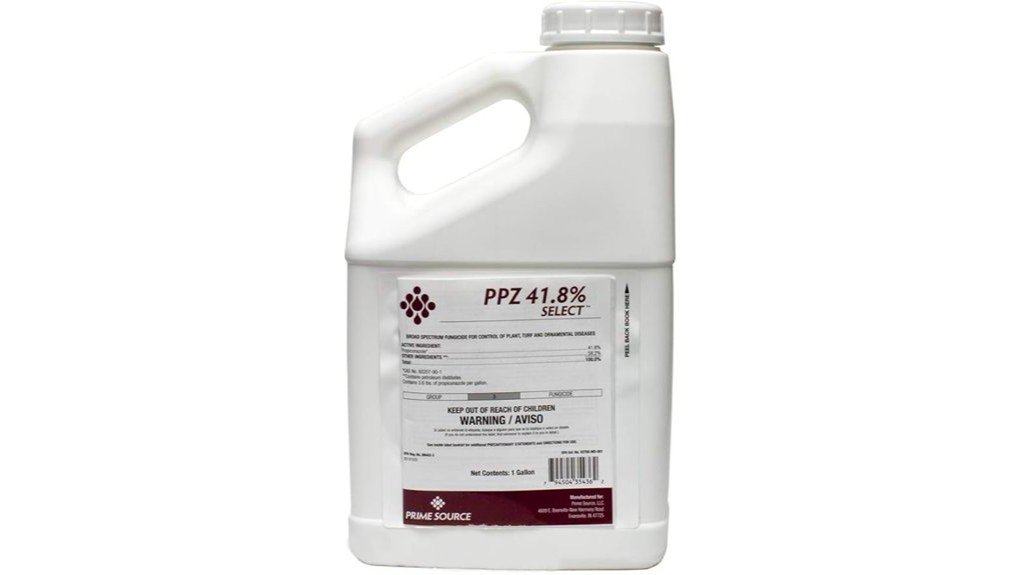
PPZ 41.8 Select (1 gal) gives you a professional 41.8% propiconazole concentrate that delivers systemic, broad-spectrum control of dollar spot, brown patch, anthracnose, fusarium and common ornamental leaf spots when applied precisely and rotated to reduce resistance. It translocates into shoots and crowns for preventive and early curative action, but single-site chemistry requires strict use limits, PPE and drift precautions. It’s cost-effective per acre versus ready-to-use options; keep reading to see rates, safety and alternatives.
Some Key Takeaways
- PPZ 41.8 Select is a professional 41.8% propiconazole concentrate offering broad-spectrum preventive and early curative turf and ornamental disease control.
- Highly effective versus dollar spot, brown patch, anthracnose, fusarium patch, powdery mildew, rusts, and common leaf spots.
- Systemic translocation into shoots and crowns provides longer symptom suppression but single-site MOA requires resistance management.
- Use per-label rates, calibrate professional sprayers, limit consecutive applications, and rotate modes of action for best results.
- Handle as a concentrated pesticide: wear required PPE, avoid drift and water contamination, and follow tank-mix compatibility guidance.
Which Problems Does PPZ 41.8 Select Solve for Turf and Ornamentals?
Because propiconazole combines preventive and curative action, PPZ 41.8 Select tackles a wide range of fungal problems on turf and ornamentals with efficiency and economy. You’ll control anthracnose, brown patch, dollar spot, fusarium patch, gray leaf spot, powdery mildew and common ornamental leaf spots and rusts when you apply correctly. Prioritize application timing to hit preventive windows and early symptoms; that minimizes inputs. You’ll appreciate its low-odor EC and broad-spectrum label, but don’t over-rely on it. Integrate cultural practices and alternate modes for resistance management so the community you’re part of keeps effective tools long-term. For homeowners, following essential tips for choosing sprays and rotating modes of action helps maintain long-term effectiveness and reduces resistance risk.
How Strong Is the Propiconazole 41.8% Formulation for Common Turf Diseases?
Propiconazole at 41.8% in PPZ 41.8 Select delivers a high-dose, systemic broad-spectrum activity that gives you strong preventive and early curative control of many turf pathogens when applied at label rates. You’ll find efficacy against dollar spot, brown patch, anthracnose and fusarium patch is robust, especially for preventive programs. Systemic activity improves translocation into shoots and crowns, aiding symptom suppression. Be critical: single-site demethylation inhibitor chemistry raises resistance management concerns, so rotate modes of action and limit consecutive applications. Overall potency is high, but prudent programing and monitoring are essential to maintain long-term control and turf community success. Consider integrating preventative turf fungicide programs into your lawn care routine to maximize disease prevention and product effectiveness.
How to Use PPZ 41.8 Select: Rates, Timing, and Application Tips
Having a potent 41.8% formulation means you’ll need a disciplined application plan: follow label rates for turf and ornamentals, time applications for preventive windows (cool, humid periods and early disease pressure), and limit consecutive uses to manage resistance. You’ll calibrate your sprayer precisely—turf calibration is non-negotiable—to hit label ppm and avoid phytotoxicity. Choose professional application equipment with cleanable tanks and accurate nozzles; record pressure, speed, and volume. For cool-season grasses, start preventively at first disease signs and repeat per label intervals. Rotate modes of action and document applications to protect efficacy and community green spaces. Consider integrating eco-friendly fungicide options as part of a broader organic lawn and garden program to reduce chemical load and support beneficial organisms.
Safety, Compatibility, and Environmental Considerations for Homeowners and Pros
When you handle PPZ 41.8 Select, treat it like a concentrated pesticide: wear chemical-resistant gloves, eye protection, and coveralls, follow label PPE and re-entry intervals, and avoid drift to non-target plants and water. You’ll respect buffer zones, calibrate equipment, and mix outdoors or in ventilated areas to reduce inhalation and splash risks. Check tank-mix labels; incompatibilities can reduce efficacy or create hazardous reactions. Protect pollinators by avoiding bloom sprays and use integrated pest management to limit applications. Prioritize drinking water protection near wells and surface water. Share practices with peers to maintain safety and stewardship. Consider investing in chemical-resistant gloves specifically designed for lawn care to improve protection and durability.
Is PPZ 41.8 Select Worth Buying? Cost, Alternatives, and Final Recommendation
Although it’s a technical, concentrated fungicide suited for professionals, PPZ 41.8 Select is worth considering if you need broad-spectrum, long-lasting control of turf and ornamental diseases and want a cost-effective way to protect large areas. You’ll weigh upfront price versus application rate; a clear cost comparison shows lower per-acre cost than many ready-to-use products. Expect robust long term effectiveness against anthracnose, brown patch, and dollar spot when used per label. Alternatives include lower-concentration propiconazole mixes and different actives for resistance management. If you share best practices with peers, PPZ 41.8 is a defensible, practical choice. Best practice tips include considering application timing and integrated disease management when using concentrated fungicides.
Some Questions Answered
Can PPZ 41.8 Be Used on Edible Food Crops?
No — you shouldn’t use it on edible food crops. It’s labeled for ornamentals only and turf safety is the focus; regulatory use-patterns and residue limits aren’t established for food. You’ll treat non food landscapes, sod and ornamentals with confidence, but check labels and local rules before applying. If you need fungicide for crops, consult registered products for food use, involve extension services, and keep your growing community compliant and protected.
How Long After Application Can Pets Re-Enter Treated Areas?
You should follow the product’s labeled re entry interval for pet safety; typically keep pets off treated areas until spray has dried and label-specified REI expires. Read the label for exact waiting time, as formulations and rates vary. If label lacks pet-specific guidance, restrict access at least 24 hours, ventilate and allow residue to settle. When in doubt, contact the manufacturer or your vendor for precise instructions to protect animals and household members.
Does the Product Require Any Special Storage Conditions?
Yes. You should store cool, ventilated, dry and keep upright, sealed container to preserve product stability and prevent leaks. Don’t expose it to heat, open flames, or freezing; avoid prolonged sunlight. Label and secondary containment help prevent spills and cross-contamination. You’ll want secure access control and to follow local regulations for hazardous liquids. Inspect periodically for integrity and document storage conditions to protect your team and community.
Are There State or Local Restrictions on Purchasing Propiconazole?
Yes — you’ll encounter state regulations and purchase limits in some areas. You must check your state’s pesticide laws, as certain jurisdictions restrict homeowner sales, require certification, or limit quantities of propiconazole you can buy. Retailers may enforce purchase limits and request ID or documentation. You’re encouraged to join local applicator networks and share compliance resources so you’re informed, supported, and able to meet legal requirements without surprise.
What Personal Protective Equipment Is Required During Mixing?
You must wear chemical resistant gloves and eye protection; respirator use is required if label indicates ventilation is inadequate or if you’re using high-concentration pours. Wear long-sleeved coveralls, chemical-resistant footwear, and a NIOSH-approved respirator with organic vapor cartridges or particulate filters as specified. Follow the product label for exact PPE, don’t improvise, and decontaminate gear after mixing. This keeps you and your crew protected and compliant.