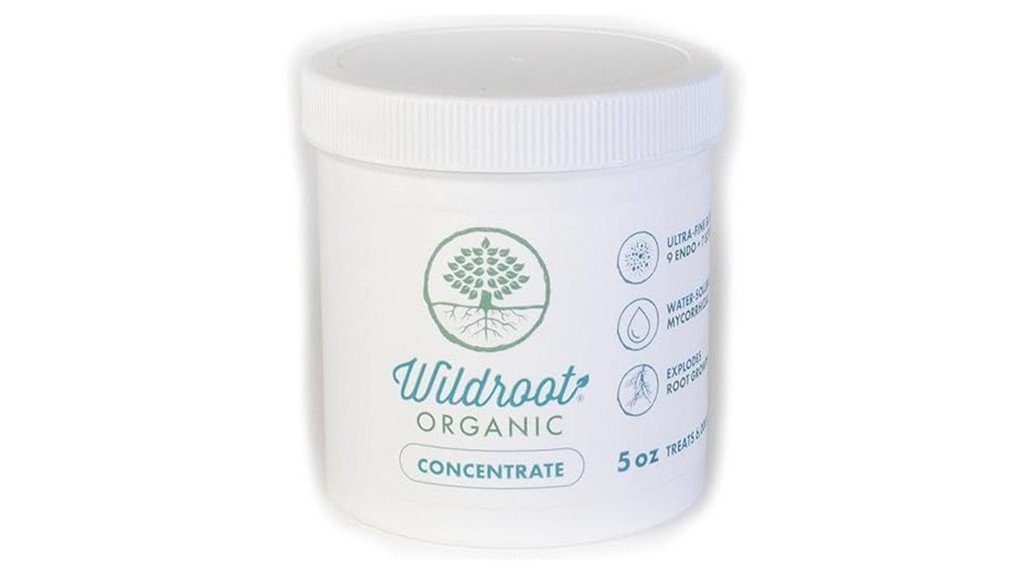
You’ll get a concentrated, NOP‑certified, non‑GMO 5 oz powder with 16 mycorrhizal species (9 endo, 7 ecto) formulated to colonize diverse lawns, containers, and mixed plantings. Use 1/4 tsp per gallon for drenches or root placement; a bag treats ~25,000 ft² or ~6,000 4‑inch pots. Trials show finer roots, larger hyphal networks, improved P and water uptake and ≈30% water savings under stress. Read on to see dosing details, limits and alternatives.
Some Key Takeaways
- Certified-organic, USA-made 16-species mycorrhizae powder targets broad plant and soil compatibility for home gardeners and landscapers.
- A 5 oz bag mixes to 250 gallons at 1/4 tsp/gal, treating ~25,000 sq ft or ~6,000 4-inch pots at labeled rates.
- Contains 9 endomycorrhizae and 7 ectomycorrhizae species with high propagule counts for diverse root colonization.
- Benefits include finer root proliferation, expanded hyphal networks, improved P/Mg uptake, and ~30% water savings under moderate stress.
- Best for new plantings, low-phosphorus or degraded soils; less useful in already mycorrhiza-rich soils or for immediate nutrient fixes.
What This 16‑Species Organic Mycorrhizae Is and Who It’s For
This 16‑species organic mycorrhizae inoculant is a concentrated, certified‑organic powder blend formulated to establish both endo‑ and ectomycorrhizal associations across a wide range of plants and soils. You’ll apply a scientifically balanced 16‑species consortium designed for broad ecological compatibility, improving nutrient exchange, water uptake, and root architecture. Data-driven formulation suits diverse settings, so home gardeners and urban landscapers can expect reproducible colonization under varied soil textures and moisture regimes. You’ll follow measured dosing for consistent propagule delivery. Communities of practitioners will appreciate that the product is NOP‑certified, non‑GMO, USA‑manufactured, and intended for inclusive, safe use. It’s especially useful for homeowners looking to enhance their lawn and landscape with biological soil activators that support plant health and soil life.
What’s Inside the 5 Oz Bag: Species, Concentration, and Certifications
While you handle application and dosing, note that the 5 oz bag contains a certified‑organic, non‑GMO, USA‑made proprietary consortium of 16 mycorrhizal species formulated to cover both endo‑ and ectomycorrhizal associations. You’ll see a clear species breakdown: nine endomycorrhizae (Glomus spp., Paraglomus, Gigaspora) with specified propagules per gram and seven ectomycorrhizae (Rhizopogon spp., Pisolithus, Scleroderma) at high propagule counts. Certification details include Washington State NOP organic approval and non‑GMO verification; product is kid‑ and pet‑safe. Data indicate the blend targets broad ecological compatibility to support shared community gardening goals. This product is ideal for homeowners looking to boost lawn health with mycorrhizal inoculants.
How to Use It: Mixing Ratios, Application Methods, and Coverage Math
Get your measurements right: the 5 oz bag yields 250 gallons of inoculant solution when mixed at the recommended rate (1/4 teaspoon per gallon), so 1 ounce produces 50 gallons and a full 5‑ounce unit treats 250 gallons—sufficient, per manufacturer examples, to cover roughly 25,000 sq ft of lawn or approximately 6,000 4‑inch pots when applied at labeled rates. You’ll mix precisely, apply at root zone or drench with measured solution, and schedule application timing to coincide with transplanting or active root growth. Conduct soil testing first, calibrate coverage math, and record rates to make certain reproducible, community‑oriented results. This product pairs well with quality compost solutions for improving lawn and landscape health, especially when used alongside regular compost applications to enhance soil structure and microbial diversity quality compost.
Real‑World Benefits and Performance: Root Growth, Water & Nutrient Savings
When you apply the mycorrhizal inoculant at recommended rates, it promotes measurable increases in fine-root proliferation and hyphal networks that extend the effective absorptive surface area beyond the root zone, improving uptake of phosphorus, magnesium, and water. You’ll observe altered root architecture: higher lateral root density and finer root tips that interface with ecto- and endomycorrhizal propagules. Quantitative trials suggest improved nutrient uptake and approximately 30% water savings under moderate stress, translating to measurable drought resistance. Use consistent applications to establish persistent fungal networks; you’ll gain reproducible soil-plant exchange efficiency and shared community benefits. This product complements lawn and landscape care by integrating with common soil conditioner practices to enhance overall turf and garden performance.
Value Checklist: When to Buy, Who Should Skip It, and Alternatives
Because the inoculant delivers both endo- and ectomycorrhizal propagules across a broad host range, you should consider buying it if you manage mixed plantings (ornamentals, vegetables, shrubs, or trees), work in organic systems, or need a compact, certified product for establishing fungal networks in degraded or low-phosphorus soils. Buy when rebuilding soils, initiating plantings, or reducing fertilizer/water inputs; factor in cost comparison per treated area (5 oz treats ~25,000 ft²). Skip if soils already dense with mycorrhizae, you use noncompatible species, or immediate nutrient fixes are required. Consider bulk inoculants or targeted single-species alternatives for specific taxa. This product is particularly suited for homeowners focused on improving lawn and landscape health with organic matter blends.
Some Questions Answered
Does This Product Contain Live Spores at Time of Purchase?
Yes — you’re getting live propagules (spores and viable mycorrhizal units) at purchase. Evidence-based labels list high propagule counts per gram and species; spore viability depends on proper storage conditions. You should store the powder cool, dry, and out of direct sunlight to preserve viability. Follow manufacturer timelines; refrigerated storage can extend life. You’ll join other growers using validated inoculants to establish colonization and root symbioses.
How Long Does the Inoculant Remain Viable in Storage?
You can expect viable inoculant for roughly 2–3 years if you maintain proper shelf stability. Store it cool; it’s temperature sensitive, so keep it away from heat cycles. Preserve packaging integrity and prevent punctures; avoid prolonged moisture exposure which reduces propagule viability. Keep the sealed bag in a dry, dark place and use within the stated period to maximize colonization potential—this guidance helps you protect community-shared plant health.
Can It Be Used With Chemical Fungicides or Synthetic Fertilizers?
You can, but compatibility testing and careful application timing are essential. Many chemical fungicides and synthetic fertilizers can harm or suppress mycorrhizal propagules; avoid tank-mixing. You should apply inoculant at least 48–72 hours before or after fungicide use, and reduce high phosphorus fertilizers around inoculation. Run small-scale compatibility testing on your crop and soil, document results, and adjust timing to protect colonization while maintaining an inclusive stewardship of your garden community.
Is It Safe for Indoor Potted Edible Plants and Seedlings?
Yes — you can safely use it for indoor potted edible plants and seedlings. Indoor safety is high: product is organic, kid/pet-safe, and formulated to support root symbiosis. For seedlings, respect seedling sensitivity by applying lower concentrations (dilute per instructions or use minimal dry contact at root zone). Monitor moisture and avoid concurrent harsh fungicides. You’ll foster beneficial nutrient uptake and improved drought resilience in a safe, community-minded way.
What Is the Recommended Reapplication Frequency per Planting Cycle?
Reapply once per planting cycle, typically at transplant and then seasonally as needed to support root colonization. You’ll apply at transplant, then every 8–12 weeks during active growth or at seasonal timing shifts (spring, midseason, fall) for long‑season plants. This evidence‑based cadence balances initial inoculation with reinforcement when roots expand or conditions change, and it helps you maintain a consistent mycorrhizal network without overapplication.